
Quick Summary
The best botanical shampoo for a sensitive scalp is a gentle, fragrance-free formula, but first identify your pattern, since dryness, contact irritation and dandruff need different fixes. Patch test any new product for 24 to 48 hours before use, and pair it with lukewarm water and thorough rinsing.
- Tightness and fine, powdery flakes usually point to dryness rather than dandruff.
- Patch test any new product behind the ear or on the inner forearm for 24 to 48 hours.
- Leave Thrive Hair & Scalp Oil on the scalp for at least 30 minutes before shampooing.
- Use lukewarm water rather than hot, because hot water strips lipids and increases itch.
- Seek GP or pharmacist advice if itching persists, spreads or comes with sores or hair loss.
Table of Contents
- Why a Sensitive Scalp Needs a Different Shampoo
- How We Compared These Botanical Options
- Natural Shampoo for Sensitive Scalp: Comparison Table
- Botanical Shampoo for Itchy Scalp: What Actually Helps
- Sulphate-Free Shampoo for Sensitive Scalp: Is It Worth It?
- Sensitive Scalp Shampoo Ingredients to Avoid
- Patch Testing and Introducing a New Shampoo Safely
- Booking Your Starter Routine: Choosing Your First Scalp-Care Product
- Frequently Asked Questions
9 Botanical Shampoos for Sensitive Scalps Compared
Last Updated: October 30, 2026
Why a Sensitive Scalp Needs a Different Shampoo
Finding the best botanical shampoo for sensitive scalp starts with understanding why an ordinary shampoo so often leaves the scalp tight, itchy or flaky, and, crucially, which kind of sensitivity you actually have.
A scalp is skin, and it can be irritated like any other part of the body. But "sensitive scalp" is an umbrella term, and the four conditions below behave differently and respond to different products.
- Sensitivity without visible damage. The scalp stings, tingles or feels tight after washing, often with no redness or flaking. This is usually a reaction to surfactants, fragrance or preservatives rather than a skin disease, and it typically settles when the triggering ingredient is removed.
- Dryness. The scalp feels tight, looks dull and may show fine, powdery flakes that brush away easily. It is often worse in winter, after frequent hot washing, or alongside dry hair lengths. Dryness responds to gentler cleansing and to conditioning oils rather than to anti-dandruff actives.
- Contact irritation or allergy. Redness, itching or a rash appears where the product touches the skin, sometimes 24 to 48 hours after use. This is a reaction to a specific ingredient, a fragrance, an essential oil, a preservative or a surfactant, and the fix is identification and avoidance, not a milder version of the same formula.
- Dandruff and seborrhoeic dermatitis (the NHS). Flakes are larger, often yellowish or greasy, and may sit alongside redness along the hairline or behind the ears. This is driven by a yeast that lives on most scalps and by the skin's response to it. Persistent or inflamed cases usually need professional assessment.
The mechanism matters because it explains why one person's miracle botanical shampoo is another person's irritant. Fragrances, colourants and certain preservatives can trigger reactions directly in people whose skin is already reactive.
If you are unsure which pattern fits, keep a simple two-week note of when symptoms appear, what you used and how soon the reaction came on. That record is far more useful to a pharmacist or GP than a general description of "sensitive scalp".
How We Compared These Botanical Options
Our comparison focuses on the practical questions a reader with a sensitive scalp actually needs answered. We looked at what each product is for, the main botanical and conditioning ingredients it contains, how it is used, and what it costs.
We also considered the limits. Botanical does not automatically mean safe for everyone. Plant extracts and essential oils can cause reactions in some people, so the ingredient list matters as much as the label. Where a product's information is incomplete or varies between sources, we say so rather than fill the gap with assumptions.
Our own range is the only one covered here, so the comparison is deliberately narrow. It is a way to decide which of our products suits your scalp, and how to use it.
Natural Shampoo for Sensitive Scalp: Comparison Table
The table below summarises the three products in our range that suit a scalp-care routine. Prices are the listed UK prices at the time of writing.
| Product | Price (GBP) | Main Ingredients | Best For | Main Drawback |
|---|---|---|---|---|
| Thrive Hair & Scalp Oil | £25.00 | Jojoba, argan and castor oils, vitamin E, botanicals | Pre-wash scalp conditioning and dry lengths | Contains essential oils; patch test first |
| Hair & Face Oil Duo (THRIVE + Glass Skin Elixir) | £45.00 | THRIVE Hair & Scalp Oil plus facial oil | Those wanting a scalp-to-face routine | Higher total spend; facial oil may not be needed |
| Skin & Scalp Ritual Set (Calm Balm, Pure Whipped Tallow, THRIVE) | £62.50 | Tallow, shea butter, botanical oils, THRIVE | A full skin and scalp routine in one set | Largest upfront cost |
Pros and cons at a glance:
- Thrive Hair & Scalp Oil: Pros: a focused, multi-use scalp oil at the lowest price; can also be used on dry ends. Cons: contains aromatic essential oils, so it is not suited to every sensitive scalp.
- Duo set: Pros: saves £8.25 compared with buying the two oils separately. Cons: you pay for a facial oil if you only need scalp care.
- Ritual set: Pros: covers skin and scalp together and saves £17.50. Cons: the highest outlay if you only want a scalp product.
Botanical Shampoo for Itchy Scalp: What Actually Helps
Itch is the symptom most people with a sensitive scalp want to stop first. A botanical product can help by conditioning dry-feeling skin and reducing the friction that comes from scratching, but it cannot treat every cause of itching.
Thrive is designed as a pre-wash scalp treatment. Massage a small amount into the scalp, then leave it on for at least 30 minutes before shampooing thoroughly.

If itching is persistent, spreading, or comes with redness, flaking or sores, speak to your GP or a dermatologist. A product can support comfort, but it is not a substitute for a diagnosis.
Sulphate-Free Shampoo for Sensitive Scalp: Is It Worth It?
Many people with a reactive scalp choose sulphate-free formulas because they tend to be less stripping. That can matter if your scalp feels tight after washing.
The products covered here are oil-based scalp treatments rather than sulphate shampoos. Check the bottle label for the complete ingredient list, particularly if you have known sensitivities. A sulphate-free label alone does not tell you whether a formula will suit your skin.
Sensitive Scalp Shampoo Ingredients to Avoid
When you are screening any product for a sensitive scalp, a few ingredient types deserve a closer look:
- Strong fragrance, including synthetic perfume, which is a common source of irritation.
- Essential oils, which are natural but can still provoke reactions in some people.
- Harsh surfactants, such as sodium lauryl sulphate, which can strip oils from the scalp.
- Colourants and preservatives you already know you react to.
Thrive contains aromatic botanicals, including rosemary, lavender and tea tree, as listed in its product information. People who are sensitive to essential oils should patch test before use.
Patch Testing and Introducing a New Shampoo Safely
Patch testing is the single most useful habit for anyone with a reactive scalp, but it only works if it is done properly and followed by a sensible introduction routine. The steps below cover both.
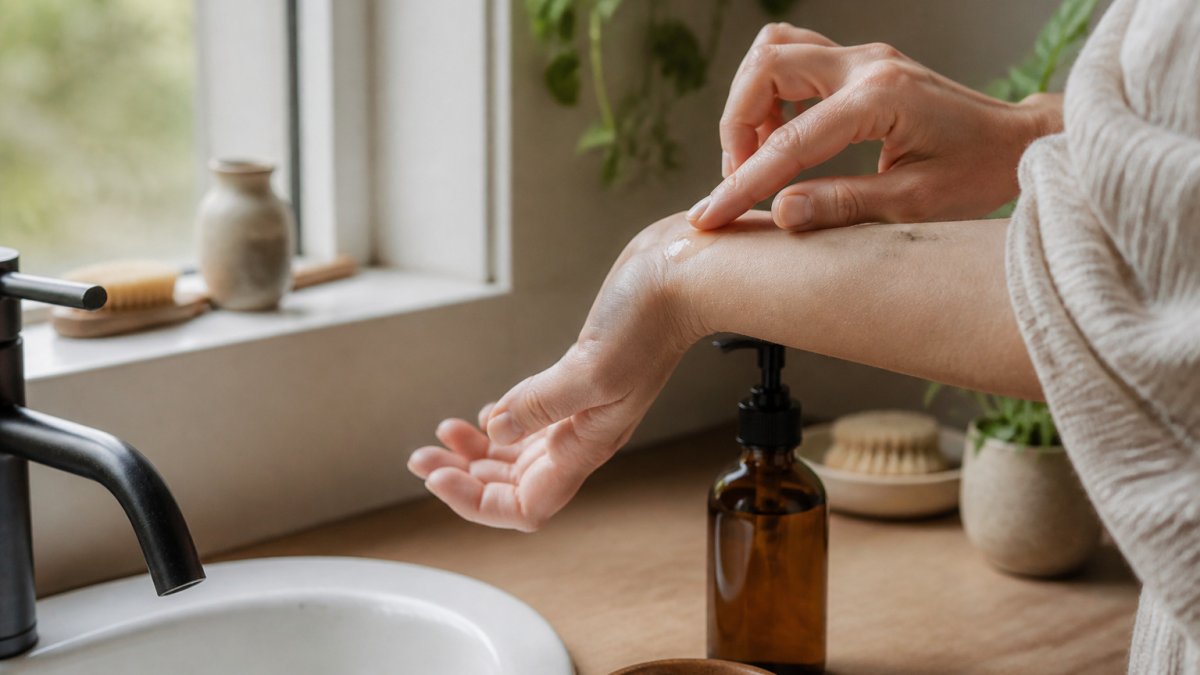
How to patch test a botanical shampoo or scalp oil
- Apply a small amount, roughly the size of a pea, to a patch of skin behind the ear or on the inner forearm.
- Leave it on for 24 hours without washing the area, then check for redness, itching, stinging or swelling.
- If the first 24 hours are clear, continue to 48 hours, because some reactions are delayed.
- If any reaction appears, wash the area with lukewarm water and a mild, fragrance-free cleanser and do not use the product on your scalp.
- Repeat the test with any new product, even one from the same range, because formulas and your own skin can change.
Introducing the product gradually
If the patch test is clear, introduce the product one change at a time. Start with one or two treatments a week and keep everything else in your routine the same for at least two weeks, so you can tell what is helping and what is not.
The washing routine that protects a sensitive scalp
A few adjustments matter more than the label:
- Water temperature. Use lukewarm water rather than hot. Hot water strips lipids and increases tightness and itch.
- Frequency. Wash when the scalp needs it rather than by habit. Many people with a dry or reactive scalp do well on two to three washes a week, with a pre-wash oil on the day before. If you exercise heavily or have an oily scalp, daily washing with a gentle formula is fine, the key is the formula, not the frequency.
- Application. Dilute a small amount in your hands, apply to the scalp rather than the lengths, and massage with fingertips rather than nails. Spend 30 to 60 seconds on the scalp and let the lather run through the ends.
- Rinsing. Rinse for longer than feels necessary. Residue left at the hairline and behind the ears is a common cause of itching and flaking.
- Conditioner. Keep conditioner on the mid-lengths and ends, not the scalp, unless the product is specifically designed for scalp use. Rinse thoroughly.
- Pre-wash oiling. For a dry, tight scalp, massage a small amount of a botanical scalp oil into the scalp for two to five minutes, leave it for at least 30 to 60 minutes, then shampoo thoroughly. This softening step can make a dry scalp feel more comfortable and reduce the friction that comes from scratching.
When to stop and seek advice
A product can support comfort, but it is not a substitute for a diagnosis.
For a gentle starting point, our Sensitive Skin Starter Set is designed for dry, easily irritated skin and can help you build a routine that feels comfortable from the outset.
Booking Your Starter Routine: Choosing Your First Scalp-Care Product
If you are choosing a first scalp-care product, start with the one that matches your main concern. For a dry, tight scalp and dull lengths, Thrive is the simplest entry point at £25.00.
Learn more about our approach to nourishing the scalp on our Hair + Scalp Health page before you commit. When you are ready, you can explore the Thrive Hair & Scalp Oil and read the full ingredient detail first.
For a complete routine, the Dry Skin & Scalp Care Duo pairs targeted balm care with a pre-wash scalp oil, and you can also read our guide on whether tallow can help eczema if your scalp is flare-prone.
Frequently Asked Questions
What do dermatologists recommend for an itchy scalp?
Dermatologists commonly suggest gentle, fragrance-light cleansers, reducing how often harsh products touch the scalp, and avoiding scratching, which can worsen irritation. If itching is persistent, widespread, or comes with redness, flaking that does not respond to gentle care, or hair loss, see a GP or dermatologist. A botanical shampoo may feel soothing, but it is not a treatment for underlying skin conditions, so professional advice matters if symptoms continue.
Can botanical shampoo help soothe an itchy scalp?
It can help if the cause is dryness or sensitivity to harsh cleansing agents, because a gentler formula washes away less natural oil. However, botanical ingredients such as essential oils and plant extracts can themselves trigger reactions in some people. Patch test any new product on a small area first, and stop using it if burning, stinging or redness develops.
What ingredients should you avoid in shampoo if you have a sensitive scalp?
Many people with a sensitive scalp prefer to avoid sodium lauryl sulphate and strongly scented synthetic fragrance, both of which can strip oils or provoke irritation. Essential oils, even natural ones, are worth checking because they are a common source of contact sensitivity. Read the full ingredient list on the bottle rather than relying on front-of-pack claims such as natural or gentle.
How can you tell if a shampoo is irritating your scalp?
Signs include stinging or tingling during use, redness, increased itchiness within a day or two, tightness after washing, or new flaking. Stop using the product and rinse thoroughly if these appear. If symptoms persist after switching back to a gentler routine, speak to a GP or dermatologist.


