
Table of Contents
- What Beef Tallow Is and Why It Works for Skin
- How to Use Tallow on Face: Safe Application and Routine Integration
- Hydration, Barrier Support, and Moisture Retention
- Tallow for Acne-Prone Skin: Addressing Comedogenicity and Sensitivity
- Tallow Skincare Side Effects: What to Watch For
- Tallow vs Retinol: Different Approaches to Skin Repair
- Evidence, Quality, and What to Look for When Choosing Tallow Products
- Frequently Asked Questions
Last Updated: October 11, 2026
What Beef Tallow Is and Why It Works for Skin
Beef tallow is rendered animal fat from grass-fed cattle that closely mimics your skin's natural lipid composition. This biocompatibility makes tallow exceptionally effective for dry, sensitive, and reactive skin types.
Tallow works because it's anhydrous (water-free) and packed with skin-compatible fatty acids, vitamins, and antioxidants that your skin recognises and absorbs efficiently, unlike water-based moisturisers that are fundamentally different from what your skin needs.
How tallow is rendered and processed
Rendering slowly heats raw animal fat until it separates from connective tissue and water. Grass-fed beef tallow contains higher levels of CLA and fat-soluble vitamins than grain-fed alternatives. Rendering temperature, duration, and filtration all affect the final product's purity.
Choose products with transparent sourcing and processing. Small-batch producers like Izzy Rose Skin prioritise gentle processing that preserves nutrient density.
Fatty acid composition and biocompatibility
Tallow's fatty acid profile closely matches human sebum, which is why it absorbs well and rarely triggers irritation. The primary fatty acids, oleic, stearic, and palmitic acid, are essential to your skin barrier.
This biocompatibility explains tallow's centuries-long use in skincare and its current resurgence. Your skin integrates the fatty acids directly into barrier function rather than struggling to process silicones or petroleum derivatives.
How to Use Tallow on Face: Safe Application and Routine Integration
Start with patience and a methodical approach. The most common mistake is using too much too quickly.
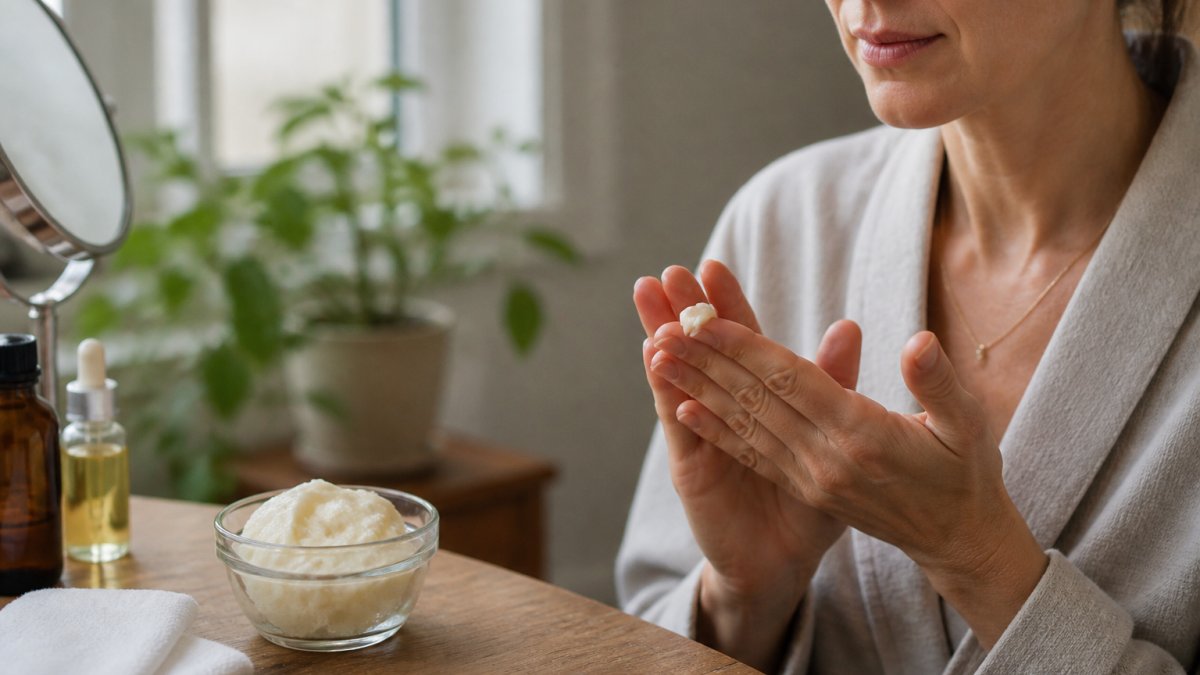
Starting with a patch test
Test tallow on a small area (inside forearm or behind ear) once daily for 3-5 days, watching for redness, itching, or swelling. This step is essential if you have a history of reactions to skincare products.
If the patch test succeeds, introduce tallow gradually, starting with 2-3 times per week, then increasing as your skin acclimates. Listen to your skin's signals rather than following a rigid timeline.
Daily application and layering with other products
Tallow works as a standalone moisturiser or layers well with other products. Apply water-based serums first, then seal with tallow last to lock in hydration.
Apply actives like vitamin C or niacinamide first, then follow with tallow. Most mineral sunscreens perform better over tallow than chemical filters. Use tallow as your final evening step.
Hydration, Barrier Support, and Moisture Retention
Hydration means water content in your skin; occlusion means preventing water loss. Most dry skin needs both. Tallow for skin provides powerful occlusive support, preventing transepidermal water loss (TEWL).
How tallow acts as an occlusive emollient
Tallow acts as both emollient and occlusive, filling microscopic gaps in your skin barrier. This is why tallow supports barrier repair while soothing inflammation.
The whipping process creates a lighter texture that melts into skin without greasy residue.
Vitamins and antioxidants that support skin health
Grass-fed beef tallow naturally contains fat-soluble vitamins A, D, E, and K. Vitamin E provides antioxidant support.
You're delivering nutrients your skin recognises and absorbs.
Tallow for Acne-Prone Skin: Addressing Comedogenicity and Sensitivity
The biggest misconception is that tallow clogs pores and worsens acne. Tallow has a comedogenic rating of 2 out of 5, lower than many plant oils people use on acne-prone skin without hesitation.
Misconceptions about tallow clogging pores
Tallow doesn't cause excess sebum production. When your barrier is compromised, your skin compensates by producing more sebum. Tallow repairs the barrier.
The real risk for acne-prone skin isn't tallow itself but using too much or introducing it too quickly. If you have active acne, start conservatively: use tallow only at night, apply sparingly, and monitor breakouts closely. Many people find that tallow allows their barrier to heal.
When tallow is suitable and when to avoid it
Tallow works well for acne-prone skin that is also dry, sensitive, or barrier-compromised. If your acne is driven purely by excess oil production, lightweight hydrators like hyaluronic acid may be better.
Tallow is a supporting moisturiser with retinoids or benzoyl peroxide. Avoid tallow during active infections or extreme inflammation; introduce gradually once inflammation settles.
Tallow Skincare Side Effects: What to Watch For
Tallow is generally well-tolerated, but side effects do occur in a small percentage of users. The most common reactions are mild and temporary; others signal that tallow isn't right for you.
Allergic reactions and sensitivity responses
True allergic reactions are rare but possible, causing itching, hives, swelling, or burning within minutes to hours. Rinse immediately with cool water and avoid tallow if this occurs.
More common is a temporary adjustment period with slight congestion or breakouts in the first week or two. If it persists beyond two weeks, tallow likely isn't suitable.
Pure Whipped Tallow | Face + Body Moisturiser ★★★★★ Bestseller →
Sensitivity responses like redness, tightness, or stinging indicate your barrier is too compromised for tallow's richness.
How to recognise when tallow isn't right for you
If after two weeks your skin is worse, more congested, inflamed, or reactive, tallow isn't your answer. Some people's skin chemistry simply doesn't process tallow efficiently.
Trust how your skin feels. If tallow feels suffocating or makes your skin more reactive, other excellent moisturising options exist.
Tallow vs Retinol: Different Approaches to Skin Repair
Tallow and retinol are often discussed together because both support skin health and address ageing concerns, but they work through completely different mechanisms. Understanding the difference helps you decide which approach, or combination, suits your skin.
How they work differently on the skin
Retinol is a vitamin A derivative that works by increasing cell turnover and stimulating collagen production. It's an active ingredient that changes your skin's behaviour at a cellular level.
Retinol can be irritating, especially when you're starting out. It causes peeling, redness, and sensitivity as your skin adjusts. Tallow is soothing. Retinol requires a build-up period where you use it 2-3 times per week initially, gradually increasing frequency. Tallow can typically be used daily from the start.
Which is better for your skin type and goals
If your primary concern is fine lines, loss of elasticity, or accelerated cell turnover, retinol is effective. If your primary concern is barrier repair, hydration, calming inflammation, or addressing sensitivity, tallow is a good choice.
The good news: you don't have to choose. Many people use retinol 3-4 times per week for its cell-turnover benefits, then use tallow on the other nights and every morning for barrier support and hydration.
Evidence, Quality, and What to Look for When Choosing Tallow Products
The clinical evidence for tallow skincare is growing, though it's still limited compared to research on retinol or hyaluronic acid. Most evidence comes from traditional use and emerging small-scale studies.
Sourcing, processing, and product quality standards
Quality tallow products start with grass-fed beef and gentle rendering processes that preserve nutrient density.
Processing matters enormously. Some manufacturers use high heat and chemical solvents that damage the fatty acid profile. Others use low-temperature rendering and minimal filtration to preserve vitamins and bioactive compounds.
Check the ingredient list. Pure tallow products should contain tallow plus complementary ingredients like shea butter, botanical oils, and beeswax, nothing synthetic or unnecessary.
What clinical research actually tells us
The research we do have is encouraging. Studies on tallow's fatty acid composition confirm its biocompatibility with human skin.
What's missing is large-scale, placebo-controlled clinical trials specifically testing tallow skincare products.
When choosing a tallow product, prioritise quality sourcing and transparent processing over marketing claims.
| Aspect | What to Look For | Red Flags |
|---|---|---|
| Sourcing | Grass-fed beef, transparent origin | Unclear source, grain-fed only |
| Processing | Low-temperature rendering, minimal filtration | High-heat processing, chemical solvents |
| Ingredients | Tallow + complementary botanicals, short list | Long synthetic ingredient list, unnecessary fillers |
| Packaging | Dark glass or opaque containers | Clear containers (light degrades nutrients) |
| Price Point | Premium pricing reflecting quality | Suspiciously cheap compared to competitors |
Dry, reactive skin demands ingredients that actually support barrier repair. Tallow for skin addresses a weakened lipid barrier.
Izzy Rose Skin's Pure Whipped Tallow and Calm Balm are formulated specifically for sensitive skin, combining grass-fed tallow with botanical oils and beeswax to deliver deep hydration without irritation.

Frequently Asked Questions
Is tallow actually good for your face?
Yes, for many people, particularly those with dry, sensitive, or reactive skin. Tallow is rich in fatty acids and biocompatible lipids that closely resemble the skin's natural barrier. It acts as an occlusive emollient, helping to lock in moisture and support hydration. Many users report calmer, more comfortable skin after consistent use. However, individual results vary; patch testing before full application is essential to rule out sensitivity.
How do you use tallow as a face moisturiser?
Start with a patch test on a small area like your inner arm or behind your ear for 24-48 hours to rule out allergic reaction. When ready to use on your face, warm a pea-sized amount between clean fingertips until it softens, then gently massage into clean, slightly damp skin. Use morning or night, or both. A little goes a long way because tallow is concentrated and water-free. You can layer it over serums or use it as your standalone moisturiser.
Can tallow clog pores or cause acne?
Tallow has a relatively low comedogenic rating and is less likely to clog pores than many conventional moisturisers. However, individual skin chemistry varies. Some people with oily or highly acne-prone skin may find tallow too rich, especially if they apply too much or layer it heavily. If you have active acne, start cautiously with a small amount on clean skin and monitor closely. Concentrated, high-quality tallow with minimal additives is less likely to trigger breakouts than heavily processed alternatives.
What are the side effects of using tallow on skin?
Most side effects are mild and uncommon. The most likely is mild irritation or redness in the first few days as skin adjusts, especially if you have very sensitive skin. Allergic reactions are rare but possible; stop use immediately if you experience itching, hives, or swelling. Some users report a slight waxy or heavy feeling initially, this usually resolves as skin adapts. If you experience persistent redness, burning, or worsening dryness, discontinue use and patch test again after a few days.
Is beef tallow suitable for sensitive skin?
Yes, tallow is often ideal for sensitive skin because it's a natural, biocompatible ingredient with minimal fillers or synthetic additives. Its fatty acid profile closely matches the skin barrier, reducing the risk of irritation from foreign compounds. However, 'sensitive skin' varies widely. Always patch test first, especially if you have eczema, rosacea, or dermatitis. Products with just a few purposeful ingredients, like Izzy Rose Skin's formulas, are gentler than those with fragrance, preservatives, or unnecessary fillers.
Is tallow better than retinol?
They serve different purposes. Tallow is an occlusive emollient that hydrates and supports the skin barrier, ideal for dry, sensitive, or irritated skin. Retinol is a cell-turnover accelerant that addresses fine lines, texture, and pigmentation, but can be irritating and requires gradual introduction. Tallow is effective for barrier repair and moisture retention; retinol for anti-ageing and surface renewal. Many people use both, though not simultaneously, tallow at night, retinol on alternate nights, or retinol in winter and tallow year-round for sensitive skin.
Is it okay to use beef tallow on your face every day?
Yes, daily use is safe and often recommended for dry or sensitive skin. Because tallow is water-free and concentrated, a small amount goes a long way, so daily application doesn't waste product. Use it morning and night, or adjust frequency based on your skin's response. If your skin feels greasy or congested after a week of daily use, reduce to once daily or every other day. Consistency matters more than frequency, regular use builds barrier support, while sporadic use may not deliver full benefits.


