
Last Updated: November 1, 2026
Quick Summary
The best hair growth oils for irritated scalps are usually the simplest formulas, since fragrance and essential oils often cause the stinging and itching. Patch test first, use a small amount, and leave it on for 30 to 60 minutes before washing. Oils condition the scalp, but none is a guaranteed fix for hair loss.
- Fragrance and essential oils are a common trigger for sensitive scalps.
- Patch test a small area of skin, such as behind the ear, for 24 to 48 hours before use.
- Leave the oil on for 30 to 60 minutes before shampooing thoroughly.
- Start with one or two treatments a week and watch how your scalp responds.
- Stop using any oil if itching, burning or flaking persists, and speak to a pharmacist or GP.
Table of Contents
Choosing among the best hair growth oils for irritated scalps is harder than it looks, because the ingredients that get marketed for growth are often the same ones most likely to sting a reactive scalp. A product can smell pleasant, feel rich, and still leave an inflamed scalp itching by the next morning. Izzy Rose Skin builds haircare for people with dry, sensitive and reactive skin, so we start from a simple question: will this oil calm the scalp, or will it add to the problem?
That question matters more than any growth claim on a label. Many people with a sensitive scalp find that their irritation comes from fragrance, essential oil concentration, or a carrier oil they have never tried before. Others notice that scalp tightness and flaking get worse after heavy oiling left on for hours. Oils can condition the scalp and hair, but no oil should be treated as a guaranteed fix for hair loss.
Before you buy, it helps to know what you are actually choosing between. The table below summarises how the oils in our range differ by what they do and who they suit.
| Product | Price | Main Role | Best For |
|---|---|---|---|
| Thrive Hair & Scalp Oil | £25.00 | Pre-wash scalp conditioning | Dry-feeling scalps, dull lengths |
| Hair & Face Oil Duo | £45.00 | Scalp oil plus facial oil | Combined scalp and face routine |
| Skin & Scalp Ritual Set | £62.50 | Balm, whipped tallow and scalp oil | A full routine for sensitive skin |
Mistakes to avoid start with how much you use. A common error is applying too much oil and leaving it on for too long, which can leave sensitive skin irritated. Start small, and watch how your scalp responds over the first few uses.
Irritated scalps need a different approach because the goal changes. The aim is comfort and conditioning first, then a routine you can keep up without setbacks.
How We Compared the Oils: Evidence, Suitability and Irritation Risk
We judged each option on three things: what the ingredient listing actually says, how suitable it is for a reactive scalp, and how much irritation risk it carries. We did not rank oils by growth promises, because the research on most botanical oils for hair growth is limited.
Our comparison focuses on the products in our own catalogue, so we can state their ingredients and prices accurately. Where a product lists aromatic essential oils such as rosemary, lavender or tea tree, we flag that clearly, since fragrance and essential oils are a common trigger for sensitive skin.
Ingredient lists also change between batches and formulations. Always check the label on the bottle you buy, particularly if your scalp is reactive. This is a short, practical check, and it is the single most useful thing you can do before using any new oil.
Rosemary Oil for Hair Growth: What the Evidence Supports
Rosemary oil is one of the ingredients in our Thrive Hair & Scalp Oil.
For a sensitive scalp, the practical question is tolerance. Aromatic botanicals can cause stinging or redness in some people, even when they are well regarded. Patch test a small area of skin before applying any oil that contains them. If you notice persistent itching, burning or flaking, stop using the product and speak to a pharmacist or GP.
Best Oil for Itchy Scalp: Gentle Options Compared
For an itchy scalp, the best oil is usually the one with the simplest formula and the fewest potential triggers. Thrive is built around conditioning carrier oils such as jojoba, argan and castor oil.
Thrive is designed for dry-feeling scalps that feel tight or uncomfortable. It is a pre-wash treatment, so the oil goes on, sits, and is washed out.
Best for: people with a dry, tight scalp who want a conditioning pre-wash treatment. Skip if: your scalp reacts to essential oils, since the formula includes aromatic botanicals.
Our Hair & Face Oil Duo pairs Thrive with Glass Skin Elixir for a combined scalp and face routine at £45.00, saving £8.25 against buying the two separately at £55. You can compare the duo's scalp and face oils on its product page. Apply Thrive to the scalp in sections, massage gently, and leave for at least 30 minutes before shampooing thoroughly.

Oils for Scalp Psoriasis and Flaky, Inflamed Skin
Flaky, inflamed skin on the scalp needs more care than a cosmetic oil can provide. Scalp psoriasis and other inflammatory conditions should be assessed and treated by a doctor or dermatologist, and no oil should replace that advice.
The Hair & Face Oil Duo and the Skin & Scalp Ritual Set are designed for dry, sensitive and reactive skin. If you have an active flare, check with your doctor before adding any new product, and stop any oil that makes the inflammation worse.
How to Use Scalp Oil Without Making Irritation Worse
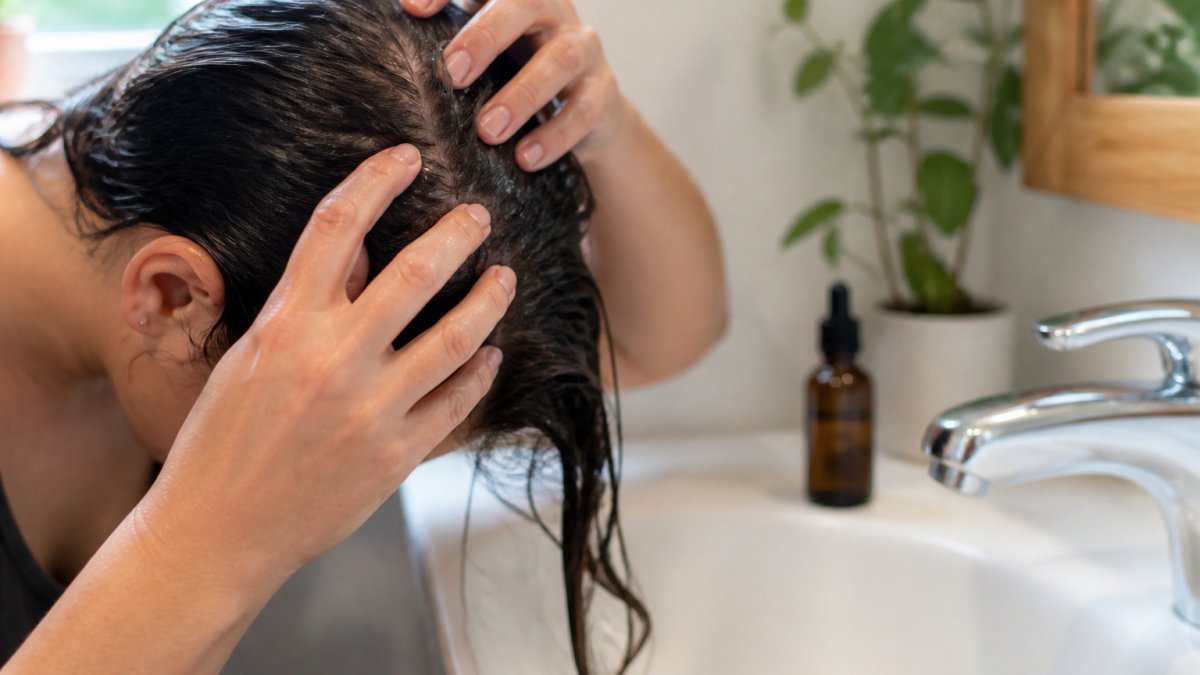
Application matters as much as the product. Section the hair and apply a small amount directly to the scalp. Massage gently with your fingertips for two to five minutes, avoiding vigorous rubbing or scratching, which can make irritation worse.
Leave the oil on for 30 to 60 minutes before washing. Longer is not necessarily better, especially on a sensitive scalp. Shampoo thoroughly, and repeat if needed to remove excess oil.
Start with one or two treatments a week. Watch how your scalp feels over the following days before increasing frequency. If you have never used a scalp oil before, the Skin & Scalp Ritual Set at £62.50 includes Calm Balm, Pure Whipped Tallow and THRIVE, so you can build a routine gradually and save £17.50 against buying them separately. You can view the full bundle contents to see how the pieces work together.

Watch out: applying oil to broken, inflamed or freshly irritated skin can sting and spread irritation. Wait until the area has calmed before oiling it.
Booking a Patch Test and Choosing Your Next Scalp Oil
Patch testing is the simplest safeguard you have. Apply a small amount of oil to a discreet patch of skin, such as behind the ear or on the inner forearm, and wait 24 to 48 hours before using it on your scalp. If redness, itching or swelling appears, do not use the product on your scalp.
Once you know how your skin responds, choose an oil that fits your routine and your sensitivity. Thrive suits dry, tight scalps. The Hair & Face Oil Duo suits anyone who wants a matching facial oil. The Skin & Scalp Ritual Set suits people who want a complete routine for sensitive skin.
Whichever you pick, start small, shampoo properly, and stop if irritation appears. Irritated scalps reward patience.
Frequently Asked Questions
What is the best oil for an irritated scalp?
There is no single best oil for every irritated scalp, because the trigger matters more than the oil. Lightweight carrier oils such as jojoba are often chosen for their smooth feel and conditioning effect, while essential oils like rosemary, lavender and tea tree are more likely to provoke sensitivity. Patch test any new oil on a small area of the inner arm or behind the ear for at least 48 hours before applying it to the scalp. If redness, stinging or itching increases, stop using the product. Persistent scalp symptoms should be assessed by a GP or dermatologist.
Which oils may help support hair growth?
Oils such as castor, jojoba and argan are used in scalp-care routines mainly for conditioning, softness and shine. Realistic expectations matter: oils can help hair feel stronger and look healthier, but they cannot correct hormonal, thyroid or genetic causes of hair loss. Thrive Hair and Scalp Oil from Izzy Rose Skin is a conditioning blend of jojoba, argan and castor oils, priced at £25.00.
Can hair oil make an itchy scalp worse?
It can. Oil that is heavy, heavily fragranced or left on for long periods may trap sweat and product residue, and essential oils are a common cause of contact irritation. If your scalp becomes itchier after oiling, reduce how much you apply, shorten the time it stays on, and wash thoroughly with a gentle shampoo. Stop using any product that causes burning or rash. If itching persists for more than a few weeks, speak to a GP or dermatologist.
How long should you leave scalp oil on?
A common starting point is 30 to 60 minutes before washing. Longer is not necessarily better, particularly on a sensitive scalp, where extended contact can increase irritation for some people. Begin with one or two treatments a week, use only a small amount, and wash out fully with shampoo, repeating if the hair still feels greasy. Adjust the timing based on how your scalp feels afterwards.


