
Last Updated: October 30, 2026
Quick Summary
The best lightweight face oil for dehydrated skin in the UK is one that seals in water without smothering skin, so look for light textures such as squalane or jojoba. Apply a water-based layer and moisturiser first, then press two or three drops of oil over the top as the final step.
- Dehydration means skin lacks water, while dryness means it lacks oil, so heavy rich oils can make dehydrated skin worse.
- Apply two drops to your forearm: if it sinks in within a minute or two, the oil is lightweight.
- Patch test any new oil on the jawline or inner forearm for five to seven nights before going full-face.
- Use two drops of lightweight oil at night first, adding a daytime drop only if skin feels comfortable.
- The Glass Skin Elixir is a four-ingredient facial oil priced at £30.00, but it contains frankincense so it is not fragrance-free.
Table of Contents
- How to Choose a Lightweight Face Oil for Dehydrated Skin
- The Best Face Oil for Dry Skin: Key Ingredients to Look For
- Face Oil for Oily but Dehydrated Skin: Lightweight Options That Balance
- Squalane Oil for Face: Why It Suits Dehydrated Skin
- How to Use Face Oil with Moisturiser for Lasting Hydration
- Lightweight Face Oil Options for Dehydrated Skin
- Build Your Hydrating Routine with Izzy Rose Skin
- Frequently Asked Questions
How to Choose a Lightweight Face Oil for Dehydrated Skin
Finding the best lightweight face oil for dehydrated skin in the UK starts with one distinction most guides skip: dehydration is not dryness. A dehydrated complexion lacks water; a dry one lacks oil. You can be oily and dehydrated at the same time, which is why heavy, rich oils often make things worse. Dehydration and dryness are often confused, and that confusion leads to a lot of poor product choices.
Hydration vs Moisturisation: What Dehydrated Skin Actually Needs
Hydration means adding water to the skin; moisturisation means sealing that water in with lipids and occlusives. These are different jobs, and confusing them is the most common mistake we see.
Dehydrated skin often feels tight, looks dull, and shows fine lines even when it isn't dry to the touch. NHS guidance on looking after your skin points to gentle cleansing and consistent moisturising as the foundation, not harsh stripping.
That single reframe changes which oil you buy. If your skin is dehydrated, you want a lightweight oil that seals without smothering.
Texture Matters: Lightweight vs Rich Face Oils
Lightweight oils absorb quickly and leave a non-greasy finish; rich oils sit on the surface and deliver heavier occlusion. Neither is "better", they suit different skin.
For dehydrated skin, especially combination or oily types, a lightweight texture is usually the safer bet.
A quick way to judge: apply two drops to your forearm. If it sinks in within a minute or two, it's lightweight. If it stays tacky, it's rich.
The Best Face Oil for Dry Skin: Key Ingredients to Look For
The best face oil for dry skin leans on ingredients that mimic or support the skin barrier. Look for oils rich in essential fatty acids and antioxidants, and check the ingredient list rather than the front label. The front label sells a feeling; the INCI list tells you what is actually doing the work.
A useful way to read a face oil is to sort its ingredients into three jobs: emollients that soften and smooth, occlusives that slow water loss, and antioxidants that help protect against environmental stress. A lightweight oil for dehydrated skin should lean on the first and third, with just enough of the second to seal without smothering.
Ingredients worth knowing:
- Jojoba oil, technically a liquid wax ester, its structure closely resembles skin sebum, so it conditions without a heavy feel. It is a good benchmark for lightweight texture.
- Argan oil, rich in conditioning lipids and vitamin E, good for softening; slightly richer than jojoba, so better suited to night use or genuinely dry patches.
- Rosehip seed oil, a source of antioxidants and fatty acids; it is relatively light but can feel slightly dry-tacky on some skin, so patch test if you are reactive.
- Sweet almond oil, a light, softening base oil that works well in blends; avoid if you have a known tree-nut allergy.
- Squalane, a lightweight, stable emollient that suits most skin types and resists oxidation better than many plant oils.
- Vitamin E (tocopherol), antioxidant support that also helps condition skin and slow the oxidation of the oil itself.
What to check before you buy
- Fragrance and essential oils. Frankincense, lavender, citrus and other aromatic oils add scent but also add reaction risk for sensitive or eczema-prone skin. A fragrance-free formula is the safer default if your skin reacts easily.
- Comedogenicity. No oil is universally non-comedogenic, but lighter, linoleic-acid-rich oils such as jojoba and squalane are generally better tolerated by congestion-prone skin than heavy coconut or wheatgerm oils.
- List length. A short, purposeful ingredient list is easier to patch test and easier to trust. If a formula lists twenty botanicals, your reactive skin has twenty chances to react.
- Packaging. Antioxidant-rich oils degrade with light and air; a dark glass bottle with a dropper or pump protects the formula better than a clear jar.
The oil is only the sealing step; the water has to come first.
Face Oil for Oily but Dehydrated Skin: Lightweight Options That Balance
Face oil for oily but dehydrated skin sounds like a contradiction, but it isn't. Oily skin can still lack water, and harsh cleansers can make tightness worse. The answer is a lightweight, low-comedogenicity oil used sparingly, and, crucially, more water underneath it.
Why some oils suit oily-dehydrated skin better
A useful rule of thumb is the balance of linoleic acid and oleic acid in an oil. Oils higher in linoleic acid tend to feel lighter and are often better tolerated by congestion-prone skin; oils higher in oleic acid feel richer and heavier. Jojoba, rosehip and squalane sit toward the lighter end; coconut, wheatgerm and marula sit toward the richer end.
Lightweight options to consider, and who they suit:
- Squalane, the safest starting point for most oily-dehydrated skin: light, stable, and unlikely to feel greasy.
- Jojoba, close to skin sebum, so it conditions without a heavy film; good for combination skin.
- Rosehip seed, light and antioxidant-rich, but patch test if you are reactive.
- A short blend of jojoba and squalane, a practical compromise if a single oil feels either too light or too rich.
How to use it without triggering congestion
- Cleanse gently, avoid foaming, stripping cleansers that leave skin tight.
- Apply a water-based hydrating layer to damp skin (a humectant serum or a light moisturiser).
- Seal with two drops of lightweight oil, pressed over the top, not a full dropper.
- Use at night first; add a daytime drop only if your skin feels comfortable rather than slick.
Avoid heavy butters and occlusive balms during the day. If you're prone to breakouts, patch test on the jawline for a week before going full-face, and stop if you see new congestion rather than assuming it is "purging".
What most guides miss: the goal is not to dry out oily skin, but to stop stripping it. A gentle cleanse, a water-based layer, and a thin oil seal is usually more effective than a mattifying routine that leaves skin tight by mid-morning.
Squalane Oil for Face: Why It Suits Dehydrated Skin
Squalane oil for face is a strong choice for dehydrated skin because it is lightweight, stable, and unlikely to feel greasy. It's an emollient that softens and helps reduce moisture loss without a heavy residue.
Glass Skin Elixir | Nourishing Facial Oil →
It suits most skin types, including sensitive skin, and layers well under or over moisturiser. The one caveat: squalane is a sealing and softening ingredient, not a source of water.
How to Use Face Oil with Moisturiser for Lasting Hydration
Learning how to use face oil with moisturiser is where most routines succeed or fail.
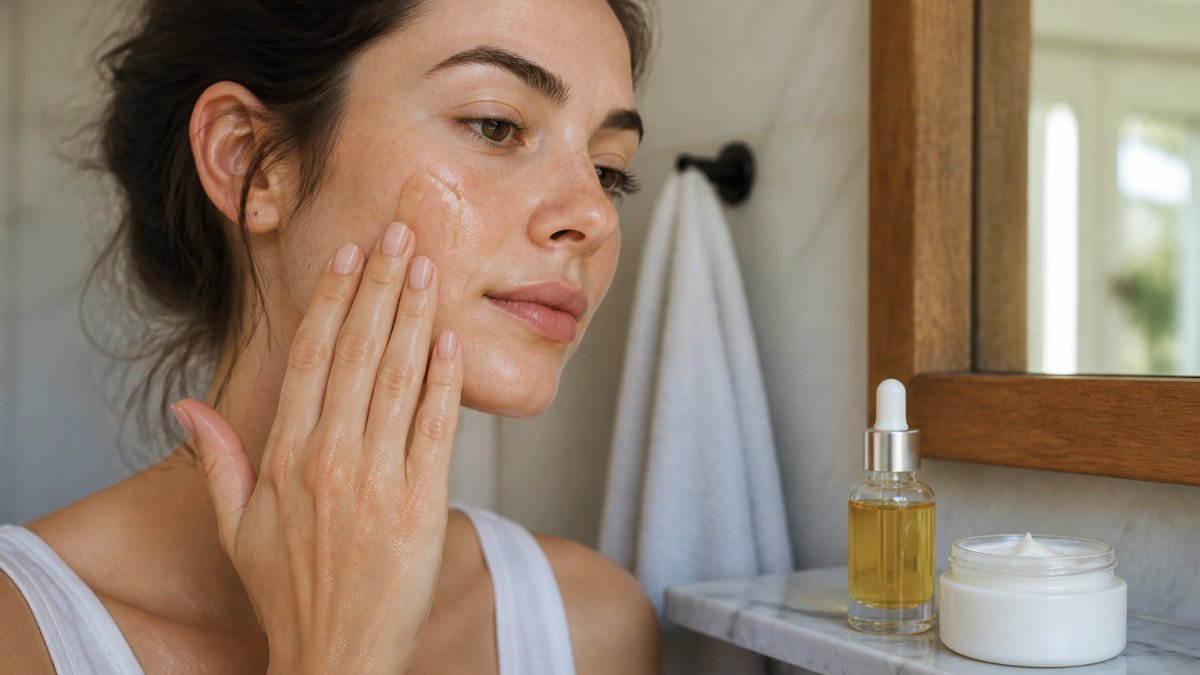
Order of steps:
- Cleanse gently and leave skin slightly damp
- Apply a water-based serum or hydrating layer if you use one
- Apply moisturiser to seal in water
- Warm two or three drops of oil and press over the top as the final step
Why this order? Oil is occlusive. Put it on first and it can block the water-based layers underneath from reaching the skin.
Watch out: applying oil to dry, unmoisturised skin can leave it feeling tight rather than comfortable, because there's no water underneath to trap.
If you want a ready-made pairing, The Dry Skin Rescue Duo combines a whipped tallow moisturiser with a facial oil in one two-step ritual. For the moisturising step on its own, Pure Whipped Tallow is a rich, water-free face and body cream designed to soften dry-feeling skin and support the moisture barrier.

The order of steps matters more than the number of products, so here is the sequence to follow.
| Step | What to do |
|---|---|
| 1 | Cleanse gently and leave skin slightly damp |
| 2 | Apply a water-based serum or hydrating layer |
| 3 | Apply moisturiser to seal in water |
| 4 | Warm two or three drops of oil and press over the top |
Lightweight Face Oil Options for Dehydrated Skin
Our pick for dehydrated skin is a short, lightweight formula you can layer without heaviness. The Glass Skin Elixir is a concentrated four-ingredient facial oil, castor oil, coconut oil, vitamin E and frankincense, made to soften the feel of dry skin and leave a dewy-looking finish.

Best for: dehydrated skin that wants a glow step without a heavy feel. Skip if: you prefer a fragrance-free formula, since it contains frankincense.
Massage two or three drops onto clean, slightly damp skin, morning or evening. Patch test first.
Build Your Hydrating Routine with Izzy Rose Skin
A hydrating routine doesn't need ten steps. It needs water, then a seal, then consistency.
Izzy Rose Skin's formulas are purposeful, made in small batches with grass-fed tallow and botanical oils, for dry and sensitive-feeling skin. If you're new to the range, The Mini Discovery Set at £29.99 lets you try four mini formats before committing to full sizes. For a complete routine, The Calm + Glow Ritual at £65.00 brings together a whipped tallow moisturiser, a comforting balm and the facial oil in one three-step set.

Patch test each product separately, and introduce one new step at a time.
Dehydrated skin rarely needs more products; it needs the right order and the right texture. If you've been layering rich oils onto dry skin and still feel tight, start with water, seal with a moisturiser, and finish with a lightweight oil.
Frequently Asked Questions
Can face oil help dehydrated skin?
Yes, but with a caveat. Dehydrated skin lacks water, while a lightweight face oil primarily seals in moisture and conditions the surface. Oils can reduce water loss through the skin barrier, which helps dehydrated skin feel softer and look less dull. For best results, apply oil over a damp moisturiser or serum so it locks in hydration rather than replacing it. Look for non-greasy oils like squalane or jojoba that absorb quickly and won't sit heavily on the skin.
Should I apply face oil before or after moisturiser?
Apply face oil after moisturiser, as the final step in your evening routine. Moisturiser adds water-based hydration, and the oil creates a seal that helps reduce moisture loss. If you prefer a lighter feel during the day, mix one drop of oil into your moisturiser instead. For dehydrated skin, the layering approach works best: cleanse, apply a hydrating serum or damp skin, follow with moisturiser, then press two or three drops of lightweight face oil over the top.
What is the thinnest oil for skin?
Squalane is often considered one of the thinnest, most lightweight face oils because it mimics the skin's natural sebum and absorbs quickly without a greasy finish. Other lightweight options include jojoba oil, which closely resembles skin sebum, and grapeseed oil. These oils suit oily but dehydrated skin because they condition without heaviness. Richer oils like castor or coconut are better for dry skin types or for use as an occlusive final step in the evening.
Can face oil make dehydrated skin worse?
A lightweight face oil used correctly should not worsen dehydrated skin, but applying a heavy oil without any water-based hydration underneath can leave skin feeling tight or congested. Dehydrated skin needs water first, so always apply oil over damp skin or a moisturiser. If you have oily but dehydrated skin, choose non-comedogenic oils like squalane and use only two or three drops. Patch test any new oil, and if you notice breakouts or irritation, stop use and consult a dermatologist.


