
Table of Contents
- Best Natural Scalp Itch Relief: What Actually Calms the Itch
- Itchy Scalp Causes: Why Your Scalp Itches in the First Place
- Home Remedies for Itchy Scalp: 7 Options Worth Trying
- Itchy Dry Scalp Treatment: Rebuilding Moisture and the Skin Barrier
- Scalp Psoriasis Treatment: Where Natural Care Fits
- Patch Testing and Allergy Precautions Before You Start
- When Home Care Is Not Enough: Signs to See a GP
- Building a Scalp Care Routine That Prevents Itch Returning
- Frequently Asked Questions
Last Updated: October 12, 2026
Best Natural Scalp Itch Relief: What Actually Calms the Itch
The best natural scalp itch relief starts with one question: what is causing the itch? An itchy scalp is a symptom, not a condition, and the remedy depends on whether you have dryness, dandruff, irritation or something needing medical care.
Below, we break down seven natural remedies, match each to the cause it suits, and explain how to apply them without worsening the itch.
Itchy Scalp Causes: Why Your Scalp Itches in the First Place
An itchy scalp usually comes from one of five triggers: dryness, dandruff, product buildup, irritation or an inflammatory skin condition. Identifying yours is the most useful step before trying any remedy.
Common causes include:
- Dry scalp, often from cold weather, harsh shampoos or overwashing
- Dandruff and seborrhoeic dermatitis, linked to a yeast that lives naturally on the scalp
- Product buildup from styling products, dry shampoo or conditioner residue
A common mistake is treating every itch as dandruff. If your scalp is tight and flaky rather than oily and yellow-flaked, drying anti-dandruff products will make things worse.
Dry Scalp vs Dandruff: Telling Them Apart
Dry scalp and dandruff look similar but need opposite approaches. Dry scalp gives small, white, dry flakes and tightness; dandruff gives larger, greasier, yellowish flakes with oiliness.
If flakes brush off easily and your scalp feels tight after washing, treat it as dryness and focus on hydration. If flakes cling to scalp and hair with persistent itch, treat it as dandruff with gentle cleansing plus an anti-dandruff shampoo.
Home Remedies for Itchy Scalp: 7 Options Worth Trying
The most effective home remedies for itchy scalp are matched to your cause. Evidence varies widely, some are well supported, others traditional with little more than anecdotal backing.
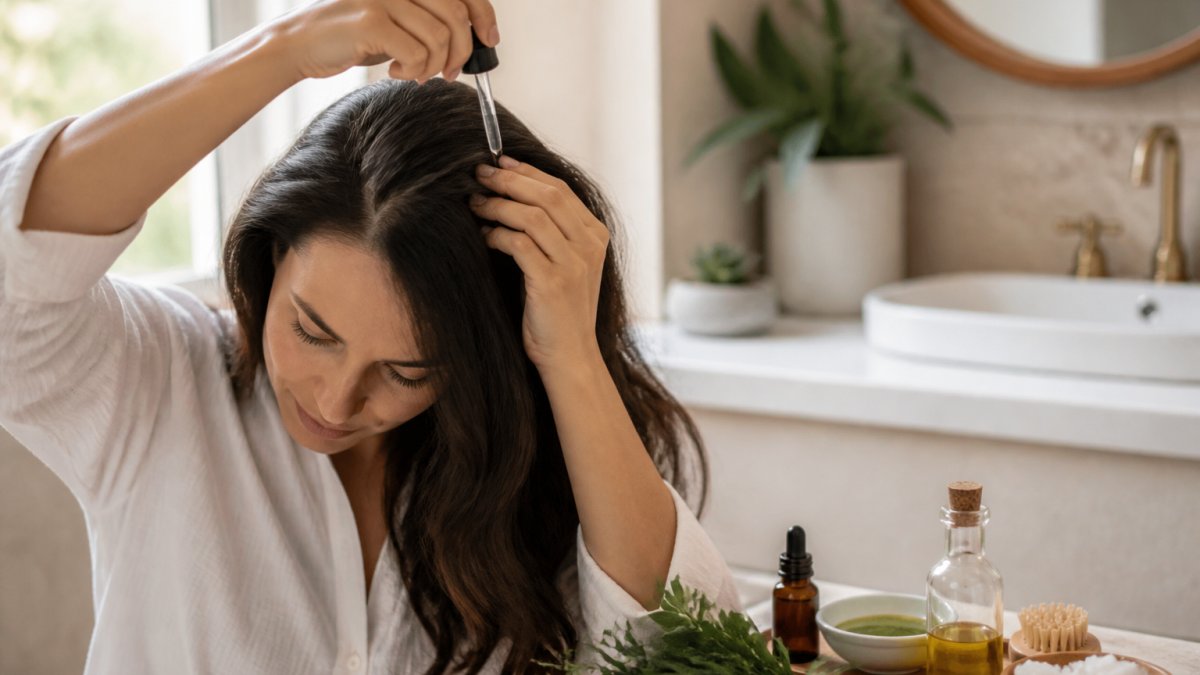
| Remedy | Best suited to | How to use | Frequency | Evidence strength | Main risk |
|---|---|---|---|---|---|
| Coconut oil | Dry, tight scalp | Warm a teaspoon, massage into scalp, leave 1 hour or overnight | 1-2 times weekly | Moderate for moisturising; weak for dandruff | Can feed the yeast behind dandruff in oily scalps |
| Aloe vera gel | Irritated, reactive, sun-exposed scalp | Apply pure gel to damp scalp, leave 20-30 minutes, rinse | 2-3 times weekly | Moderate for soothing irritation | Preservatives in bottled gels can sting |
| Diluted apple cider vinegar | Product buildup, dull flaking | 1 part vinegar to 4 parts water, apply after washing, rinse well | Once weekly | Weak; mainly lifts residue | Stings broken skin; can dry hair |
| Neem oil | Flaking and persistent itch | Dilute in a carrier oil (1:10), massage in, wash out | 1-2 times weekly | Traditional use; limited clinical evidence | Strong smell; can irritate sensitive skin |
| Jojoba oil | Dry scalp that turns greasy easily | A few drops massaged in, leave on or rinse | 2-4 times weekly | Moderate for barrier support | Rare; generally well tolerated |
| Tea tree oil | Dandruff and oily, itchy scalp | Dilute to 5% in a carrier oil, apply, leave 20 minutes | 2-3 times weekly | Moderate for mild dandruff | Irritant and allergen undiluted; never neat |
| Lemon juice | Oily scalp only | Dilute 1:3 with water, apply briefly, rinse thoroughly | No more than once weekly | Weak; astringent effect only | Strips and stings dry or broken skin; skip entirely if scalp is dry |
How to read the evidence column. "Moderate" means reasonable published support for that specific use, usually from small trials or long-standing clinical use. "Weak" means popular but largely traditional or anecdotal.
Matching remedy to cause, in one line each:
- Dry, tight scalp → coconut, jojoba or a blended scalp oil.
- Dandruff with oily, yellowish flakes → diluted tea tree, plus a gentle anti-dandruff wash.
- Buildup from styling products or dry shampoo → diluted apple cider vinegar rinse, then a clarifying wash.
If you want one step that covers dryness, flaking and scalp comfort without mixing anything yourself, our Thrive Scalp & Hair Oil (£25.00) blends jojoba, argan, rosemary, peppermint, tea tree and lavender oils to nourish and hydrate the scalp while helping reduce dryness and flaking.

How to Apply Each Remedy Safely
Application matters as much as the ingredient. For any oil or leave-in treatment:
- Part dry hair in sections to expose the scalp.
- Apply a small amount directly to the scalp, not the lengths.
- Massage gently for 2-5 minutes to work it in.
- Leave on for at least one hour, or overnight for a deeper treatment.
- Wash out with a gentle shampoo and lukewarm water.
Dilution rules for essential oils. A safe topical dilution for scalp use is generally 1-2% for leave-on products and up to 5% for short-contact rinses, roughly 6-12 drops per 30 ml (about 2 tablespoons) of carrier oil for a leave-on blend. Tea tree, peppermint, rosemary and neem are potent, more is not better, and neat application risks a chemical burn.
Itchy Dry Scalp Treatment: Rebuilding Moisture and the Skin Barrier
An effective itchy dry scalp treatment rebuilds the skin barrier rather than just adding surface moisture.
What to look for in a scalp product:
- Jojoba oil, structurally close to the scalp's own sebum, so it conditions without clogging follicles.
- Argan oil, rich in oleic and linoleic acids; supports the lipid barrier and softens flaking.
- Glycerin or panthenol, humectants that attract water into the upper skin layers.
How to rebuild the barrier, step by step:
- Wash with lukewarm, not hot, water. Hot water strips lipids faster and worsens tightness.
- Choose gentle, sulphate-free cleansers. Sulphates (look for SLS and SLES on the label) are effective degreasers but harsh on a compromised barrier.
- Apply a scalp moisturiser or leave-in oil while the scalp is still slightly damp. Damp skin absorbs humectants far better than dry skin.
- Avoid daily washing if your scalp is dry. Every wash removes some of the lipids you are trying to rebuild.
- Add a weekly oil treatment to seal in moisture. Leave it on for at least an hour before washing out.
Washing frequency: finding your number. There is no single correct frequency, it depends on scalp type and product use. As a starting point:
- Dry scalp: 1-2 washes per week, with a gentle sulphate-free shampoo.
- Normal scalp: 2-3 washes per week.
- Oily scalp or heavy product use: daily or every other day is fine, provided the shampoo is mild.
If your scalp feels tight and itchy within a day of washing, you are probably washing too often or with something too harsh.
How to tell it is working. Expect improvement over two to four weeks, not overnight.
Thrive - scalp and hair growth oil *NEW →
For many people, a dedicated scalp serum or oil used two to four times a week is enough to calm a dry, itchy scalp.
Scalp Psoriasis Treatment: Where Natural Care Fits
Natural care can soothe scalp psoriasis, but it does not replace medical treatment. Psoriasis is an autoimmune condition, and its scaly, raised patches need a diagnosis and often prescription treatment.
Natural options that may help alongside medical care:
- Cooling, fragrance-free moisturisers to ease tightness and scaling
- Gentle oils such as jojoba or coconut to soften plaques before washing
- Aloe vera for its soothing, cooling effect on irritated skin
What natural care cannot do is clear the underlying inflammation. If you have thick, silvery scales, bleeding or spreading patches, see your GP or a dermatologist. NHS guidance on psoriasis explains the treatments available and when to seek help.
Patch Testing and Allergy Precautions Before You Start
Patch testing before you start is the step most people skip, and it prevents a bad reaction. Even natural ingredients can cause contact dermatitis, and if your scalp is already sensitive, a new oil or rinse can tip it into a flare.
How to patch test properly:
- Apply a small amount of the product to the inner forearm or behind the ear.
- Leave it on for 24 to 48 hours without washing it off.
- Check for redness, swelling, itching or burning.
- If you react, do not use it on your scalp.
- If there is no reaction, apply it to a small patch of scalp first.
If you have a known allergy to nuts, grasses or specific botanicals, check the ingredient list before you buy. NHS advice on contact dermatitis covers the common triggers.
When Home Care Is Not Enough: Signs to See a GP
Home care is not enough when the itch persists for weeks, spreads, or comes with signs of infection. Persistent scalp problems can point to conditions needing a proper diagnosis.
See your GP if you notice:
- Itching that does not improve after several weeks of consistent care
- Sores, weeping, crusting or bleeding on the scalp
- Hair loss alongside the itch
Building a Scalp Care Routine That Prevents Itch Returning
A scalp care routine prevents itch from returning by keeping the barrier intact and the scalp clean without stripping it. Consistency matters more than intensity.
A simple weekly routine:
- Wash two to three times a week with a gentle, sulphate-free shampoo
- Treat with a scalp oil or serum two to four times a week
- Moisturise dry patches with a fragrance-free balm or cream
| Step | Frequency | Purpose |
|---|---|---|
| Gentle wash | 2-3 times weekly | Cleanse without stripping |
| Scalp oil treatment | 2-4 times weekly | Hydrate and soothe |
| Moisturise dry patches | Daily as needed | Support the skin barrier |
| Patch test new products | Before first use | Prevent reactions |
If you are managing both a dry scalp and dry skin, our Calm, Glow & Grow Bundle (£62.50) pairs Calm Balm, Pure Tallow Cream and Thrive Scalp Oil, so you can care for skin and scalp with one routine.

Frequently Asked Questions
What is the best natural remedy for an itchy scalp?
There is no single best remedy because the cause matters most. For dryness, jojoba or coconut oil applied before washing helps restore moisture. For flaking, aloe vera or diluted apple cider vinegar can calm irritation. For persistent itch, a pre-wash botanical scalp oil massaged in for 2 to 5 minutes and left for at least an hour supports the skin barrier. Patch test first, and if itching lasts more than two weeks, see a GP.
Can natural oils make an itchy scalp worse?
Yes. Essential oils such as tea tree, peppermint and rosemary can trigger irritation or allergic contact dermatitis if used undiluted or too often. Coconut oil may worsen flaking for some people with dandruff because it feeds the yeast involved. Always dilute essential oils in a carrier oil, patch test on your inner forearm for 48 hours, and stop using any product that causes burning, redness or increased itching.
What is the difference between a dry scalp and dandruff?
A dry scalp produces small, white flakes and feels tight, often alongside dry skin elsewhere on the body. Dandruff flakes are larger, yellowish and greasy, and the scalp may look inflamed. Dry scalp responds to moisturising treatments such as jojoba or argan oil, while dandruff usually needs a medicated shampoo containing selenium sulfide or pyrithione zinc. Getting the distinction right prevents treating the wrong problem.
When should I see a GP about an itchy scalp?
Book an appointment if itching lasts more than two weeks, if you have severe scaling, crusting or weeping patches, if hair is falling out in patches, or if over-the-counter treatments have not helped. Scalp psoriasis, eczema and fungal infections need a proper diagnosis. A GP can also check for head lice or other causes that need prescription treatment rather than home remedies.
How often should I wash an itchy scalp?
Wash with a gentle, fragrance-free shampoo every two to three days for most itchy scalps. If you have dandruff, a medicated shampoo used twice a week is usually enough. Over-washing strips the skin barrier and increases dryness, while under-washing lets oils and product buildup accumulate. Adjust based on how your scalp feels, and always follow with a moisturising scalp treatment if dryness is the main issue.
Persistent scalp itch rarely has a single fix, and the wrong remedy can set your scalp back further than doing nothing. The reliable path is to match the treatment to the cause, patch test everything, and keep your routine gentle and consistent. If you want a starting point built for dry, sensitive and reactive skin, explore the Izzy Rose Skin Starter Set and give your scalp the calm, hydrated care it has been missing.


