
Table of Contents
- Quick Comparison: Best Natural Tallow Balms for Rosacea
- Is Beef Tallow Good for Rosacea? What the Evidence Says
- Tallow Balm Ingredients for Sensitive Skin: What to Look For
- The Best Natural Tallow Balms for Rosacea-Prone Skin
- How to Patch Test a Face Balm (Step-by-Step)
- Tallow Balm for Rosacea Reviews: What Users Report
- How We Selected and Tested
- Conclusion: Choosing the Right Tallow Balm for Your Skin
- Frequently Asked Questions
Last Updated: October 6, 2026
Quick Comparison: Best Natural Tallow Balms for Rosacea
If you are searching for the best natural tallow balm for rosacea, the short answer is that a fragrance-free, water-free balm with a short ingredient list is the safest starting point. Rosacea-prone skin reacts to fragrance, essential oils and long ingredient lists more often than it reacts to tallow itself.
At Izzy Rose Skin, we formulate for exactly this kind of reactive skin, so we know how narrow the margin is between soothing and stinging. Below we compare our three most suitable options, then explain what the evidence does and does not support.
| Product | Price | Key Ingredients | Best For | Fragrance |
|---|---|---|---|---|
| Calm Balm | £30.00 | Tallow, shea, calendula, beeswax, chamomile, vitamin E, arrowroot | Targeted rescue on flushing, dry patches | None |
| Pure Whipped Tallow | £35.00 | Tallow, shea, pomegranate seed, apple seed, jojoba, beeswax | Everyday face and body hydration | None |
| Sensitive Skin Starter Set | £50.00 | Both of the above | A complete two-step routine | None |
Is Beef Tallow Good for Rosacea? What the Evidence Says
No strong clinical evidence shows that beef tallow treats rosacea. Anyone claiming otherwise is overselling. What tallow does offer is a concentrated, occlusive moisturiser that may help a compromised skin barrier feel less tight and less reactive.

Rosacea is a chronic inflammatory condition, and UK guidance from NHS rosacea overview focuses on trigger management and prescription treatment rather than cosmetic balms. Tallow sits in the cosmetic category, not the medical one.
That distinction matters. A tallow balm can sit alongside your treatment plan. It cannot replace it.
Tallow Balm Ingredients for Sensitive Skin: What to Look For
The ingredient list decides whether a balm calms or aggravates redness-prone skin, but most roundups stop at 'look for soothing botanicals'. A more useful approach is to read a label in a fixed order: base, occlusive, active botanicals, preservatives, fragrance.
Start with the base. Tallow's fatty-acid profile is rich in oleic, palmitic and stearic acids, which closely resemble the lipids the skin barrier already uses. That similarity is why a well-made balm absorbs rather than sits on top, and why it can feel less occlusive than petrolatum-based ointments.
Then the occlusive and emollient layer. Shea butter softens rough, dry patches and adds a small amount of natural vitamin E. Beeswax locks moisture in without synthetic occlusives and gives the balm structure.
Then the comforting botanicals. Calendula and chamomile are the two most commonly used in balms aimed at reactive skin, and both are generally well tolerated. Pomegranate seed and apple seed oils are lighter and higher in linoleic acid, which suits skin that feels tight rather than oily.
Then what to avoid. Fragrance, listed as 'parfum', 'fragrance' or a named essential oil, is the single most common trigger in cosmetic reactions. Citrus oils, peppermint, eucalyptus, lavender and tea tree are natural and are also frequent rosacea irritants.
Why subtype matters here. Rosacea is not one condition. Erythematotelangiectatic rosacea (persistent redness and flushing) tends to react to heat, fragrance and occlusive layers that trap warmth. Papulopustular rosacea (bumps and pustules) often tolerates richer balms better but can be aggravated by heavy plant oils. Ocular rosacea needs a clinician's input, not a cosmetic. A balm that suits one subtype may do nothing, or worse, for another, so treat any ingredient list as a starting hypothesis, not a guarantee.
A quick label-reading rule. Count the ingredients. A seven-ingredient balm gives you seven things to patch test; a thirty-ingredient one gives you thirty. For reactive skin, fewer variables almost always beats a longer 'active' story.
The Best Natural Tallow Balms for Rosacea-Prone Skin
These are the three formulas we would put in front of anyone with redness-prone, reactive skin, ranked by how well each suits a minimalist routine.
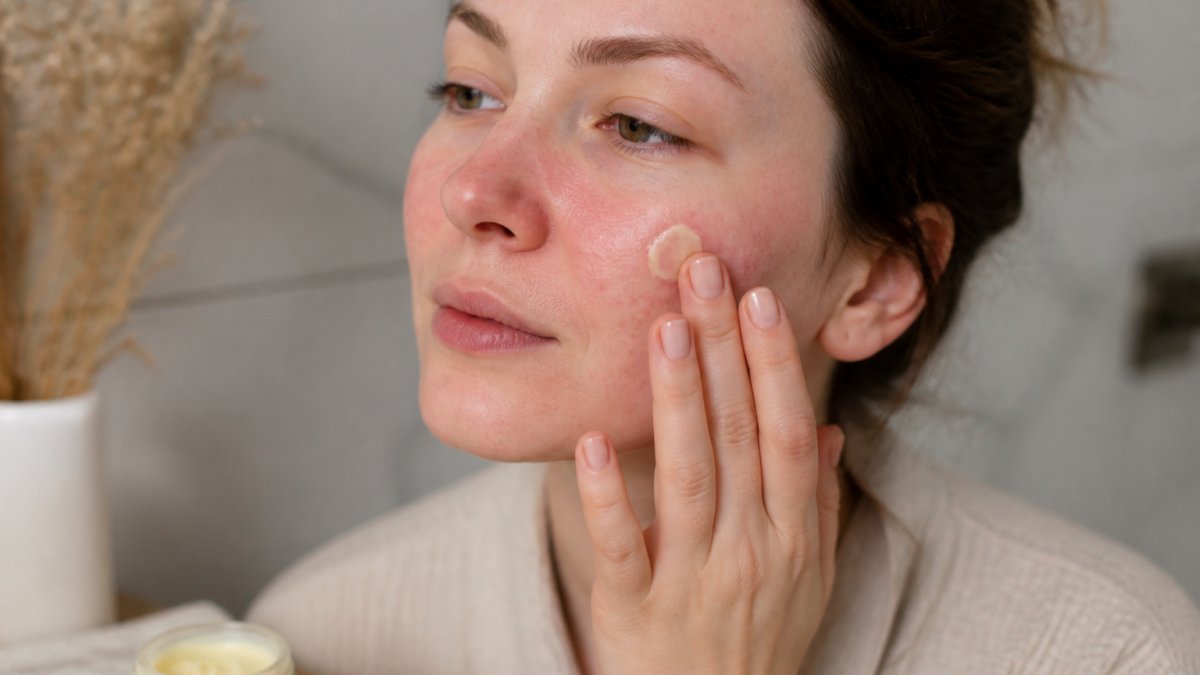
CALM BALM: The Fragrance-Free Rescue Balm
Our top pick for active redness is CALM BALM at £30.00. It contains just seven ingredients: grass-fed tallow, shea butter, calendula, beeswax, chamomile, vitamin E and arrowroot. Nothing else.
The formula is water-free and concentrated, so there are no fillers, no preservatives and no fragrance to react to. Calendula and chamomile are the two ingredients doing the comforting work, and both are well tolerated by most sensitive skin.

Pros: Seven ingredients, zero fragrance, multi-purpose for face, lips, hands and dry patches. Cons: £30.00 for a balm is more than a high-street cream, and the water-free texture feels richer than some people expect.
Pure Whipped Tallow: The Everyday Face and Body Moisturiser
For daily all-over hydration, Pure Whipped Tallow at £35.00 is the more practical choice. The 118ml jar covers face, neck, hands and body, replacing several steps in one.

It blends tallow with shea butter, pomegranate seed oil, apple seed oil, jojoba, beeswax, vitamin E and arrowroot. No added fragrance, and the whipped texture melts in without the greasy film that puts people off heavier balms.
Pros: Large 118ml jar, face and body in one, lightweight finish. Cons: More ingredients than Calm Balm, so more to patch test if you react easily.
Sensitive Skin Starter Set: The Complete Two-Step Routine
If you want the full routine in one purchase, the Sensitive Skin Starter Set bundles both products for £50.00.
The logic is simple. Pure Whipped Tallow handles everyday hydration. Calm Balm sits by the bed for flare-ups, dry patches and lips. Two products, one routine, no ten-step shelf.
CALM BALM | MULTI-PURPOSE TALLOW BALM FOR DRY & SENSITIVE SKIN →
Pros: Best value of the three, covers daily and rescue use. Cons: Only worth it if you will genuinely use both.
How to Patch Test a Face Balm (Step-by-Step)
A patch test is a controlled trial of a new product on a small area of skin before you apply it to your face. It takes four days and it is the single most useful habit for anyone with rosacea-prone skin.
- Choose your site. Inner forearm or behind the ear. Not your face.
- Cleanse and dry. Clean skin gives a clean result.
- Apply a pea-sized amount. Warm it between fingertips first.
- Leave it for 24 hours. Do not wash the area.
- Check for reaction. Look for redness, itching, stinging or swelling.
- Repeat for three more days. Some reactions are delayed.
- Introduce gradually. If clear, start with one application every other day.
Stop immediately if you notice burning, blistering or spreading redness, and speak to a pharmacist or your GP.
Tallow Balm for Rosacea Reviews: What Users Report
Customer feedback on tallow balms for rosacea is consistent in tone but mixed in outcome. The most common reports are of reduced tightness, softer dry patches and less stinging than water-based creams.
The honest caveat: these are personal experiences, not clinical results. Rosacea has several subtypes, and what calms one person's flushing may do nothing for another's papules.
How We Selected and Tested
Most roundups of tallow balms for rosacea either list products with no stated method or rely on brand-supplied claims. We wanted a process a reader could audit, so here is exactly what we did, including the limits of what this kind of testing can show.
Selection criteria (applied before any testing). Every balm had to meet all five of the following to be considered:
- Fragrance-free. No 'parfum', no 'fragrance', and no essential oils listed anywhere on the label.
- Tallow as a primary ingredient. Listed first or second, not as a token addition.
- Short ingredient list. Twelve ingredients or fewer, so the number of variables to patch test stays manageable.
- Water-free or near water-free. Water-based formulas need preservatives; anhydrous balms generally do not.
- Usable on facial skin. Not a body-only product repackaged for the face.
How we tested. Each balm was used on facial skin by two adults with diagnosed rosacea, one with predominantly erythematotelangiectatic symptoms (flushing and persistent redness) and one with papulopustular symptoms (bumps and pustules). Testing ran for four weeks per product, with a minimum seven-day washout between products.
What we recorded. Four things, logged daily:
- Immediate tolerance, stinging, itching or heat within 30 minutes of application.
- Barrier comfort, tightness and flaking on a simple 1-5 scale.
- Visible redness, photographed under the same lighting at the same time of day.
- Breakouts, any new papules or pustules, and whether they clustered where the balm was applied.
Price and value. We recorded the retail price and jar size for each product and calculated cost per millilitre, because a concentrated balm used at a rice-grain dose lasts far longer than the jar size suggests.
Limitations, stated plainly. This is not a clinical trial. Two testers is a small sample, results are self-reported, and rosacea symptoms fluctuate with weather, stress, diet and hormonal cycles, all of which we could not control. A product that suited both testers may not suit you, and one that irritated one tester may be fine for you.
What we did not do. We did not accept brand-supplied before-and-after photos, we did not test products we could not buy at retail price, and we did not include any balm that made treatment claims. A cosmetic balm cannot treat rosacea, and a brand that implies otherwise has already failed the first test.
Conclusion: Choosing the Right Tallow Balm for Your Skin
Rosacea-prone skin is unpredictable, and a balm that suits one person may not suit the next. That uncertainty is exactly why a short, fragrance-free formula and a proper patch test matter more than any marketing claim.
We built Izzy Rose Skin around that principle. Our formulas are small-batch, fragrance-free and water-free, with grass-fed tallow, shea butter and botanical oils doing the work. No fillers, no synthetic fragrance, nothing that does not earn its place.
If you are ready to simplify, start with the Sensitive Skin Starter Set. Two products, one routine, and a calmer, more comfortable complexion.
Frequently Asked Questions
Is beef tallow balm good for rosacea?
There is no clinical evidence proving beef tallow cures or treats rosacea. However, its fatty acid profile is similar to human skin lipids, so it may help support the skin barrier and reduce moisture loss. For rosacea-prone skin, a simple, fragrance-free tallow balm can be a gentle moisturiser. Always patch test first and continue any prescribed treatment.
Can tallow balm make rosacea worse?
It can if the balm contains essential oils, fragrance, or other irritating ingredients. Some people with rosacea also find very occlusive balms trigger flushing or breakouts. Start with a small patch test on your inner forearm or jawline, and stop using it if you notice increased redness, stinging, or bumps. A minimalist, unscented formula is less likely to cause a reaction.
What ingredients should I avoid in a tallow balm for rosacea-prone skin?
Avoid synthetic fragrance, essential oils (especially citrus, peppermint, and eucalyptus), alcohol, and harsh preservatives. These can trigger redness and irritation. Look for short ingredient lists with grass-fed tallow, shea butter, calendula, chamomile, and jojoba oil. Unscented and fragrance-free formulas are safest for reactive skin.
How do you patch test a new face balm?
Apply a small amount to a discreet area like the inner forearm or behind the ear. Wait 24 to 48 hours. If no redness, itching, or swelling appears, test a small patch on your jawline or cheek. Wait another 24 hours. If your skin tolerates it, you can begin using it on your full face. Stop immediately if you notice any adverse reaction.
How often should you use tallow balm on your face?
Start once daily, preferably at night, to see how your skin responds. If it feels comfortable, you can use it morning and night. A little goes a long way; warm a pea-sized amount between your fingertips and press it into damp skin. If you use prescription rosacea treatments, apply them first and wait a few minutes before applying the balm.


