
Last Updated: November 2, 2026
Quick Summary
The best gentle face moisturiser for a rosacea flare-up is fragrance-free, has a short ingredient list and a simple texture. Choose a cream for most skin, and patch test it for three to five days before using it on your face.
- Choose a fragrance-free formula with a short list of recognisable ingredients.
- A cream is the safest starting point if you are unsure of your skin type.
- Apply a pea-sized amount to the inner forearm once a day for three to five days.
- Stop using a product and seek advice if stinging lasts more than a few minutes.
Table of Contents
- Why Your Moisturiser Matters More During a Rosacea Flare-Up
- Understanding Rosacea and Your Skin's Sensitivity
- Building a Rosacea Skincare Routine That Stays Gentle
- Ingredients to Avoid With Rosacea and What to Look for Instead
- Patch Testing Skincare Products Before You Commit
- How to Calm a Rosacea Flare-Up While Using Your Moisturiser
- Choosing Your Starter Set to Test a Calming Routine
- Frequently Asked Questions
Why Your Moisturiser Matters More During a Rosacea Flare-Up
Rosacea flare-ups can leave the face hot, stinging and visibly red within hours.
A gentle face moisturiser can add comfort to skin that feels tight, and softening dryness may make the skin feel less uncomfortable.
Many people find that flare-ups make every product feel harsher than usual. This is why the moisturiser deserves more thought than it gets on a calm day.
Understanding Rosacea and Your Skin's Sensitivity
Rosacea is a long-term skin condition that can cause redness, visible blood vessels and, in some people, bumps across the centre of the face (the NHS).
Sensitivity is the part most people feel day to day. The skin barrier, the outer layer that holds moisture in and keeps irritants out, can become less effective when it is inflamed.
A gentle moisturiser may support comfort, while any medical treatment from your GP or a dermatologist addresses the condition itself.
Common Symptoms and Flare-Up Triggers
Symptoms usually include persistent facial redness, a burning or stinging feeling, and skin that looks or feels rough. Some people also notice swelling, dryness around the cheeks and nose, or small raised spots.
Common triggers include:
- Hot drinks, spicy food and alcohol
- Heat, sun exposure and strenuous exercise
- Cold, wind and sudden temperature changes
Keeping a short diary of flare-ups and possible triggers can help you spot patterns. Bring it to your GP or dermatologist, who can advise on what is really driving your symptoms.
Building a Rosacea Skincare Routine That Stays Gentle
A calm routine for rosacea-prone skin is built on restraint. Most people do best with three steps: a mild, non-foaming cleanser, a gentle face moisturiser and a broad-spectrum mineral sunscreen in the morning. Each step should be fragrance-free and free of physical scrubs. The order matters less than the number of steps: keep it to three and you reduce the chances of one product stinging another into a reaction.
Choosing a texture for your skin
Texture is the decision most people skip, and it is the one that most often decides whether a moisturiser feels calming or suffocating. A simple way to choose:
- Lotion or fluid, best for oily or combination skin, or for daytime under sunscreen. It spreads easily, absorbs quickly and is less likely to pill under makeup. The trade-off is that it may not be rich enough for dry patches on the cheeks.
- Cream, the middle ground for most people. Rich enough to soften tightness, light enough to use twice a day. A cream is usually the safest starting point if you are unsure.
- Balm or ointment, for dry, rough or cracked areas, and for night use on the cheeks and nose. These are the richest textures and can feel heavy on oily skin, so use them as a targeted layer rather than all over.
A common pattern is to use a lotion or cream in the morning and a balm on dry patches at night. If your skin is oily in the T-zone but tight on the cheeks, you can use different textures on different areas, there is no rule that one product must cover the whole face.
How much to use, and how to layer
More product is not more soothing. A pea-sized amount is enough for the whole face for a lotion or cream; a balm needs only a small fingertip amount per area. Applying too much can trap heat during a flare-up and make the face feel hotter.
Layer in this order:
- Cleanse with lukewarm water and a mild, fragrance-free cleanser.
- Pat dry, leaving the skin slightly damp.
- Apply moisturiser while the skin is still damp, this helps hold water in.
- Wait a minute or two before sunscreen, so the layers do not pill.
- Apply mineral sunscreen as the last step in the morning.
In the evening, use the same cleanser and moisturiser and skip active treatments until your skin has been calm for a while.
Pure Whipped Tallow is a rich, velvety face and body moisturiser that can be applied in a small amount, so you can keep the routine short. If you want to test a full set of gentle products together, the general skincare guidance on sensitive skin from the NHS is a useful reference for keeping the routine simple.

Ingredients to Avoid With Rosacea and What to Look for Instead
Not every ingredient affects rosacea-prone skin in the same way, and individual reactions vary.
Ingredients that some people find irritating include:
Sensitive Skin Starter Set | Pure Whipped Tallow + Calm Balm →
- Added fragrance and essential oils, including many "natural" scents
- Alcohol denat and high concentrations of menthol or witch hazel
- Physical scrubs and harsh exfoliating acids used at high strength
When you are reading a label, look for short ingredient lists with recognisable names.
Caveats matter here. A "natural" ingredient can still irritate, and a product that works for one person may not suit another.
The ingredient categories that some people with rosacea-prone skin find irritating are summarised below.
Ingredient type |
Why it is worth avoiding |
Note |
|---|---|---|
Added fragrance and essential oils |
Commonly reported to cause stinging or redness |
Includes many "natural" scents |
Alcohol denat |
Can irritate |
Watch high concentrations |
High-strength menthol or witch hazel |
Can irritate |
Concentration matters |
Physical scrubs |
Can irritate |
Avoid harsh exfoliation |
High-strength exfoliating acids |
Can irritate |
Use only at low strength |
Strong preservatives and sulphates |
Can irritate in some cleansers |
Check cleanser labels |
Patch Testing Skincare Products Before You Commit
Patch testing is the simplest way to reduce the risk of a bad reaction, but most guides stop at 'try it on your arm'. The useful part is knowing what a normal response looks like, how to tell a product reaction from a rosacea flare, and what to do if a moisturiser stings once it is on your face.
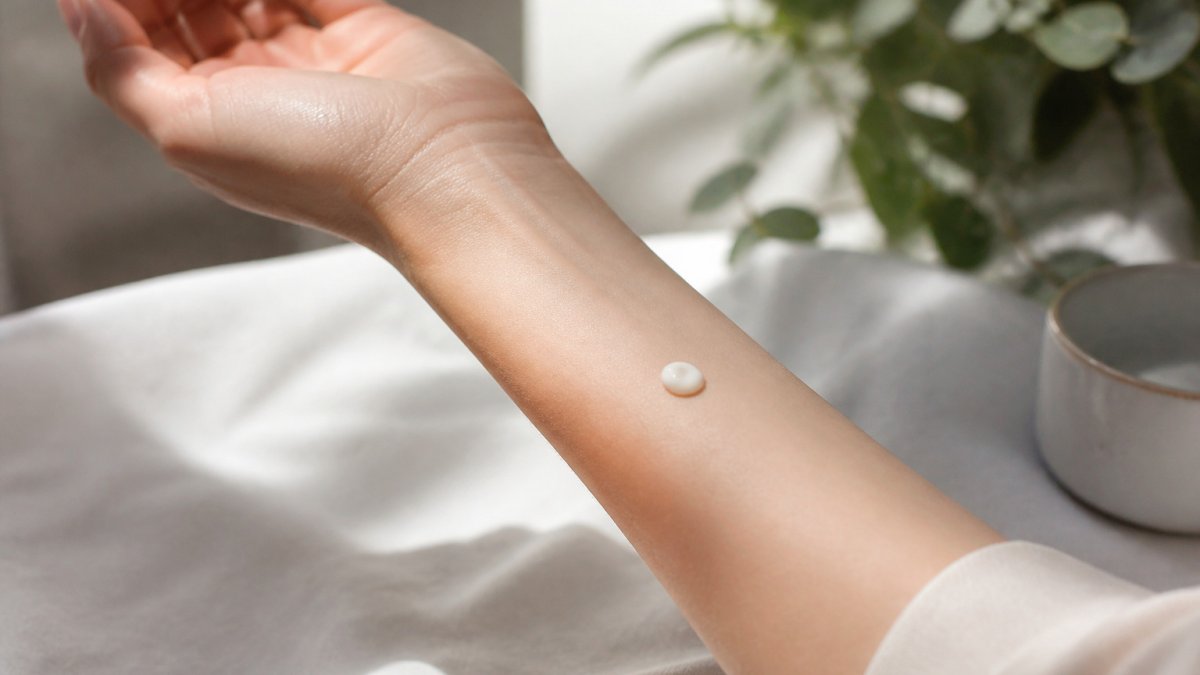
A practical patch-test protocol
- Choose the site. Apply a small amount to the inner forearm or behind the ear, not the face, once a day for three to five days.
- Use the amount you would use on the face. A pea-sized amount is enough; a thin smear will not tell you how the product behaves at full strength.
- Do not layer it under other new products. Keep everything else in your routine unchanged so you can attribute any reaction.
- Record what you feel, not just what you see. Note stinging, itching, tightness or heat within the first hour, and any redness the next morning.
- If there is no stinging, itching or new redness after three to five days, it is usually reasonable to try it on the face, starting with a small area such as one cheek.
Telling a product reaction from a flare
This is the distinction that matters most, and it is the one most product roundups leave out. A product reaction tends to be:
- Localised to where you applied it, rather than spreading across the whole face.
- Immediate or consistent, it stings on contact or each time you use it, rather than coming and going with triggers such as heat or spicy food.
- Accompanied by itching or a rash rather than the burning and flushing typical of rosacea.
A rosacea flare, by contrast, often follows a known trigger, affects the central face in the usual pattern, and settles when the trigger is removed. If you are unsure, stop the new product for a week and see whether the symptoms settle. If they do, the product is the likely cause; if they do not, it is more likely a flare and worth discussing with your GP or dermatologist.
What to do if a moisturiser stings
If a product stings on contact, rinse it off with lukewarm water and stop using it. Do not try to 'push through', stinging that persists is a signal, not a stage to get past.
- A sting that fades within a few minutes and leaves no redness may simply mean the skin is very dry or barrier-compromised. Wait until the skin is calmer before trying again, and consider a richer, simpler texture.
- A sting that lasts more than a few minutes, or any swelling or spreading rash, is a reason to seek advice from your GP or pharmacist.
- Symptoms that do not settle, or that spread quickly, need medical attention rather than another product trial.
Introducing a new moisturiser slowly also helps you see whether it is actually improving comfort. Keep notes on how your skin feels after a week, not just after the first application, the first application tells you about tolerance, the first week tells you about benefit.
How to Calm a Rosacea Flare-Up While Using Your Moisturiser
When a flare-up starts, the priority is to reduce heat and irritation. Use cool or lukewarm water, pat your skin dry rather than rubbing, and stop using any active products until the skin has settled.
Follow these steps when applying your moisturiser during a flare-up:
- Cleanse gently with lukewarm water and a mild, fragrance-free cleanser.
- Pat the skin dry with a soft towel, leaving it slightly damp.
- Warm a very small amount of moisturiser between your fingertips.
- Press or smooth it onto the areas that feel tight or dry, avoiding heavy rubbing.
- Leave the skin alone for a few minutes before applying sunscreen or makeup.
If your skin is stinging or the redness gets worse rather than better, stop using the product and speak to a pharmacist or dermatologist.
Our Calm Balm is a multi-purpose balm designed for dry patches and areas that need extra comfort. Patch test before first use.

Choosing Your Starter Set to Test a Calming Routine
If you are ready to try a calming routine, a starter set lets you test several gentle products together without committing to full-size versions of each one.
The Sensitive Skin Starter Set includes two full-size products, Pure Whipped Tallow and Calm Balm, for £50.00, which saves £15 against buying them separately. Pure Whipped Tallow is a daily face and body moisturiser, and Calm Balm is a multi-purpose balm for dry patches and areas that need extra comfort.

If you want to see the full range of products before choosing, the UK government guidance on cosmetic product labelling explains what information should appear on packaging. Check the ingredient list and patch test each product before you commit.
Frequently Asked Questions
Can a moisturiser make rosacea worse?
It can. Fragranced products, alcohol-based formulas and harsh surfactants are the most common culprits for stinging, burning or added redness. Heavy occlusive creams can also feel uncomfortable on inflamed skin if they trap heat. Look for fragrance-free, water-light or balm textures and introduce any new product slowly. If a moisturiser stings or your redness spreads, stop using it and wash the area with lukewarm water. Persistent symptoms should be checked with a GP or pharmacist.
Should you patch test a new moisturiser if you have rosacea?
Yes. Apply a small amount to the inner forearm or behind the ear once a day for three to five days before using it on your face. Check for stinging, itching or new redness during and after application. Patch testing will not catch every reaction, so introduce the product on the face gradually at first, using it every other day for the first week. Stop straight away if irritation develops.
How often should you moisturise rosacea-prone skin?
Most people with rosacea-prone skin benefit from applying a gentle moisturiser twice a day, morning and night, to support the skin barrier. During a flare-up you may need a thin layer more often, but avoid heavy layering, which can feel hot and uncomfortable. Apply to slightly damp skin and let it settle rather than rubbing it in. Adjust frequency based on how your skin feels rather than a fixed rule.
Is a natural balm suitable for rosacea-prone skin?
Natural does not automatically mean gentle, so check the full ingredient list for botanicals and essential oils that may irritate. Check the full ingredient list for botanicals and essential oils that may irritate, and patch test before use. Izzy Rose Skin's Calm Balm, priced at £30.00, is a multi-purpose balm with seven ingredients including calendula and chamomile, and its listing advises a patch test before first use. The Sensitive Skin Starter Set (£50.00) includes Calm Balm alongside Pure Whipped Tallow.
Choosing a gentle face moisturiser for rosacea flare-ups is less about finding a miracle product and more about keeping the routine calm, simple and well tested. Start with one product, patch test it, and give your skin time to respond. Shop the Starter Set when you are ready to try a gentle routine.


