
Last Updated: November 19, 2026
Quick Summary
To soothe burning face skin, stop the trigger and rinse with cool, plain water for at least 10 minutes. Then hold a cool, wrung-out cloth on the skin for 5 to 10 minutes, pat dry gently, and apply a bland, fragrance-free moisturiser. Avoid oils, vinegar, honey and hot compresses.
- Rinse off the product with cool, plain water for at least 10 minutes.
- Hold a cool, wrung-out cloth on the skin for 5 to 10 minutes, not ice.
- Pat dry with a soft towel and never rub the skin.
- Avoid essential oils, food oils, vinegar, lemon juice and hot compresses.
- Seek urgent help for facial swelling, breathing difficulty or blistering.
Table of Contents
- Irritants, products and environmental triggers
- Step-by-Step: Cool the Skin Right Away
- Natural Remedies That Soothe Burning Facial Skin
- Protecting and Moisturising a Burning Face
- What to Stop Using and How to Reintroduce Products
- When to Seek Help for Facial Burning
- Building a Calm Routine for Sensitive Skin
- Frequently Asked Questions
A burning face can come on suddenly after a new product, a windy walk, or a long day in the heating, and it is rarely random, so knowing how to soothe burning face symptoms starts with understanding the cause. Izzy Rose Skin makes tallow-based skincare for dry, sensitive and reactive skin, and a barrier that has been stripped or overwhelmed is a common reason this sensation appears. Knowing the likely cause shapes what you should do next.
Irritants, products and environmental triggers
Most facial burning comes from something touching skin that cannot cope with it. Fragranced cleansers, strong exfoliating acids, alcohol-heavy toners and hot water are the usual suspects. Cold wind and central heating dry the outer layer, which lets irritants in more easily.
A common mistake is adding a new product and blaming the last one. Change one thing at a time so you can spot the trigger.
Watch for these patterns:
- Burning starts within minutes of applying a product
- Burning follows a change in weather or heating
- Burning gets worse after using makeup or sunscreen
- Your skin feels tight, stings and looks flushed
Skin conditions such as eczema and rosacea
Burning can also be a sign of an underlying condition. Eczema causes dry, itchy, inflamed patches that sting when disturbed. Rosacea causes persistent redness, warmth and flushing across the cheeks, nose and forehead, and often flares with heat, spicy food or alcohol.
If you have a diagnosed condition, your flare-ups may be driven by it rather than a single product. Keep a short diary of when burning occurs and what you used that day. Bring it to your GP or dermatologist, who can confirm what is going on.
Step-by-Step: Cool the Skin Right Away
When your face starts to burn, the first job is to cool it down gently and stop the trigger. Work through these steps in order and keep an eye on how the skin responds.

- Stop the exposure immediately. If a product caused the burning, rinse it off with cool, plain water for at least 10 minutes. If you have been in the sun or near a heater, move to a cool, shaded room. For a chemical splash, rinse continuously for 20 minutes and remove any contaminated clothing or jewellery near the face.
- Apply a cool compress, not ice. Soak a clean cloth in cool water, wring it out and hold it on the skin for 5 to 10 minutes. Repeat every few hours as needed. Ice directly on the skin can cause further damage, so always wrap it or use a cool cloth instead.
- Pat dry, never rub. Use a soft towel and press lightly. Rubbing can break down the already-compromised barrier and increase stinging.
- Apply a bland, fragrance-free moisturiser while the skin is still slightly damp to lock in moisture. Choose a product with a short ingredient list and no added fragrance, essential oils or alcohol.
- Check again after 30 minutes. If the burning is easing, keep the routine simple for the rest of the day. If it is worsening or spreading, treat it as a sign to seek advice.
Watch out: Do not apply butter, oil, toothpaste, vinegar or any food substance to a burning face. These trap heat, introduce bacteria and can make the injury worse.
Facial-specific warning signs that need urgent care
Most mild burning settles with the steps above, but some signs mean you should stop home care and get medical help promptly:
- Swelling of the face, lips, tongue or eyes, especially if it comes on quickly after a product or food.
- Difficulty breathing, throat tightness or wheezing, call 999 immediately, as this can signal a severe allergic reaction.
- Blistering, open sores or skin that looks white or charred after a heat or chemical injury.
- Eye involvement, if a product or chemical has entered the eye, rinse with cool water for 15 minutes and seek urgent care.
- Severe pain that does not ease with cooling, or burning that covers a large area of the face.
- Chemical exposure, if you suspect a strong acid, alkali or unknown substance, rinse for 20 minutes and contact NHS 111 or go to A&E.
A pharmacist can advise on safe over-the-counter options for minor irritation, and a GP or dermatologist can check for eczema, rosacea or allergic contact dermatitis if burning persists.
The steps below summarise how to cool a burning face and what to do at each stage.
| Step | What to do | Time or frequency |
|---|---|---|
| Stop the exposure | Rinse off the product with cool, plain water | At least 10 minutes |
| Chemical splash | Rinse continuously, remove contaminated clothing | 20 minutes |
| Cool compress | Hold a cool, wrung-out cloth on the skin, not ice | 5 to 10 minutes, repeat every few hours |
| Pat dry | Press lightly with a soft towel, never rub | Each time the skin is dried |
| Moisturise | Apply bland, fragrance-free moisturiser while slightly damp | After drying |
| Check progress | Assess whether burning is easing or worsening | After 30 minutes |
Natural Remedies That Soothe Burning Facial Skin
Natural options can calm mild irritation, but they work best as gentle support, not a cure. The evidence for most home remedies is limited, and some popular choices can make burning worse. Here is a practical comparison of the options people ask about most.
Aloe vera
Aloe vera gel is a common ingredient in cooling skincare. Pick a pure gel with few additives, because some aloe products contain alcohol, fragrance or preservatives that can sting. Apply a thin layer to clean, cool skin and leave it on. If stinging starts, wash it off and stop.
Watch out: Do not use aloe vera on blistered, broken or infected skin, and stop if you develop a rash, some people are allergic to compounds in the leaf.
Calendula and chamomile
Calendula and chamomile are botanicals often included in soothing balms. Reactions are possible, especially if you have a ragweed allergy. Choose fragrance-free products and patch test before applying to the face.
Colloidal oatmeal
Colloidal oatmeal is an ingredient often found in fragrance-free creams for dry, irritated skin. It is generally well tolerated, but avoid it if you have a known oat allergy.
Honey
Ordinary kitchen honey is not sterile and can introduce bacteria to irritated skin, so avoid applying it to a burning face.
What to avoid
Some natural ingredients are too risky for facial skin that is already burning:
- Essential oils such as peppermint, tea tree, lavender and eucalyptus, these can cause contact dermatitis and increase stinging.
- Food oils such as coconut, olive or almond oil, these can trap heat, feed bacteria and trigger reactions in people with nut or food allergies.
- Apple cider vinegar, lemon juice or baking soda pastes, these disrupt the skin's acid mantle and can cause chemical irritation.
- Hot or warm compresses, heat increases blood flow and can worsen burning and redness.
A gentle balm as support
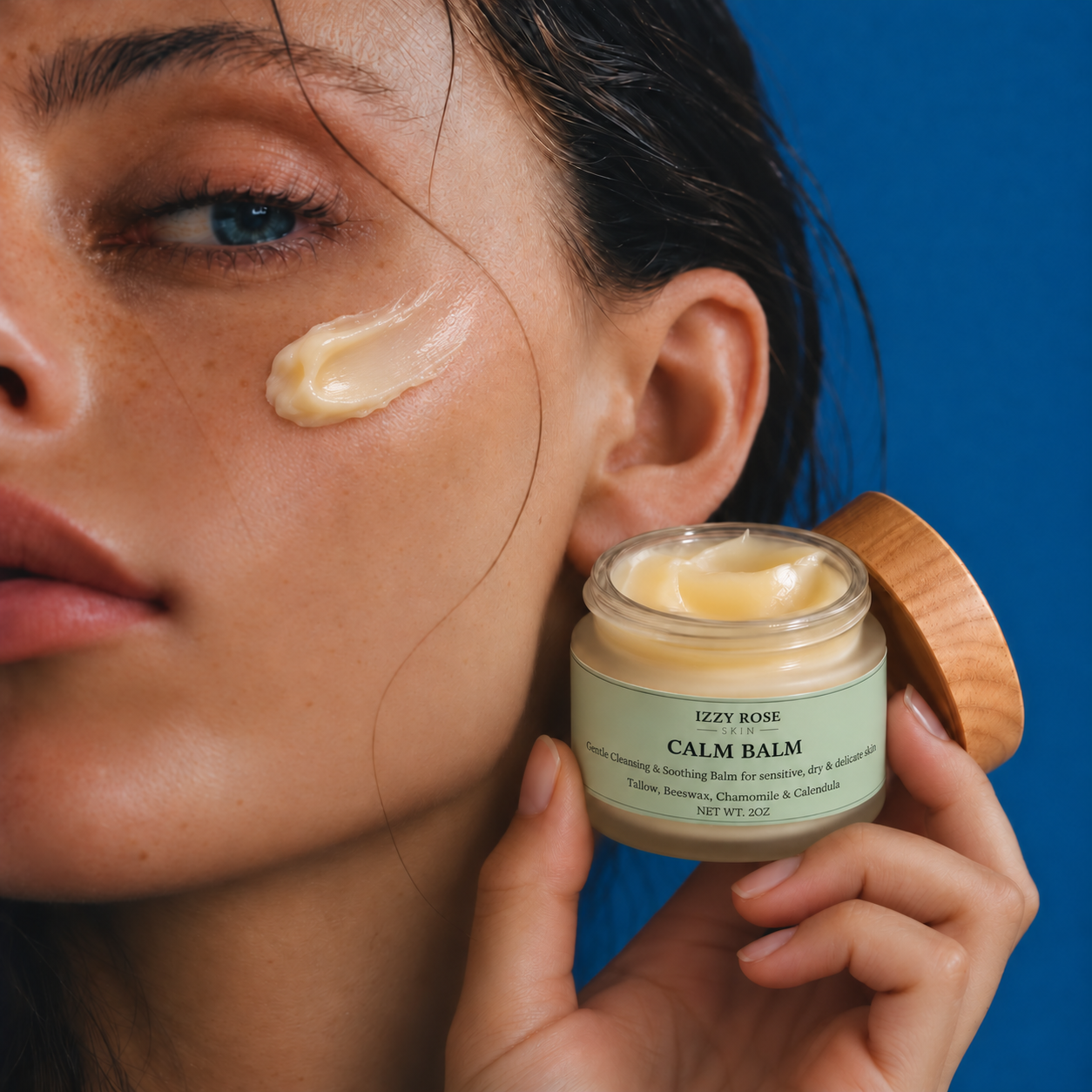
Balms with rich ingredients can provide a protective layer of moisture. Our Calm Balm combines grass-fed tallow, shea butter, calendula, beeswax, chamomile, vitamin E and arrowroot. It is designed for dry, sensitive-feeling skin. You can find the concentrated tallow balm with calendula and chamomile for dry, sensitive skin.
If burning persists beyond a few days or keeps returning, stop all remedies and speak to a pharmacist or GP, who can check for an underlying cause such as eczema, rosacea or allergic contact dermatitis.
Protecting and Moisturising a Burning Face
Once the worst of the heat has settled, the skin barrier needs support.
Our Pure Whipped Tallow is a rich daily moisturiser for face and body, made for skin that feels dry or uncomfortable. Warm a small amount between your fingertips and massage it onto clean skin.

Sun protection matters too. Wind, heat and UV exposure can keep the skin reactive, so wear a gentle, mineral-based sunscreen when you go outside and try to avoid strong sun at midday.
What to Stop Using and How to Reintroduce Products
While your face is burning, pause anything that might be contributing. This usually includes:

- Exfoliating acids, scrubs and retinoids
- Fragranced toners, cleansers and essential oils
- Alcohol-based products
- Hot water and harsh cleansing cloths
Keep only a gentle cleanser, a moisturiser and sunscreen for at least one to two weeks, or until the skin feels calm.
Reintroduce products one at a time. Start with the least active item, use it for three to five days, and watch for stinging or redness. If nothing happens, move on to the next. If burning returns, stop that product and note it down. Many people find a product they stopped was the trigger all along.
When to Seek Help for Facial Burning
Most mild burning settles within a few days. Some signs mean you should see a doctor or pharmacist promptly:
- Burning that lasts more than a few days or keeps coming back
- Blisters, open sores, pus, or skin that looks infected
- Swelling of the face, lips or eyes
- Difficulty breathing or throat tightness, which needs emergency help straight away
- Severe pain, or burning after a chemical, heat or sun injury
- Skin that worsens despite stopping products
A pharmacist can advise on safe over-the-counter options, and a GP or dermatologist can check for eczema, rosacea or allergic contact dermatitis.
Building a Calm Routine for Sensitive Skin
A simple routine is the most reliable way to keep reactive skin calm. For a fuller barrier-first approach, read how to calm reactive facial skin fast. Aim for four steps: a gentle, fragrance-free cleanser, a light moisturiser, a protective balm where needed, and daily sunscreen.
If you want a starting point, the Sensitive Skin Starter Set (£50) pairs our Pure Whipped Tallow with Calm Balm, two full-size products designed for dry, sensitive-feeling skin. Used together, they give you moisture for the face and body plus extra comfort for dry patches. Patch test any new routine before using it all over.

Shop the Starter Set
Get started with Izzy Rose Skin and build a gentle routine that keeps your skin calmer, softer and more comfortable day to day.
Frequently Asked Questions
What can I put on my face to soothe a burning sensation?
A cool, damp cloth or a clean cool compress is the safest first step, held gently against the skin for about 10 to 15 minutes. After that, a fragrance-free moisturiser or a balm with calming ingredients such as calendula or chamomile can help comfort the skin. Avoid rubbing, scrubbing or applying strong actives until the sensation settles. If the skin is blistering, broken or the burning is severe, seek medical advice rather than treating it at home.
Does a cool compress help calm burning facial skin?
Yes. Cooling the skin with cool, not icy, water can ease heat and discomfort within minutes. Use a clean cloth soaked in cool water, press it gently on the affected area and replace it when it warms up. Avoid ice directly on the skin, as it can cause further damage. Cooling is a short-term measure, so follow it with a gentle moisturiser and by removing any product that may have triggered the reaction.
Should I moisturise if my face feels like it is burning?
Usually yes, if the skin is intact and not weeping. A simple, fragrance-free moisturiser helps restore the skin barrier and reduces the dryness that can make burning feel worse. Apply a small amount with clean fingertips, and patch test first if you are unsure. Stop using any product that stings or worsens the sensation, and avoid heavily scented or active-ingredient formulas until your skin has settled.
When should I seek medical advice for a burning sensation on my face?
Seek medical advice promptly if the burning follows a chemical exposure or a hot-liquid splash, if blisters, open wounds or swelling develop, or if your eyes, lips or breathing are affected. Also see a GP or pharmacist if the burning lasts more than a few days, keeps returning, or spreads despite gentle care. In an emergency, call 999 or go to A&E.


