
Table of Contents
- Start With Your Rosacea Subtype and Symptoms
- How to Calm a Rosacea Flare-Up Naturally
- Natural Remedies That May Soothe Rosacea: An Evidence and Safety Guide
- Build a Low-Irritation Rosacea Skincare Routine
- Choosing a Gentle Moisturiser for Rosacea
- Rosacea Triggers to Avoid and How to Track Yours
- Ingredients and Practices to Avoid on Rosacea-Prone Skin
- When to See a GP or Dermatologist
- Frequently Asked Questions
Last Updated: October 19, 2026
Start With Your Rosacea Subtype and Symptoms
Rosacea is a chronic inflammatory skin condition that causes facial redness, flushing and visible blood vessels. Knowing your subtype changes how you soothe rosacea, because each one reacts to different triggers and needs different care.
Rosacea is manageable, not curable. Anyone promising a permanent fix is selling something.
The four main subtypes look like this:
- Erythematotelangiectatic: persistent redness and flushing
- Papulopustular: redness with bumps that look like acne
- Phymatous: thickened, bumpy skin, usually on the nose
Many people have more than one at once. Ocular rosacea in particular gets missed, so mention eye symptoms to your GP.
The Four Subtypes and What Each One Needs
Flushing-type rosacea responds best to trigger control and barrier repair. Bumpy rosacea often needs prescription creams or gels from a GP. Thickened skin needs medical review, not home remedies. Ocular rosacea needs a doctor, full stop.
How to Calm a Rosacea Flare-Up Naturally
The fastest way to calm a rosacea flare-up is to cool the skin, strip out everything irritating, and stop touching your face. Most flares settle within hours to a few days once you remove the trigger.
Here is the order we would follow:
- Move out of heat, sun or a stuffy room
- Apply a cool, damp cloth for 5-10 minutes
- Skip all active ingredients until the redness settles
- Use only a plain, fragrance-free moisturiser
- Keep the area cool and leave it alone
Cool Compress and Other Fast Calming Steps
A cool compress is the single most reliable home step. Use a clean cloth wrung out in cool water, not ice. Ice can damage a fragile skin barrier and make redness worse.
Other quick wins:
- Sip cold water and cool down from the inside
- Sleep with the room cool and a fan on low
- Swap hot showers for lukewarm ones
Natural Remedies That May Soothe Rosacea: An Evidence and Safety Guide
Some natural ingredients may calm the feeling of irritation, but the evidence for most is limited and often based on small studies.
That distinction matters. The NHS guidance on rosacea is clear that rosacea is a long-term condition managed with trigger avoidance, gentle skincare and, where needed, prescription treatment.
We grade remedies on two things: how likely they are to irritate, and how strong the evidence is.
| Remedy | Evidence | Irritation Risk | Best For |
|---|---|---|---|
| Cool compress | Strong practical support | Very low | Fast flare relief |
| Aloe vera | Limited | Low if pure | Cooling, hydration |
| Green tea | Limited | Low | Calming redness |
| Chamomile | Traditional use | Low | Soothing comfort |
| Raw honey | Limited | Medium (allergy risk) | Antibacterial support |
| Colloidal oatmeal | Good for itch | Very low | Dryness, itching |
| Calendula | Traditional use | Low | Delicate, dry skin |
Aloe Vera, Green Tea and Chamomile
Aloe vera is a cooling gel that can ease the heat of a flare. Choose a pure gel with no added fragrance or alcohol.
Green tea contains antioxidants that may help calm redness. A cooled, brewed tea bag pressed gently on the skin is a cheap way to try it.
Chamomile is a traditional calming botanical. It appears in our own Calm Balm for exactly this reason: it helps calm the feeling of sensitive, uncomfortable skin.

Raw Honey, Colloidal Oatmeal and Calendula
Raw honey has a long history in wound care and may support skin comfort.
Colloidal oatmeal is one of the better-supported home ingredients for itching and dryness. It is widely used in eczema care and suits reactive skin.
Calendula is a gentle botanical traditionally used on delicate, dry skin. You will find it in our Calm Balm, alongside grass-fed tallow and shea butter.
Build a Low-Irritation Rosacea Skincare Routine
A rosacea skincare routine should be short: a gentle cleanser, one moisturiser and daily sun protection. Fewer products means fewer chances for irritation.
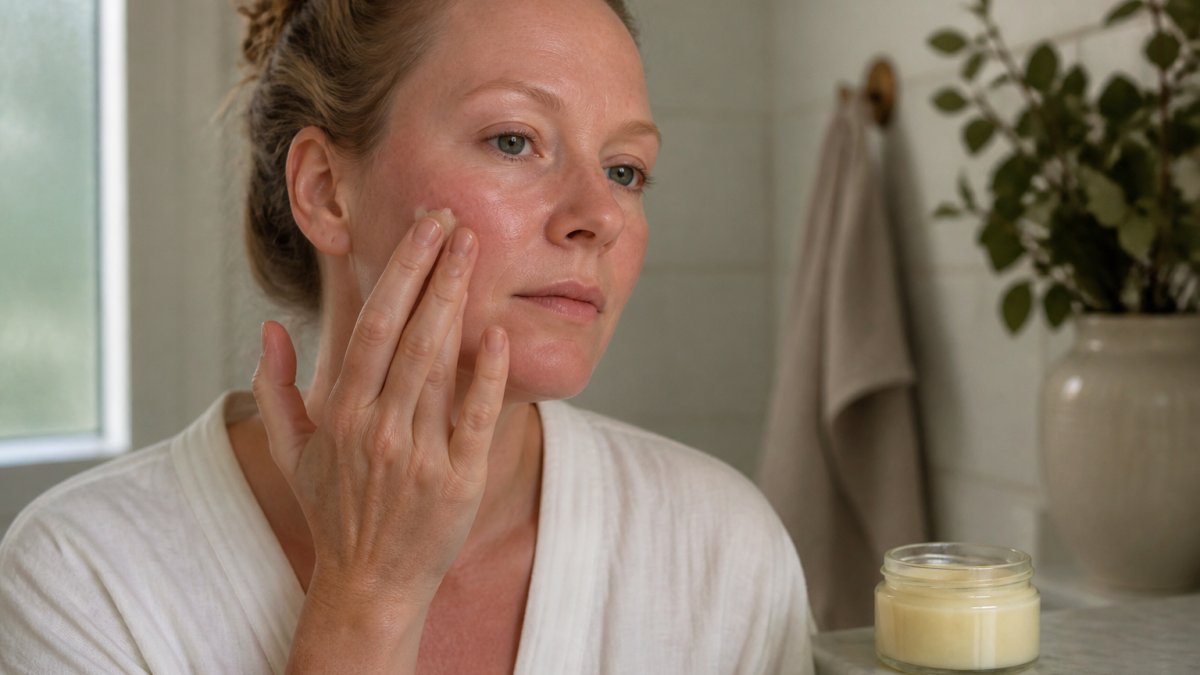
What most guides miss is that adding products is the problem, not the solution. Strip back to three steps and give your skin barrier time to recover.
Step-by-Step: Cleanse, Moisturise, Protect
- Cleanse with lukewarm water and a non-soap cleanser. Use fingertips only, no cloths or brushes. Pat dry.
- Moisturise while skin is still slightly damp. Press, do not rub.
- Protect every morning with a broad-spectrum sunscreen. Sun is one of the most common triggers.
Repeat morning and evening. That is the whole routine.
Choosing a Gentle Moisturiser for Rosacea
The best gentle moisturiser for rosacea is fragrance-free, free of drying alcohols, and rich enough to support the skin barrier. Simple formulas beat long ingredient lists every time.
Sensitive Skin Starter Set | Pure Whipped Tallow + Calm Balm →
Look for:
- Fragrance-free and essential-oil-free formulas
- Barrier-supporting ingredients such as fatty acids and shea butter
- Short ingredient lists you can actually read
Our Sensitive Skin Starter Set pairs Pure Whipped Tallow with Calm Balm for £50. Both are fragrance-free, made in small batches, and designed for dry, sensitive-feeling skin. The Calm Balm uses seven purposeful ingredients, including calendula and chamomile, to nourish dry patches without a heavy, greasy feel.

Rosacea Triggers to Avoid and How to Track Yours
Common rosacea triggers include sun, heat, alcohol, spicy foods and stress, but your personal triggers may be different. The only reliable way to know is to track your own patterns rather than following a blanket list of foods to cut out.
A common mistake is to eliminate whole food groups on the basis of a general trigger list. That approach is hard to sustain and can mask the real culprit. A structured diary is more useful and less restrictive.
A Four-Week Symptom-and-Trigger Diary Method
Run the diary for four weeks. That is long enough for patterns to surface without becoming a chore.
- Score your skin daily. Rate flushing, redness, bumps and any eye symptoms from 0 (none) to 3 (severe) at the same time each evening.
- Log the likely inputs. Note sun exposure, hot drinks, alcohol, spicy food, stress, exercise, new skincare and room temperature.
- Note timing, not just presence. A flush that appears within 30 minutes of a hot drink points to a different trigger than one that builds over two days of poor sleep.
- Change one variable at a time. If you cut out three things at once, you cannot tell which one helped.
- Review weekly. Look for the two or three inputs that most often precede a higher score.
A simple notebook or a spreadsheet works as well as an app. The value is in the consistency, not the tool.
What the Patterns Usually Show
Most people find that one or two triggers dominate and the rest are minor. A common pattern is that sun and heat drive flushing, while stress and poor sleep drive bumps and lingering redness over days. Once you know your dominant trigger, you can target it rather than avoiding everything on the list.
| Trigger | Common Reaction | What to Try |
|---|---|---|
| Sun exposure | Redness within hours | Daily broad-spectrum SPF, hat, shade at peak hours |
| Hot drinks | Flushing | Let drinks cool; try iced versions |
| Alcohol | Flushing, heat | Reduce or avoid; note which types affect you most |
| Spicy food | Heat, redness | Test in small amounts rather than cutting out entirely |
| Stress | Flares over days | Sleep, breathing breaks, gentle movement |
| Harsh skincare | Stinging, redness | Fragrance-free only; patch test new products |
| Exercise | Flushing | Cool room, cool down gradually, blot sweat |
When to Stop Tracking
Once you have identified your two or three main triggers, stop the daily diary and keep a lighter weekly note. The aim is a workable routine, not permanent self-monitoring.
Ingredients and Practices to Avoid on Rosacea-Prone Skin
Certain ingredients reliably make rosacea worse. Avoiding them does more for your skin than any remedy you add.
Skip these:
- Fragrance and essential oils
- Alcohol-based toners and astringents
- Physical scrubs and exfoliating acids
When to See a GP or Dermatologist
Book a GP appointment if symptoms persist despite gentle care, if you develop bumps, eye irritation or thickened skin, or if flushing affects your daily life. Prescription creams and gels are effective and widely available.
The NHS overview of rosacea treatment sets out when medical help is appropriate. A GP can also rule out other conditions that look similar, including acne, seborrhoeic dermatitis and lupus.
Red Flags That Need Prompt Review
Some symptoms should not wait for a routine appointment. Contact a GP promptly if you have:
- Eye pain, sensitivity to light, a gritty or burning sensation, or blurred vision
- Swelling around the eye or a stye that keeps returning
- A rapid worsening of redness, swelling or warmth on one side of the face
Eye symptoms deserve particular attention. Ocular rosacea can affect the cornea if left untreated, and facial balms or oils should never be used near the eyes.
What Each Subtype Usually Needs Clinically
- Flushing-type: trigger control and barrier repair first; a GP may consider prescription topical treatments if flushing is persistent.
- Bumpy type: often needs prescription creams or gels; over-the-counter remedies rarely clear papules and pustules.
- Thickened skin: needs medical review rather than home remedies; treatment options are clinician-led.
What to Bring to the Appointment
A short summary helps the GP help you. Bring:
- Your four-week trigger diary, if you kept one
- A list of every product you use, including cleansers and sunscreens
- Photos of flares, especially if your skin is calmer on the day
What to Expect
A GP will usually assess your symptoms, review your skincare and triggers, and either start treatment or refer you to a dermatologist. Prescription options are common and well established; ask about side effects and how long to trial a treatment before judging whether it works.
For broader skin-barrier advice, the National Eczema Society guidance is a useful, practical resource.
Frequently Asked Questions
How can I calm a rosacea flare-up naturally?
Cool the skin first: a cool, damp cloth for five to ten minutes and a switch to lukewarm water when washing. Move to a fragrance-free moisturiser while the skin is still slightly damp, and skip anything with alcohol, acids or scrubs for a few days. Avoid hot drinks, alcohol and spicy food during the flare, and keep the room cool. If redness, stinging or swelling does not settle within a week, or if you develop pus-filled bumps, speak to a GP. Natural steps can soothe rosacea discomfort, but they do not cure the condition.
What should I avoid putting on a rosacea-prone face?
Skip anything with alcohol denat, menthol, eucalyptus, strong fragrances, physical scrubs and high-strength acids such as glycolic or salicylic acid in leave-on products. Avoid waterproof cosmetics and heavy occlusives that trap heat, and be cautious with essential oils, which are a common irritant on reactive skin. Patch test anything new on your inner forearm for two to three days before using it on your face. A plain, short ingredient list is usually safer than a long one.
Can a cool compress help soothe rosacea?
Yes, a cool compress is one of the simplest ways to settle flushing. Use a clean cloth dipped in cool, not icy, water and hold it against the flushed area for five to ten minutes. Never press ice directly onto the skin, as the extreme cold can damage the skin barrier and trigger more redness. Repeat two or three times a day during a flare. Pair it with a gentle moisturiser afterwards to reduce dryness and scaling.
When should I speak to a GP about rosacea?
Book an appointment if you have not had a diagnosis, if symptoms are worsening despite gentle care, or if you develop thickened skin, eye irritation, or papules and pustules. A GP can confirm rosacea, rule out other conditions such as acne or lupus, and prescribe topical treatments or oral antibiotics where needed. Natural remedies and a gentle rosacea skincare routine work best alongside medical care, not instead of it, particularly for moderate to severe symptoms.
Rosacea flares are frustrating, but a short, gentle routine does most of the work. If your skin is dry, reactive and tired of being stripped, our Sensitive Skin Starter Set combines Pure Whipped Tallow and Calm Balm for £50. Both are fragrance-free, made in small batches, and built to calm stressed, dry skin. Shop the Starter Set and give your barrier the break it needs.


