
Last Updated: October 25, 2026
Quick Summary
Tallow for hair is a superb conditioner and a poor hair-growth treatment: it softens dry hair, calms a tight scalp and reduces breakage from friction, but it cannot regrow hair lost to genetics, hormones or illness. Use it as a pre-wash treatment once or twice a week, leaving it on for at least 30 minutes before shampooing twice.
- No strong clinical trial shows that tallow grows hair; its evidence is about moisture, conditioning and scalp comfort.
- Warm a small amount, work it through scalp and lengths, leave at least 30 minutes, then shampoo twice.
- For shoulder-length hair, a pea-sized amount suits the scalp and another small amount the ends.
- Apply tallow to dry or barely damp hair, since soaking-wet hair dilutes it and spreads it unevenly.
- Stop use and seek advice for rapid shedding, bald patches, a widening parting or a receding hairline.
Table of Contents
- What Tallow Can and Cannot Do for Hair Growth
- Fatty Acids and Vitamins A, D, E and K in Tallow
- How to Use Tallow on Hair: A Step-by-Step Routine
- Tallow for Dry Scalp: Nourishment and Moisture Retention
- Making a Tallow Hair Mask for Brittle or Damaged Hair
- Choosing Tallow Hair Products: Sourcing, Safety and Sensitive Scalps
- How Tallow Compares With Established Hair and Scalp Treatments
- Start Your Scalp Ritual With the Izzy Rose Skin Skin Starter Set
- Frequently Asked Questions
What Tallow Can and Cannot Do for Hair Growth
Tallow for hair is rendered beef fat, rich in fatty acids and fat-soluble vitamins, and it has become one of the most talked-about ingredients in natural hair care.
The honest answer is that tallow is a superb conditioner and a poor hair-growth treatment.
Below, we explain what tallow genuinely does, how to use it well, and when thinning hair needs a clinician rather than a conditioner.
The Evidence Behind Tallow and Hair Growth
No strong clinical trial shows that tallow grows hair. The evidence for tallow is about moisture, conditioning and scalp comfort, not follicle stimulation. Anyone promising regrowth from a jar is overselling.
What tallow does well is well understood: it coats the hair shaft, slows water loss and leaves hair feeling softer. That reduces the snapping and friction that make thin hair look thinner.
When Thinning Needs a Clinician, Not a Conditioner
Sudden shedding, patchy loss, a widening parting or a receding hairline all deserve a professional opinion. These patterns often point to hormonal changes, thyroid issues, iron deficiency or genetics, and none of them respond to a topical fat.
Watch out: treating genuine hair loss with oil alone can delay diagnosis of a treatable condition. If you notice rapid shedding or bald patches, speak to your GP or a pharmacist before building a routine around any product.
Fatty Acids and Vitamins A, D, E and K in Tallow
Tallow's nutritional profile is the reason it conditions so well. It contains oleic and stearic fatty acids, plus small amounts of vitamins A, D, E and K.
Here is what each contributes to hair care:
- Fatty acids: help seal the hair surface and slow moisture loss
- Vitamin A: supports normal skin cell turnover
- Vitamin D and K: present in small amounts, with limited direct hair benefit
What most guides miss is the dosage reality. The vitamin content in tallow is modest, so the conditioning effect comes from the fats, not the vitamins. Treat the vitamin list as a bonus, not the headline.
How to Use Tallow on Hair: A Step-by-Step Routine
Using tallow on hair works best as a pre-wash treatment, not a leave-in styling product. Warm a small amount, work it through the scalp and lengths, leave it for at least 30 minutes, then shampoo thoroughly.
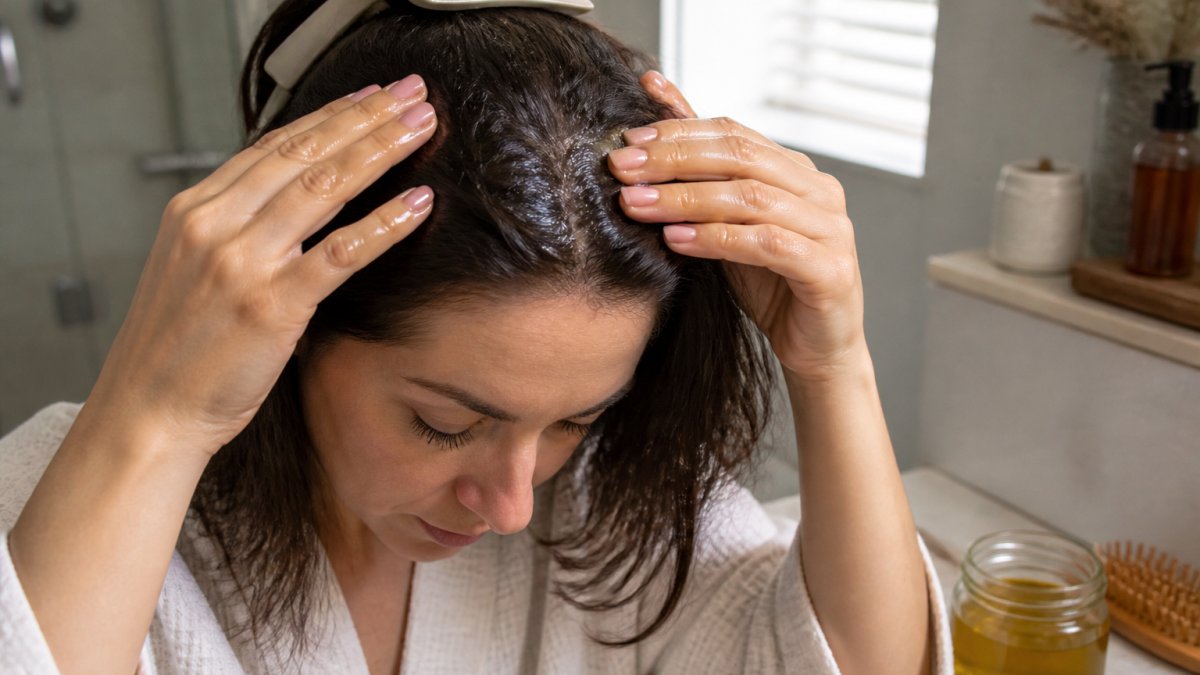
Follow this sequence:
- Warm the tallow between your palms until it melts to an oil
- Section your hair and apply along the scalp in thin lines
- Massage gently for two to three minutes to boost circulation
- Smooth the remainder through mid-lengths and ends
- Leave for 30 minutes minimum, or overnight with a towel on your pillow
- Shampoo twice to remove the residue fully
- Rinse cool to help close the hair cuticle
If you want a ready-made botanical option, our THRIVE hair and scalp oil blends jojoba, argan and castor oils with vitamin E for the same pre-wash ritual.

Application Amounts, Frequency and Removal
Less is genuinely more with tallow. For shoulder-length hair, a pea-sized amount is enough for the scalp, with another small amount for the ends.
Use it once or twice a week. More frequent use risks buildup, especially on fine or oily scalps.
Watch out: applying tallow to soaking-wet hair dilutes it and spreads it unevenly. Apply to dry or barely damp hair for the most even coverage.
Tallow for Dry Scalp: Nourishment and Moisture Retention
A dry, tight, flaky scalp responds well to tallow because the fat mimics the scalp's own oils.
The effect is comfort, not cure. If your flaking is itchy and inflamed, that may be a form of dermatitis that needs a pharmacist's advice rather than a richer oil.
For a simple two-step routine, our dry skin and scalp care duo pairs a calming balm for dry-feeling areas with a botanical scalp oil for pre-wash massage.

Making a Tallow Hair Mask for Brittle or Damaged Hair
A tallow hair mask is simply a heavier version of the pre-wash treatment, and it suits brittle, heat-styled or colour-treated hair.
Why it helps: damaged hair has a rougher surface that snags and snaps. The fats in the mask smooth that surface and reduce friction during brushing.
- For fine hair: use tallow alone, keep it off the roots
- For thick or coarse hair: add a little jojoba or argan oil
- For coloured hair: keep the mask on mid-lengths and ends only
Do not add essential oils at high concentrations if your scalp is reactive. Patch test first.
Choosing Tallow Hair Products: Sourcing, Safety and Sensitive Scalps
Quality and hygiene matter more with tallow than with most ingredients, because it is a fat that can turn rancid and because some scalps react to what is added alongside it. This section covers sourcing, safety and, the part most guides skip, how to match tallow to your scalp condition and hair texture.
Sourcing: what to look for on the label
Look for small-batch products that state their sourcing clearly, and check the ingredient list for added fragrance if your scalp reacts easily. A short ingredient list is easier to assess than a long one. If you want to understand sourcing in more depth, our guide on ordering small batch tallow online covers what to look for.
Safety: patch test and stop rules
- Patch test on the inner arm 24 hours before first use, and again on a small patch behind the ear if you plan to apply it to the scalp
- Avoid if you have a known allergy to beef or dairy-derived ingredients
- Store away from direct heat so the fats do not turn rancid
Matching tallow to your scalp condition
Not every scalp suits a rich fat. Use this as a starting point, not a diagnosis.
| Scalp or hair type | Suitability | Practical adjustment |
|---|---|---|
| Dry, tight scalp | Good | Pre-wash treatment once or twice a week |
| Oily or acne-prone scalp | Use sparingly | Keep off the roots; apply to lengths only |
| Sensitive or reactive scalp | Patch test first | Fragrance-free tallow; short contact time |
| Flaky with itch and redness | Caution | May be dermatitis, seek pharmacist advice before use |
| Fine hair | Use less | Pea-sized amount, mid-lengths and ends only |
| Coarse or curly hair | Good | Can take a heavier application and longer leave-in |
Application, frequency and removal by hair length
Less is genuinely more with tallow. Use this as a rough guide and adjust to how your hair feels after washing.
- Shoulder-length hair: a pea-sized amount for the scalp, another small amount for the ends
- Long hair (past the shoulder blades): double the ends amount, keep the scalp amount the same
- Fine hair: half the standard amount, and keep it off the roots
Use it once or twice a week. More frequent use risks buildup, especially on fine or oily scalps. To remove it, shampoo twice with a gentle formula and focus on the scalp, where residue collects. If hair still feels coated after two washes, reduce the amount next time rather than washing a third time.
When to stop and seek advice
Stop use and speak to your GP or a pharmacist if you notice rapid shedding, bald patches, a widening parting or a receding hairline. These patterns often point to hormonal changes, thyroid issues, iron deficiency or genetics, and none of them respond to a topical fat.
For a ready-made botanical option that follows the same pre-wash logic, our THRIVE hair and scalp oil blends jojoba, argan and castor oils with vitamin E.
How Tallow Compares With Established Hair and Scalp Treatments
Tallow sits in a different category from medicated treatments. It is a conditioner and scalp comfort product, while established options target specific causes of hair loss and scalp conditions.
| Treatment type | What it targets | Best for | Limitations |
|---|---|---|---|
| Tallow and botanical oils | Dryness, friction, breakage | Dry, brittle or coarse hair | No effect on genetic hair loss |
| Medicated scalp treatments | Fungal or inflammatory scalp conditions | Flaking with itch and redness | Needs pharmacist or GP advice |
| Proven hair-loss medicines | Hormonal and genetic thinning | Pattern hair loss | Requires clinical assessment |
| Gentle shampoos | Buildup and irritation | Sensitive scalps | Limited conditioning |
The practical takeaway: use tallow for softness, shine and scalp comfort, and keep clinical concerns with clinicians. If you are weighing a botanical option against other treatments, our THRIVE scalp and hair oil is formulated for exactly that conditioning role.
Start Your Scalp Ritual With the Izzy Rose Skin Skin Starter Set
Building a routine is easier when the products are designed to work together. Our Skin & Scalp Ritual Set brings together three full-size favourites for £62.50, saving £27.50 against buying them separately.

Massage THRIVE into the scalp before washing, apply Pure Whipped Tallow to clean skin, and use Calm Balm on dry-feeling areas as needed. Patch test each product first.
If you are building out your routine further, the hair and face oil duo extends tallow-based care from scalp to skin.
Frequently Asked Questions
Does tallow help hair grow faster?
There is no strong clinical evidence that tallow speeds up hair growth. Hair grows roughly 1cm per month on average, and that rate is driven by genetics, hormones and overall health. What tallow can do is condition the scalp and hair strands, reduce breakage from dryness and friction, and support moisture retention. Healthier-looking, less brittle hair often reads as fuller, but that is a cosmetic improvement rather than a proven growth effect. Treat tallow as scalp care, not a growth treatment.
Can tallow clog hair follicles or make your scalp greasy?
It can if you use too much or leave it on too long. Tallow is rich and occlusive, so a thin layer massaged into the scalp before washing is usually enough. Apply it 30 minutes to a few hours before shampooing, then wash thoroughly with a gentle shampoo, paying attention to the roots. If your scalp feels coated or weighed down afterwards, reduce the amount next time. People with very oily scalps should patch test and use it sparingly on the lengths rather than the roots.
Is tallow suitable for dry or sensitive scalps?
Many people with dry-feeling scalps find tallow comfortable because it conditions and helps slow moisture loss. Sensitivity is individual, though. Always patch test on a small area of skin 24 to 48 hours before applying it to your scalp, and stop if you notice itching, redness or irritation. If you have a diagnosed scalp condition such as seborrhoeic dermatitis or psoriasis, speak to a pharmacist or GP before adding a new product, since occlusive oils are not right for every scalp type.
How often should you use tallow on your hair?
Once or twice a week suits most people as a pre-wash scalp treatment. Dry or brittle lengths may benefit from a small amount on the ends more often, while fine hair usually needs less. Start with one weekly application, see how your scalp and hair respond over two to three weeks, then adjust. If your hair feels heavy or your scalp looks greasy between washes, space applications further apart. Consistency matters more than frequency.
The hardest part is not finding a rich oil. It is knowing what it can and cannot do, then sticking to a routine that suits your scalp. Shop the Izzy Rose Skin Starter Set to get concentrated tallow skincare and botanical haircare in one small-batch ritual, and start with a patch test before your first wash.


