
Table of Contents
- Is Tallow Skincare Backed by Science? Separating Fact From Hype
- What the Evidence Actually Says About Beef Tallow for Skin
- Can Tallow Clog Pores? What the Comedogenic Evidence Shows
- Tallow Skincare Side Effects: What to Watch For
- Beef Tallow vs Moisturiser: How They Differ in Practice
- Common Myths About Tallow Skincare, Debunked
- Frequently Asked Questions
Last Updated: October 19, 2026
Is Tallow Skincare Backed by Science? Separating Fact From Hype
The honest answer is that tallow skincare sits on a thinner scientific footing than the internet suggests. There is no large body of published clinical trials on beef tallow as a cosmetic ingredient, so claims that it is "dermatologist-approved" or "clinically proven" deserve scepticism (pubmed.ncbi.nlm.nih.gov). What we do know is biochemical: tallow is rich in fatty acids that closely resemble the lipids in the skin's own barrier.
At Izzy Rose Skin, we make concentrated tallow skincare and we are not going to pretend the evidence is stronger than it is. Below, we separate what is genuinely supported from what is marketing, and explain where tallow fits in a sensible routine.
The core issue most guides get wrong: tallow's case rests on composition and barrier function, not on trial data.
What the Evidence Actually Says About Beef Tallow for Skin
Beef tallow for skin is best understood as an occlusive, lipid-rich ingredient rather than an active treatment. Its main fatty acid profile includes oleic, palmitic and stearic acids, which is why it feels rich and seals in moisture.
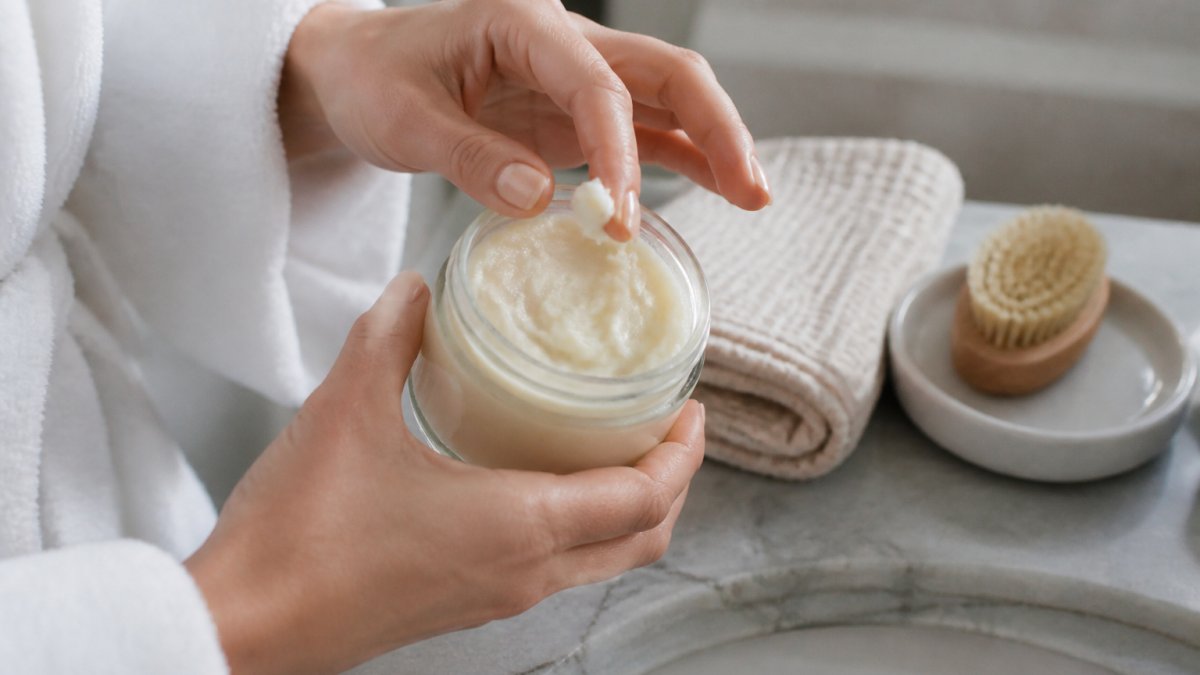
That composition is the real argument. Occlusive ingredients reduce water loss from the skin surface, and the British Association of Dermatologists' patient information on emollients explains how emollients and occlusives support dry and eczema-prone skin by trapping moisture. Tallow behaves in that family.
What the evidence does not show is tallow treating a medical condition. There is no strong trial base for that, so treat any such claim as unsupported.
Can Tallow Clog Pores? What the Comedogenic Evidence Shows
Whether tallow clogs pores is not settled by a single rating, and anyone quoting a precise comedogenic score for tallow is overstating the certainty. The more useful question is how a formula is built.
Two things matter. First, tallow contains oleic acid, which some acne-prone skin tolerates less well than linoleic-rich oils. Second, finished products often include butters and waxes that add richness. If you are prone to congestion, patch test on the jawline for a week before committing to the full face.
Tallow Skincare Side Effects: What to Watch For
Tallow skincare side effects are mostly the ordinary ones attached to any rich emollient: occasional breakouts, mild irritation, or sensitivity to a botanical added to the formula. Tallow itself is generally well tolerated, but "natural" is not the same as "hypoallergenic".
Watch for three things:
- Congestion in oily or acne-prone zones, usually from over-application
- Reactions to added ingredients such as essential oils or specific botanicals
- Patch-test reactions, which is why we tell everyone to test first
If you have a diagnosed skin condition, run any new product past your GP or a pharmacist before use.
Beef Tallow vs Moisturiser: How They Differ in Practice
Beef tallow versus a conventional moisturiser comes down to water content. Most moisturisers are emulsions built around water, humectants and a modest oil phase. Tallow formulas are typically anhydrous, meaning no water at all, so they condition and seal rather than deliver hydration from water-based ingredients.
Pure Whipped Tallow | Face & Body Moisturiser →
| Feature | Beef tallow balm | Conventional moisturiser |
|---|---|---|
| Base | Water-free, lipid-rich | Water-based emulsion |
| Main job | Occlude and soften | Hydrate and lightly condition |
| Texture | Rich, balm-like | Lighter, spreads easily |
| Best for | Very dry, tight-feeling skin | Normal to combination skin |
| Layering | Best on slightly damp skin | Often used alone |
In practice, many people with dry skin layer a water-based product first, then seal with tallow. Our Pure Whipped Tallow at £35.00 is built for exactly that role: a concentrated, water-free moisturiser for face and body, with grass-fed tallow, shea butter and beeswax doing the barrier work.

Common Myths About Tallow Skincare, Debunked
The myths around tallow skincare are worth naming plainly.
"It's clinically proven." It is not. The case rests on composition and how occlusives work, not on published trials.
"It works for every skin type." Rich, water-free formulas suit dry and reactive skin best. Oily skin may find them too heavy.
"It replaces prescribed treatment." It does not. Emollients support the skin barrier; they do not treat medical conditions.
"All tallow is the same." Source and formulation vary widely, which is why the rest of the formula matters as much as the tallow.
That is the throughline: tallow is a sound emollient ingredient, not a miracle. If your skin is dry and easily overwhelmed, our Sensitive Skin Starter Set at £50.00 pairs the whipped tallow with Calm Balm, a water-free balm with calendula and chamomile for stubborn dry patches.

Frequently Asked Questions
Is tallow skincare backed by scientific research?
There is no large-scale clinical trial on tallow skincare specifically. The evidence base is indirect: tallow is rich in fatty acids such as oleic and stearic acid, which are known to support the skin barrier, and it contains fat-soluble vitamins. However, most claims come from laboratory analysis of its composition and anecdotal reports rather than controlled studies on finished products. Treat tallow as a promising traditional ingredient with plausible mechanisms, not a proven treatment. Patch testing remains essential, especially for sensitive or reactive skin.
Can tallow clog pores or cause acne?
Tallow is generally considered low on the comedogenic scale, but it is not universally non-comedogenic. Its fatty acid profile includes oleic acid, which can be problematic for some acne-prone individuals. The risk depends on your skin type and the full formula: a whipped tallow product with arrowroot and jojoba may feel lighter than a solid balm. If you are prone to congestion, start with a small amount on one area and monitor for changes over two weeks before applying it more widely.
What are the possible tallow skincare side effects?
Reported side effects are usually mild and include redness, itching, or breakouts in people who react to the fatty acids or other ingredients in the formula. Because tallow is water-free and rich, it can feel heavy on oily or combination skin. Allergies to beef fat are rare but possible. Always patch test on your inner arm for 24 hours before using a new tallow product on your face, and stop if irritation persists.
How does beef tallow compare with a conventional moisturiser?
A conventional moisturiser typically combines water, humectants like glycerin, and occlusives to hydrate and seal in moisture. Tallow is almost entirely lipid-based, so it works mainly as an occlusive and emollient, with no added water. This makes it especially suited to dry, tight-feeling skin that needs barrier support, but less ideal for oily skin. Conventional creams offer more versatility in texture and added active ingredients, while tallow offers a simpler, concentrated fat-based formula.
Dry, tight-feeling skin needs moisture that stays put, and that is where formulation matters more than trend. Izzy Rose Skin makes concentrated tallow skincare in small batches, with water-free formulas, grass-fed tallow and botanical ingredients chosen for dry, sensitive-feeling skin. Start with the Starter Set and give your barrier the support it has been missing.


