
Table of Contents
- Is Tallow Skincare Safe for Eczema? The Short Answer
- Beef Tallow for Eczema: What It Can and Cannot Do
- Tallow Skincare Side Effects: Irritation, Allergy and Flare-Ups
- How to Patch Test Skincare for Sensitive Skin
- Ingredients to Avoid in Eczema Skincare
- How to Apply Tallow Balm to Eczema-Prone Skin
- When to Stop Using Tallow and See a Doctor
- Conclusion: A Balanced Approach to Tallow Skincare
- Frequently Asked Questions
Last Updated: October 12, 2026
Is Tallow Skincare Safe for Eczema? The Short Answer
Tallow skincare is generally safe for eczema-prone skin when it is plain, unscented and used as a moisturiser, but it is not a treatment for eczema itself. At Izzy Rose Skin, we make concentrated tallow balms for dry, sensitive and reactive skin, and we are honest about what they can and cannot do.
If your skin is dry, reactive and easily overwhelmed, a simple tallow balm is worth trying. If your eczema is active and raw, patch test first and speak to your GP or pharmacist.

Beef Tallow for Eczema: What It Can and Cannot Do
Beef tallow is rendered animal fat, and in skincare it works as an emollient and occlusive: it softens dry skin and slows water loss from the surface.
How Tallow Supports the Skin Barrier
The skin barrier is the outer layer that holds moisture in and keeps irritants out. When damaged, skin feels tight, rough and sore.
Tallow is rich in fatty acids that sit close to the lipids skin already makes. Applied to damp skin, it forms a soft seal that traps water.
- Softens rough, tight skin
- Helps reduce water loss through the surface
- Sits well on very dry, thickened patches
- Works best layered over damp skin
Why Tallow Is Not an Eczema Treatment
Eczema, also called atopic dermatitis, is an inflammatory condition involving the immune system, genetics and a weakened skin barrier. A moisturiser can calm the surface, but it cannot switch off the inflammation underneath.
NHS eczema overview and treatment guidance is clear that eczema care centres on emollients, topical treatments and trigger management. Tallow can sit alongside that routine as an emollient. It should never replace prescribed treatment.
Tallow Skincare Side Effects: Irritation, Allergy and Flare-Ups
Tallow skincare side effects are uncommon but real, and they fall into two categories that need different responses.
Irritation (irritant contact dermatitis) is a direct reaction to something on the skin.
Allergy (allergic contact dermatitis) is an immune response that can take 24 to 72 hours to appear, often spreads beyond where you applied the product, and may get worse with each exposure.
Ingredients Most Likely to Cause a Reaction
Plain rendered tallow is well tolerated by most people. Trouble usually comes from what is blended with it:
- Fragrance and parfum, the single most common cause of allergic contact dermatitis in cosmetics
- Essential oils, including lavender, citrus, tea tree, peppermint and eucalyptus; natural does not mean non-reactive
- Lanolin, a useful emollient, but a recognised allergen for a minority of people
- Beeswax and propolis, generally gentle, but occasional allergens
- Botanical extracts, calendula, chamomile and similar can rarely sensitise sensitive skin
- Preservatives, less relevant in water-free balms, but present in tallow creams and lotions
What to Watch For
- Stinging or burning within minutes of applying
- New redness or heat in the treated area
- Itching that gets worse, not better
- Small bumps, hives or swelling
- Skin that weeps or crusts after use
- A rash that spreads beyond the area you applied the product to
If a product stings, stop using it. Do not push through hoping skin will adjust, with contact allergy, repeated exposure makes the reaction stronger, not weaker.
When Not to Apply a Balm at All
Eczema-prone skin is not one single state, and a balm that helps dry, intact skin can actively harm skin that is already broken.
Do not apply tallow balm (or any occlusive balm) to:
- Skin that is weeping, oozing or crusting
- Cracked skin that is bleeding or raw
- Skin that is hot, swollen or painful to touch
- Areas with yellow or honey-coloured crusting, which can suggest bacterial infection
- Skin with visible pus, spreading redness or a foul smell
An occlusive layer over infected or weeping skin can trap moisture and bacteria and make the problem worse. These situations need assessment and treatment, not a moisturiser.
Greasiness, Folliculitis and Clogged Pores
Occlusives are not for everyone. Some find tallow balm too heavy, particularly on the face, chest and back, where it can contribute to clogged pores or folliculitis (inflamed hair follicles). If you are prone to either, start on a small area of body skin and use a thin layer.
Individual Variability Is Real
Tolerance varies enormously. Two people with similar-looking eczema can respond completely differently to the same balm: some find tallow deeply soothing, others find it too rich or react to a botanical blended into it. You cannot predict this from the ingredient list alone, which is why patch testing matters.
How to Patch Test Skincare for Sensitive Skin
Patch testing is the single most useful step before putting any new balm on eczema-prone skin. It takes a few days and costs nothing.
Here is how we would do it:
- Choose a small area of clear skin, such as the inner forearm.
- Wash and dry the area, then apply a pea-sized amount.
- Leave it uncovered for 24 hours without washing it off.
- Check for redness, itching, stinging or bumps.
- If skin is calm, repeat on a small patch near the affected area.
- Wait another 24 hours before using it more widely.
- Stop at any point if you notice a reaction.
If you have a known allergy or very reactive skin, ask a pharmacist about testing on a smaller scale first. Patch testing does not catch every reaction, but it catches most.
Ingredients to Avoid in Eczema Skincare
The shorter the ingredient list, the easier it is to spot what upset your skin, a core rule for sensitive-skin care. But how a product is made and how honestly it is labelled matter just as much.
Ingredients to Avoid
| Ingredient | Why It Causes Trouble | What to Use Instead |
|---|---|---|
| Fragrance or parfum | Common irritant and allergen; can hide dozens of compounds | Unscented, fragrance-free formulas |
| Essential oils | Natural but still reactive; lavender, citrus and tea tree are frequent offenders | Plain balms with no added scent |
| Alcohol (denatured, isopropyl) | Strips and dries the barrier | Water-free, oil-based balms |
| Exfoliating acids (AHA, BHA, retinol) | Irritate broken or thin skin | Gentle emollients only |
| Harsh preservatives (where present) | Can sting active eczema | Minimal-ingredient, water-free products |
| 'Natural' botanical blends | More ingredients, more chances of a reaction | Single-ingredient or very short lists |
A Product-Quality Checklist for Tallow Balms
Before you buy, work through these questions.
**1.
Pure Whipped Tallow | Face + Body Moisturiser ★★★★★ Bestseller →
**2.
3. How was the tallow processed? Rendered fat can be produced in different ways.
**4.
5. Is there a batch number and a use-by or best-before date? Small-batch products should be traceable.
6. How is it packaged? Jars require fingers to dip in, which introduces bacteria.
7. Does the brand make eczema claims it cannot support? A balm is a cosmetic, not a medicine.
How to Read a Label Quickly
- Scan for 'fragrance', 'parfum', 'essential oil', 'citrus', 'limonene', 'linalool', common fragrance allergens
- Check the first five ingredients; they make up the bulk of the product
- Look for a full INCI list, not just 'key ingredients'
- Check for a batch number and date
- Be wary of very long lists on a product marketed for sensitive skin
A good rule: if you cannot pronounce half the list, or it runs past ten items, keep looking. But also apply the reverse test, a short list from a brand that hides its processing and batch details is not automatically safer.
How to Apply Tallow Balm to Eczema-Prone Skin
Apply tallow balm to damp skin straight after bathing, while the surface still holds water. This locks in moisture far better than applying to dry skin.
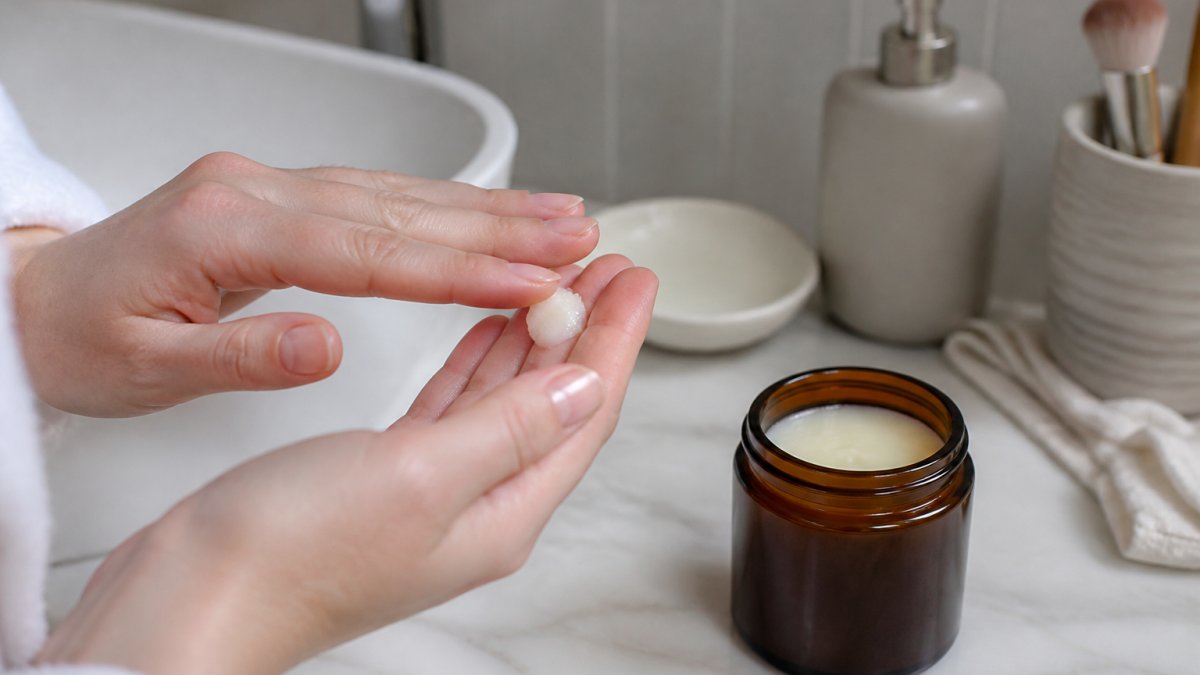
Warm a small amount between your fingertips first. It melts on contact and spreads further than you expect.
Adults: Daily Use and Damp Skin Application
For adults, the routine is simple:
- Pat skin dry after a lukewarm shower, leaving it slightly damp
- Warm a pea-sized amount between your fingers
- Press and smooth it over the area, do not rub hard
- Reapply to dry patches through the day as needed
- Use a separate pot for broken skin to avoid contamination
Our Pure Whipped Tallow face and body moisturiser is built for exactly this: a concentrated, water-free balm for face and body with no added fragrance. For stubborn dry patches, Calm Balm uses just seven ingredients, including calendula and chamomile to comfort delicate skin.

Babies and Children: Extra Caution
Children's skin is thinner and absorbs more, so treat it gently: plain, unscented products only, patch tested on a small area first.
Never apply a balm to broken, cracked or weeping skin in a child without medical advice. If eczema is widespread or the skin looks infected, see a GP before starting anything new.
When to Stop Using Tallow and See a Doctor
Stop using tallow and seek medical advice if skin is weeping, crusting, hot to touch or painful, signs of infection or a flare that needs treatment, not moisturiser.
Other reasons to stop and get help:
- The area is spreading or getting worse after a few days
- You develop a fever or feel unwell
- Blisters, oozing or yellow crusting appear
- Sleep is being disturbed by itching
- A child's eczema is affected
A GP can confirm whether the problem is eczema, an infection or a contact reaction. That matters, because each needs a different response.
Conclusion: A Balanced Approach to Tallow Skincare
Tallow is a genuinely good emollient for dry, reactive skin, and a poor substitute for eczema treatment. Use it as part of a routine, not the whole routine, and always patch test first.
At Izzy Rose Skin, we make small-batch, water-free tallow balms with no added fragrance and no unnecessary fillers.
If your skin is dry, tight and easily overwhelmed, start simple. Shop the Starter Set and give your barrier the kind of care it can actually use.
Frequently Asked Questions
Is tallow skincare safe for eczema?
Tallow skincare is generally well tolerated by eczema-prone skin because grass-fed tallow is rich in skin-compatible fatty acids and is often formulated without fragrance. However, it is a moisturiser, not a treatment. It can support the skin barrier and reduce dryness, but it will not resolve active inflammation on its own. Always patch test first, especially if your skin is cracked, weeping, or infected.
Can tallow balm make eczema worse?
Yes, in some cases. Tallow skincare side effects can include irritation, allergic reaction, or worsening of existing eczema, particularly if the product contains essential oils, fragrance, or other additives. If you notice increased redness, itching, or swelling after applying tallow, stop using it and speak to a pharmacist or GP. A patch test on a small area of clear skin can help you identify a reaction before applying it more widely.
How do you patch test tallow balm on sensitive skin?
Apply a small amount of tallow balm to a 2cm patch of clear skin on your inner forearm. Cover it with a plaster if you tend to scratch. Leave it for 24 to 48 hours without washing the area. If you see redness, itching, or swelling, do not use the product. If there is no reaction, repeat the test on a small area near your eczema-prone skin before applying it more widely.
What ingredients should you avoid in tallow skincare if you have eczema?
Look for tallow balms that are unscented and free from essential oils, fragrance, alcohol, and harsh preservatives. Ingredients to avoid in eczema skincare include limonene, linalool, citronellol, and other fragrance allergens, as well as coconut oil if you are sensitive to it. A short ingredient list with minimal fillers is usually better for reactive skin. Izzy Rose Skin's Calm Balm, for example, contains just seven purposeful ingredients and no added fragrance.


