
Last Updated: November 3, 2026
Quick Summary
An itchy scalp is often caused by dryness, dandruff or irritation, and a gentle itchy scalp balm can help by softening the skin and sealing in moisture. Choose a fragrance-free balm with a moisturising base, patch test first, and see a pharmacist or GP if the itching persists.
- Dryness, dandruff and contact irritation are the most common causes of an itchy scalp.
- Look for emollients like shea butter, jojoba or argan, plus a protective wax such as beeswax.
- Choose fragrance-free balms, since fragrance and essential oils are the most common cause of reactions.
- Patch test any new product on the inner elbow or behind the ear for 24 to 48 hours.
- Stop using any product that stings or spreads redness, and speak to a pharmacist if symptoms persist.
Table of Contents
- Why Your Scalp Itches: Dryness, Dandruff and Other Common Causes
- Natural Remedies for Itchy Scalp: What Works and What Is Unproven
- Choosing an Itchy Scalp Balm: Ingredients to Look For
- Patch Testing and Diluting Essential Oils Safely
- How to Apply a Natural Balm to Your Scalp, Step by Step
- How to Soothe a Dry Scalp Between Treatments
- Itchy Scalp and Dandruff Remedies: When Balms Are Not Enough
- Booking Your Next Step: Your Scalp-Care Routine With Thrive
- Frequently Asked Questions
An itchy scalp is one of the most common complaints people bring to the chemist, and it is rarely a sign of anything dramatic. Most of the time, the skin on the head is simply dry, irritated or reacting to something it has come into contact with. Knowing the likely cause makes it far easier to decide whether a natural balm is the right next step, and what kind of balm to choose. This guide is designed to help you understand how to approach an itchy scalp with natural balms, what they can and cannot do, and when to seek advice.
The most common triggers are fairly ordinary. Cold weather, central heating, frequent washing with harsh products, and heavy styling all strip the skin of its natural oils. A scalp that feels tight, looks flaky or itches after washing is often simply dehydrated.
Why Your Scalp Itches: Dryness, Dandruff and Other Common Causes
Dryness is usually the first thing to check. The scalp produces its own oils, but those oils can be washed away too often, leaving the skin fragile and prone to itch. Some people find that switching to a gentler shampoo helps.
Dandruff is a separate issue that causes flakes, redness and itching. It is linked to a common yeast-like organism that lives on most scalps, and it tends to flare when the skin's barrier is weakened. Dandruff and dryness can look alike, so the flakes' size, colour and whether they are oily or dry are useful clues.
- Dry scalp: fine, white flakes that look powdery
- Dandruff: larger, oily flakes, often with redness
- Contact irritation: itching after using a new product
- Scalp conditions: patches, soreness or hair loss that does not settle
Natural Remedies for Itchy Scalp: What Works and What Is Unproven
Plenty of natural remedies are shared online, and they vary widely in how well they are supported. Some have a reasonable basis because they help moisturise or calm the skin. Others have little more than anecdotal backing.
Remedies with a sensible rationale include:
- Gentle, fragrance-free shampoos used less often
- Occlusive balms that seal in moisture after washing
- Soothing botanicals such as calendula and chamomile
- Lukewarm rather than hot water when rinsing
Remedies with weaker evidence include:
- Undiluted essential oils applied straight to the scalp
- Strong vinegar or lemon rinses that can sting broken skin
- Claims that a single ingredient cures dandruff
We would be cautious about any remedy that promises a quick cure. Natural does not automatically mean gentle, and irritation can make itching worse.
Choosing an Itchy Scalp Balm: Ingredients to Look For
A balm for an itchy scalp is not simply a moisturiser in a jar.
Emollients soften and smooth the skin and help it hold water. Common examples include shea butter, jojoba oil, argan oil, castor oil and tallow.
Waxes and butters give a balm its structure and form a breathable protective layer that slows water loss. Beeswax is a common choice in balms. Arrowroot powder is sometimes added to reduce greasiness and improve spreadability.
Soothing botanicals such as calendula, chamomile and oat extract are included for their calming reputation rather than as active treatments.
Fragrance and essential oils are the most common cause of reactions in natural scalp care.
Use this checklist when comparing balms:
- A moisturising base of shea butter, jojoba, argan or similar plant oils
- A protective wax such as beeswax, in a position that suggests a meaningful amount
- Soothing botanicals like calendula or chamomile, ideally high in the list
- Minimal or no added fragrance, and no undisclosed "parfum"
- Clear labelling of essential oils and their dilution
- A texture suited to your intended use: richer for pre-wash, lighter for leave-on
Thrive | Hair & Scalp Oil is a pre-wash hair and scalp oil combining jojoba, argan and castor oils with vitamin E and aromatic botanicals, massaged into the scalp before shampooing. If you prefer something you can use on dry patches as well, Calm Balm | Multi-Purpose Balm for Dry Skin is a water-free balm made with grass-fed tallow, shea butter, calendula, beeswax, chamomile, vitamin E and arrowroot.

Watch out: a balm that feels luxurious and thick on the fingers may be the hardest to rinse from fine hair, so match the wax content to how you plan to use it.
The table below sums up the three functional ingredient groups in a balm and what each one does.
| Ingredient group | Examples named in the article | What it does |
|---|---|---|
| Emollients | Shea butter, jojoba oil, argan oil, castor oil, tallow | Softens skin and helps it hold water |
| Waxes and butters | Beeswax, arrowroot powder | Forms a breathable protective layer and gives structure |
| Soothing botanicals | Calendula, chamomile, oat extract | Included for calming reputation, not as active treatments |
| Fragrance and essential oils | Essential oils, "parfum" | Most common cause of reactions in natural scalp care |
Patch Testing and Diluting Essential Oils Safely
Essential oils are the most common source of reactions in natural scalp care. Even oils with a gentle reputation can irritate sensitive skin, so patch testing matters.
Here is a simple method:
- Dilute any essential oil in a carrier oil first.
- Apply a small amount to the inner elbow or behind the ear.
- Wait 24 to 48 hours and check for redness, itching or swelling.
- Only move to the scalp if the area stays calm.
A common mistake is assuming that because a product is natural, it cannot cause a reaction. Stop using anything that stings, burns or spreads redness, and speak to a pharmacist if symptoms persist.
How to Apply a Natural Balm to Your Scalp, Step by Step
Application matters as much as the product, and balms behave differently from oils or serums. A balm is solid at room temperature, so it needs warming to spread; too much and it sits on the hair, too little and it drags on the scalp. The aim is a thin, even film on the skin rather than a coating on the hair.
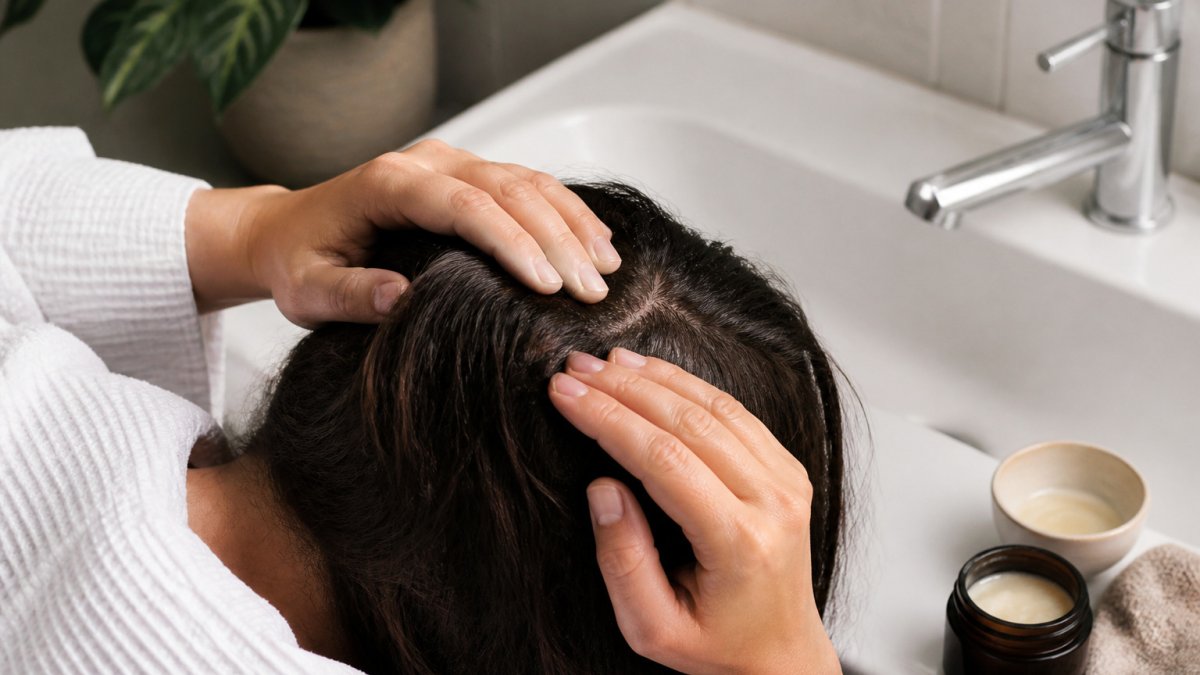
- Start with dry or slightly damp hair and part it in sections about 2 cm wide so you can see the scalp.
- Scrape up a small amount with the back of a fingernail: roughly a pea-sized amount per section is enough for most balms, and you can add more if the skin still feels dry.
- Warm it between clean fingertips until it turns glossy, then press and massage it into the scalp using the pads of your fingers, not your nails.
- Work section by section, concentrating on dry or flaky areas and keeping the product off the lengths unless your hair is also dry.
- Smooth a little through the ends if needed, then leave it on for the contact time that suits the product.
- Wash it out thoroughly with a gentle shampoo, shampooing twice if the scalp still feels greasy.
How Long to Leave It On and How to Wash It Out
Contact time depends on the product and your hair type. A light balm can be left for 20 to 30 minutes before shampooing; a richer, wax-based balm may need 30 to 60 minutes to soften dry patches. Overnight use is only appropriate for products specifically designed for it, because heavy balms can transfer to pillows and become difficult to remove in the morning.
Removal is where most balm routines go wrong. Rinse with lukewarm rather than hot water, apply shampoo directly to the scalp and massage before adding water, then rinse and repeat if needed. A final cool rinse helps close the cuticle and reduce any lingering greasy feel. If residue remains after two shampoos, you used too much product rather than too little shampoo.
Watch out: applying balm to a scalp that is already oily, or layering it over styling products, can trap debris and make itching worse rather than better.
How to Soothe a Dry Scalp Between Treatments
Between balm treatments, the goal is to keep the scalp comfortable and avoid triggering more itch. Wash less often if your shampoo leaves a tight feeling, and choose a gentle formula. Keep showers warm rather than hot, and pat the scalp dry instead of rubbing it.
Some people find it helpful to use a light leave-on conditioner or a few drops of scalp oil on dry days. Keep an eye on how your skin responds, and reduce heat styling where possible, as it can add to dryness.
Itchy Scalp and Dandruff Remedies: When Balms Are Not Enough
A balm can help with dryness and mild irritation, but it will not fix every cause of itching. If your scalp is sore, bleeding, crusted, or shedding hair in patches, you should see a GP or pharmacist. Persistent dandruff may need a medicated shampoo containing ingredients such as ketoconazole or selenium sulphide, which a pharmacist can help you choose.
Balms may support comfort alongside, but do not replace, prescribed treatment. If you have a diagnosed skin condition, check with your clinician before adding new products to your routine. You can also explore our Hair + Scalp Health page to learn more about how we approach scalp care, or browse our Bundles/ Gift Sets to see routines that combine products.
If your skin is reactive more broadly, our guide on how to choose an eczema moisturiser explains what to look for in a barrier-supporting product.
Booking Your Next Step: Your Scalp-Care Routine With Thrive
Building a routine is easier when you start small and stay consistent. Begin with a gentle wash, a patch test for any new product, and a weekly pre-wash oil treatment. Once you know how your scalp responds, you can adjust frequency to suit your needs.
If you would like to try a pre-wash scalp oil, the Thrive | Hair & Scalp Oil is a good place to start, and the Calm Balm | Multi-Purpose Balm for Dry Skin can be used on dry areas that need extra comfort.

Frequently Asked Questions
What natural balm is good for an itchy scalp?
Balms with moisturising ingredients are a common starting point, such as balms containing grass-fed tallow, calendula and chamomile, or a lightweight botanical oil. Look for simple ingredient lists and avoid added fragrance if your scalp reacts easily. Patch test on a small area first, and stop using any product that stings, burns or worsens redness. Balms are supportive care for dryness rather than a treatment for medical conditions, so persistent itching should be checked by a GP or pharmacist.
How do you apply balm to an itchy scalp?
Part the hair in sections and warm a small amount of balm between clean fingertips. Massage gently into the scalp rather than the lengths, using light pressure to avoid scratching. Leave it on for the time suggested on the product label, then shampoo thoroughly with lukewarm water and rinse well to remove residue. Using too much balm can cause buildup, so start with a small quantity and increase only if your scalp feels comfortable.
Can natural oils or balms make an itchy scalp worse?
Yes, they can. Essential oils in particular can irritate sensitive skin if they are not diluted properly, and some people react to ingredients that are natural but still allergenic, such as certain plant extracts. Always patch test for at least 24 hours before using a new product on your scalp. If redness, swelling, burning or a rash develops, wash the product off and speak to a pharmacist.
When should you see a pharmacist or GP about an itchy scalp?
See a pharmacist for advice on over-the-counter treatments if itching is mild and lasts a few weeks. Book a GP appointment if the itch is severe, keeps coming back, spreads, causes hair loss, bleeding, crusting or pain, or does not improve with gentle care. Scalp psoriasis and other inflammatory conditions usually need a proper diagnosis, and a GP can refer you to a dermatologist if needed.


