
Table of Contents
- Why Minimalist Skincare Suits Reactive Skin
- Building a Simple Skincare Routine for Sensitive Skin
- How to Calm Reactive Skin Without Overloading It
- How to Patch Test Skincare and Introduce New Products Gradually
- Skincare Ingredients to Avoid for Sensitive Skin
- Tracking Triggers and Handling a Flare-Up
- Choosing Products for a Minimalist Reactive Skin Routine
- Frequently Asked Questions
Last Updated: October 21, 2026
Why Minimalist Skincare Suits Reactive Skin
Reactive skin is skin that reacts quickly and visibly to change. New products, harsh cleansers, heat, stress, even a run of poor sleep can set off redness, stinging, tightness or breakouts.
The logic of minimalist skincare for reactive skin is simple. Every extra product is another set of ingredients your skin has to tolerate.
That's the core argument of this guide. Fewer steps, gentler formulas and slower introductions beat a ten-step routine for almost everyone with reactive skin.
What Skinimalism Actually Means
Skinimalism is the practice of using fewer, better-chosen skincare products and letting the skin barrier do its job. It is not about doing nothing. It is about doing only what your skin needs.
A minimalist routine usually means:
- One gentle cleanser
- One moisturiser that supports the barrier
- One sunscreen for daytime use
That's it. No essences, no mists, no weekly peels stacked on top of each other. The NHS guidance on caring for sensitive skin takes a similar line: keep it simple, avoid known irritants and patch test anything new.
Building a Simple Skincare Routine for Sensitive Skin
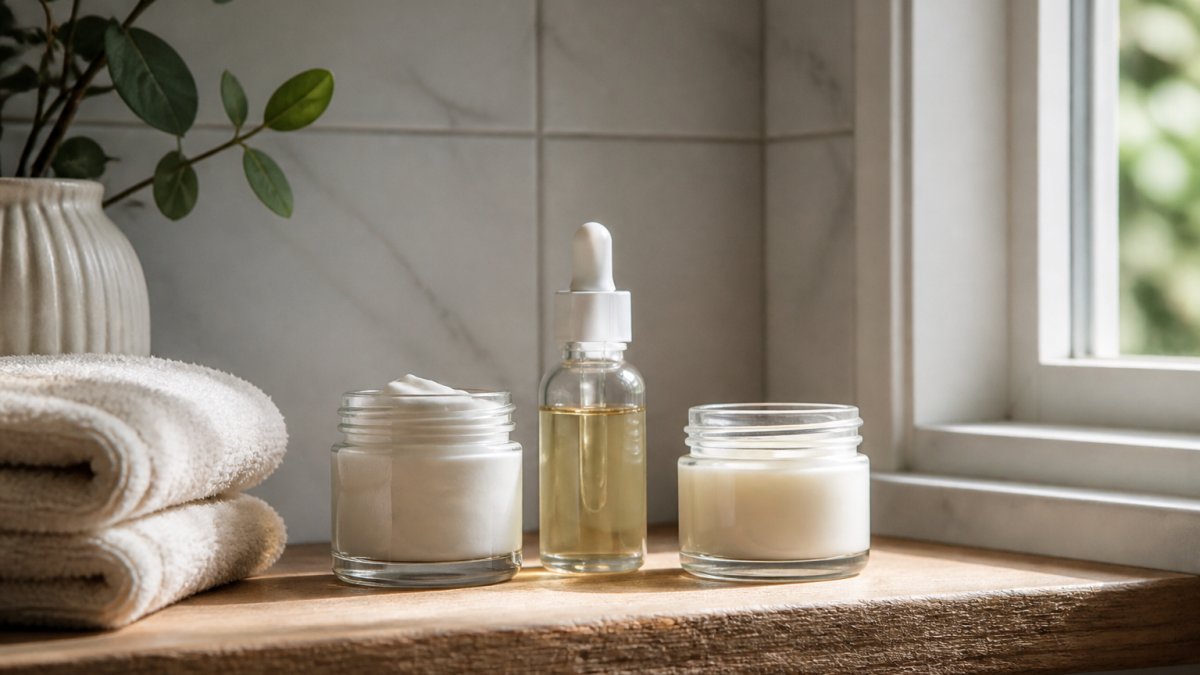
A simple skincare routine for sensitive skin has three steps in the morning and two at night. Consistency matters far more than the number of products. But reactive skin needs one extra layer of thought: every step should have a job, and every product should be one you have already tolerated.

Your Morning and Evening Steps
Morning routine:
- Rinse with lukewarm water, or use a gentle cleanser if skin feels oily. For many reactive skin types, a water-only rinse in the morning is enough. If you are oily or have applied a rich night product, use a fragrance-free, non-foaming cleanser and keep contact time under 30 seconds.
- Apply a fragrance-free moisturiser while skin is still slightly damp. Damp skin absorbs humectants such as glycerin more readily, and applying within about a minute of cleansing helps lock in water rather than letting it evaporate.
- Finish with a broad-spectrum SPF of at least 30. Use enough to cover the face and neck, roughly two finger-lengths is a common guide, and reapply if you are outdoors for long periods.
Evening routine:
- Remove makeup and SPF with a gentle cleanser. Don't scrub. If you wear heavy or water-resistant SPF, a plain cleanser may not remove it fully; a soft microfibre cloth used with lukewarm water is gentler than a second cleanse with a foaming product.
- Apply moisturiser to lock in hydration. If your skin stings on contact with water, apply the moisturiser to slightly damp skin rather than fully dry skin.
- Use a targeted balm on dry patches only, not all over. Occlusive balms are useful on cracked or flaking areas but can feel heavy or trigger congestion on oilier zones, so keep them local.
Why This Order, and What to Leave Out
Two things trip people up here. First, over-cleansing. Washing more than twice a day strips the skin barrier and makes oiliness and irritation worse. Second, skipping SPF. Daily sunscreen is the single most useful anti-ageing and barrier-protection step you can take.
A reactive-skin routine also benefits from what it deliberately omits:
- No morning acid or retinoid. These are better placed in the evening, and only once your skin is stable.
- No toner or essence step unless it replaces the moisturiser. Adding a watery layer between cleanse and moisturise rarely adds benefit for reactive skin and adds another set of ingredients to tolerate.
- No weekly exfoliation by default. Many reactive skin types do better with no scheduled exfoliation at all; if you do exfoliate, a single gentle chemical exfoliant once a week is usually better tolerated than scrubs.
| Time | Step | Purpose | Frequency |
|---|---|---|---|
| Morning | Gentle rinse or cleanse | Remove overnight oil | Daily |
| Morning | Moisturiser | Support the barrier | Daily |
| Morning | SPF 30+ | Protect from UV damage | Daily |
| Evening | Gentle cleanse | Remove SPF and makeup | Daily |
| Evening | Moisturiser | Replenish moisture | Daily |
| Evening | Targeted balm | Treat dry patches | As needed |
Adapting the Plan to Your Skin
The routine above is a starting template, not a fixed prescription. A few common adjustments:
- If your skin stings with water alone, reduce cleanse frequency to once daily in the evening and rinse with cool water in the morning.
- If you are prone to perioral or eye-area irritation, keep the richest products away from those zones and use a lighter moisturiser there.
- If you wear SPF daily and find cleansing insufficient, add a soft cloth rather than a second cleanser.
The aim is a routine you can repeat without thinking, because the fewer decisions you make each day, the fewer chances there are for a reaction.
How to Calm Reactive Skin Without Overloading It
Calming reactive skin means subtracting, not adding. When skin is red, stinging or tight, the instinct is to buy a soothing serum. That's usually the wrong move.
Here's how we'd approach it:
- Stop all actives. Retinoids, acids and vitamin C go on pause.
- Strip back to cleanse, moisturise, SPF. Nothing else.
- Use soothing, barrier-supporting ingredients. Ceramides, glycerin, panthenol, oat extract and niacinamide are well tolerated by most people.
How to Patch Test Skincare and Introduce New Products Gradually
How to patch test skincare properly: apply a small amount to a 2cm patch of skin, leave it 24 to 48 hours, and check for redness, itching or swelling. If there's no reaction, repeat on a second area before using it on your face.
A simple patch testing routine:
- Choose an inner forearm or the side of your neck.
- Apply a pea-sized amount and let it dry.
- Leave it uncovered for 24 hours.
- Check for redness, stinging or bumps.
- If clear, repeat for another 24 hours.
- If still clear, start using it on your face every third day.
- Build up to daily use over two to three weeks.
Skincare Ingredients to Avoid for Sensitive Skin
Skincare ingredients to avoid for sensitive skin include fragrance, essential oils, drying alcohols, sulphates and strong acids. These are common triggers for redness and stinging.
Sensitive Skin Starter Set | Pure Whipped Tallow + Calm Balm →
The main ones to watch for:
- Fragrance and parfum, including "natural" fragrance
- Essential oils such as citrus, peppermint and lavender
- Denatured alcohol, which dries the barrier
This doesn't mean every reactive skin type reacts to all of these. It means they're the usual suspects. Fragrance-free formulas are the safest starting point.
Tracking Triggers and Handling a Flare-Up
Most people with reactive skin have personal triggers. Finding yours is more useful than any product recommendation. This section gives you a structured way to track triggers and a clear reset plan for when a flare happens, the two things generic routine guides tend to leave out.
Keeping a Trigger Diary That Actually Works
A four-week log is usually enough to surface patterns. Keep it short enough that you will actually fill it in. A simple format works best:
- Date and time of each entry.
- Products applied, list each one, including cleanser, moisturiser, SPF and any treatment.
- New exposures, a new laundry detergent, a different pillowcase fabric, a new shampoo, a change of moisturiser.
Patterns usually emerge within a month. A new laundry detergent, a hot shower habit, a stressful work week: these show up fast in a log. The value is not in the diary itself but in the comparison, you are looking for what changed in the 24 to 72 hours before a flare, not what you used on the day it appeared.
A Simple Flare Reset Plan
When skin is actively reacting, the goal is to remove variables, not add remedies. A practical reset looks like this:
- Pause everything except cleanse, moisturise and SPF. Stop actives, exfoliants, masks, essences and any product introduced in the previous two weeks.
- Return to products you know you have tolerated before. If you are unsure, use the plainest fragrance-free cleanser and moisturiser you have.
- Cleanse once daily in the evening and rinse with cool water in the morning. Reduce shower temperature and keep the face out of direct hot water.
- Moisturise more often, not more heavily. A thin layer applied twice is often better tolerated than one thick layer.
- Protect from sun and wind. SPF and a physical barrier such as a scarf or hat reduce the chance of the flare worsening outdoors.
- Avoid new products for at least two weeks after symptoms settle. The skin barrier needs time to recover before it can tolerate anything new.
Most irritation flares begin to settle within a few days of removing the trigger. If they do not, that is useful information in itself.
When to Seek Help
A flare that spreads, blisters, weeps, or does not settle within one to two weeks is a reason to speak to a GP or pharmacist rather than try another product. Persistent redness with visible blood vessels, recurring patches in the same location, or symptoms that interfere with sleep all warrant assessment. A pharmacist can advise on over-the-counter options and whether a referral is appropriate.
Choosing Products for a Minimalist Reactive Skin Routine
Product selection for reactive skin comes down to three things: short ingredient lists, no fragrance, and barrier-supporting formulas. Fewer ingredients means fewer chances of a reaction.
Look for:
- Ceramides, glycerin and panthenol for hydration
- Oat extract and calendula for soothing
- Squalane and natural oils for barrier support
This is where our own approach fits. Our National Eczema Society guidance on emollients aligns with what we build: rich, simple, fragrance-free formulas that support the barrier rather than challenge it.
Our Sensitive Skin Starter Set pairs Pure Whipped Tallow with Calm Balm for £50, a saving of £15 on the individual price.

If you're unsure where to start, the NHS guide to emollients and dry skin is a useful plain-English reference on why rich, occlusive formulas help dry, reactive skin.
Frequently Asked Questions
What should a basic skincare routine include for sensitive skin?
A basic routine for sensitive skin needs three things: a gentle cleanser, a moisturiser that supports the skin barrier, and a daily sunscreen. That is it. Cleansing removes dirt and makeup without stripping the skin, moisturising helps reduce moisture loss, and SPF protects against UV damage that can worsen redness and irritation. Add a targeted treatment only if your skin tolerates it. A minimalist skincare approach like this keeps reactive skin calmer because there are fewer products to react to.
How should I introduce a new skincare product to reactive skin?
Introduce one new product at a time, and patch test it first. Apply a small amount to a discreet area such as the inner forearm or behind the ear, then wait 48 hours. If there is no redness, itching or irritation, try it on a small patch of your face. Use it every other day for the first week before moving to daily use. This gradual approach lets you spot a reaction early and identify which product caused it.
Can natural skincare products irritate sensitive skin?
Yes. Natural does not automatically mean gentle. Essential oils, botanical extracts and fragrances can trigger reactions in reactive skin even when they come from plants. This is why patch testing matters for every new product, natural or not. Look for short ingredient lists and fragrance-free formulas, and introduce anything new slowly. If your skin stings, turns red or feels tight after applying a product, stop using it and let your skin settle.
How many products should I use if my skin is easily irritated?
Start with two or three: a gentle cleanser, a moisturiser and a daily sunscreen. Fewer products mean fewer chances for irritation and make it easier to work out what your skin reacts to. Once your skin feels calm and comfortable for a few weeks, you can add one targeted product at a time. If a reaction happens, you will know exactly which product is new, which saves time and discomfort.
Reactive skin rarely needs more products. It needs fewer, gentler ones and a bit of patience while you work out what suits you. If you're ready to strip things back, our Sensitive Skin Starter Set brings together two concentrated, fragrance-free formulas that calm dry, easily overwhelmed skin and replenish moisture without a crowded routine. Shop the Starter Set and give your skin the simplest thing it's been offered in years.


