
Table of Contents
- Why Your Scalp Feels Dry (and What Actually Helps)
- Dry Scalp vs Dandruff: How to Tell the Difference
- How to Hydrate Scalp Naturally: A Step-by-Step Routine
- Natural Oils for Dry Scalp: What Works and How to Apply Them
- Other Soothing Remedies: Aloe Vera, Apple Cider Vinegar and More
- How Often to Wash Hair With Dry Scalp
- When Natural Remedies Aren't Enough: Seeking Medical Advice
- Conclusion
- Frequently Asked Questions
Last Updated: October 21, 2026
Why Your Scalp Feels Dry (and What Actually Helps)
Natural remedies for dry scalp work best when you understand what is causing the dryness in the first place. At Izzy Rose Skin, we hear from people every week who have tried different oils and still feel itchy.
Dry scalp is a lack of moisture in the skin on your head. It shows up as tightness, mild flaking and itchiness. Your scalp barrier, the outer layer that holds water in, has been weakened.
Common Triggers of Scalp Dryness
- Hot water and harsh shampoo. Both strip oils from the scalp faster than it can replace them.
- Cold, windy weather. Indoor heating and outdoor wind pull moisture from skin.
- Over-washing. Daily shampooing removes the natural oils that protect your scalp.
Most people reach for a stronger shampoo when they see flakes. That is the wrong move. A gentler wash and a moisturising step usually beat a medicated shampoo when the cause is simple dryness.
Dry Scalp vs Dandruff: How to Tell the Difference
Dry scalp and dandruff look similar but need different treatment. Getting the distinction right matters because the wrong remedy can make things worse: heavy oils applied to a greasy, yeast-driven scalp can feed the problem, while antifungal shampoo used on simple dryness can strip an already weakened barrier.
Here is how the two most common patterns compare:
| Feature | Dry Scalp | Dandruff |
|---|---|---|
| Flake look | Small, white, dry | Larger, yellow, greasy |
| Scalp feel | Tight, dry | Oily, sometimes red |
| Itch level | Mild to moderate | Often intense |
| Common cause | Moisture loss | Yeast overgrowth |
| Best response | Moisturise and gentle wash | Antifungal treatment |
When It May Be More Than Dryness
Simple dryness is not the only reason a scalp flakes. Three other patterns are common, and each needs a different response:
- Seborrhoeic dermatitis. Yellowish, greasy flakes, often with redness along the hairline, eyebrows or sides of the nose. It is linked to the same yeast as dandruff but is more inflamed. It usually needs an antifungal or anti-inflammatory treatment rather than a moisturising oil.
- Psoriasis. Thick, silvery scales on well-defined red patches, sometimes extending beyond the hairline. It can be sore and may bleed if scales are picked. Home oils will not settle it.
- Eczema (atopic dermatitis). Dry, itchy, inflamed patches that may crack or weep. Fragrance, sulphates and hot water are common triggers. Emollients and gentle washing help, but a flare needs medical advice.
A useful rule of thumb: dryness tends to be general and mild, while the conditions above tend to be patchy, inflamed, persistent or accompanied by other skin symptoms. If you are unsure, treat it as a condition to be assessed rather than a dryness to be moisturised.
Red Flags: When to Seek Medical Advice
See a doctor or pharmacist if any of the following apply:
- The scalp is red, cracked, bleeding or very sore.
- Flakes are thick and scaly, or form patches with clear borders.
- There is hair loss alongside the dryness or flaking.
- Symptoms persist after a few weeks of gentle washing and moisturising.
These signs can point to a condition that home remedies alone will not resolve. The NHS guidance on dandruff and seborrhoeic dermatitis is a useful starting point before you self-treat, and a pharmacist can advise on over-the-counter options if a fungal cause is likely.
If you have a diagnosed skin condition, patch test everything and introduce one new product at a time. That way you know exactly what helps and what irritates.
How to Hydrate Scalp Naturally: A Step-by-Step Routine
A simple routine beats a shelf full of products. Follow these steps once or twice a week.
- Brush gently before washing to loosen loose flakes.
- Warm, not hot, water. Hot water strips the barrier.
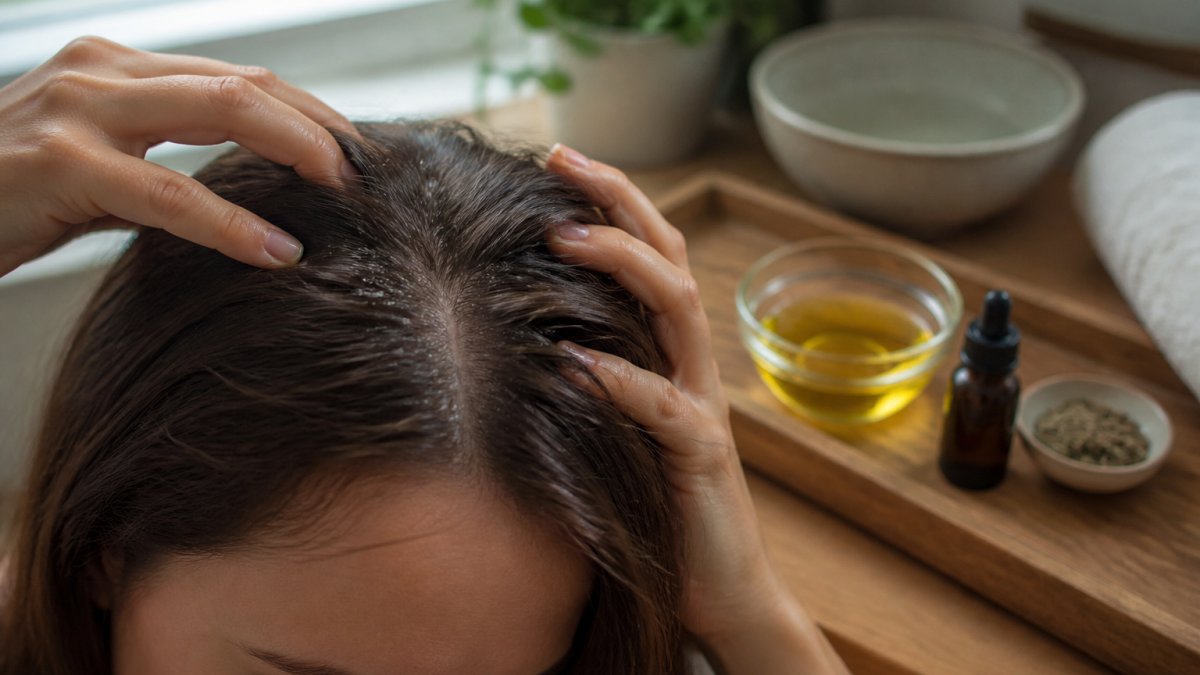
- Massage oil into the scalp in sections, using fingertips not nails.
- Leave it on for at least 30 minutes.
- Shampoo thoroughly to remove the oil.
- Pat dry and avoid heat styling on wash day.
- Repeat weekly and adjust based on how your scalp feels.
Patch Testing Before You Begin
Always patch test a new oil or remedy. Apply a small amount behind your ear or on your inner wrist. Wait 24 hours. If you see redness, swelling or itching, do not use it on your scalp. This step takes a day and saves you a week of discomfort.
Natural Oils for Dry Scalp: What Works and How to Apply Them
Natural oils for dry scalp work by sealing moisture into the skin and calming irritation. The best ones are lightweight and low in comedogenic fats, so they moisturise without clogging. Below is a remedy-by-remedy guide to amounts, application, contact time, washout and frequency, plus a note on how strong the evidence really is.
Remedy-by-Remedy Application Guide
| Remedy | Amount and dilution | How to apply | Contact time | Washout | Frequency | Evidence note |
|---|---|---|---|---|---|---|
| Jojoba oil | A few drops (about 5-10 ml) warmed between palms | Massage into scalp in sections with fingertips | 30 minutes to overnight | Gentle sulphate-free shampoo | 1-2 times a week | Traditional use; lightweight and close to skin's own oils |
| Coconut oil | 1-2 teaspoons (5-10 ml) | Massage into scalp, focusing on dry patches | 30 minutes to overnight | Gentle shampoo; may need two washes | 1-2 times a week | Traditional use; rich and occlusive, can feel heavy |
| Olive oil | 1-2 tablespoons (15-30 ml) | Pre-wash treatment, massaged into scalp | 30 minutes to 1 hour | Shampoo thoroughly | Once a week | Traditional use; nourishing but heavy |
| Argan oil | A few drops (about 5 ml) | Light massage into scalp and ends | 30 minutes | Gentle shampoo | 1-2 times a week | Traditional use; light and soothing |
| Castor oil | Blend 1 part castor to 2-3 parts lighter oil | Massage into scalp | 30 minutes | Shampoo thoroughly; can be sticky | Once a week | Traditional use; thick and conditioning, best diluted |
| Tea tree oil | 2-3 drops per 10 ml carrier oil (about 1% dilution) | Massage into scalp; never neat | 15-30 minutes | Gentle shampoo | Once or twice a week | Some clinical evidence for antifungal effect; can irritate sensitive skin |
| Rosemary oil | 2-3 drops per 10 ml carrier oil (about 1% dilution) | Massage into scalp; never neat | 30 minutes | Gentle shampoo | Once or twice a week | Some clinical evidence for hair growth; not a moisturiser on its own |
Our own Thrive Hair & Scalp Oil (£25.00) blends jojoba, argan and castor oils with vitamin E, rosemary, lavender and tea tree. It is made for a pre-wash scalp massage.

Safe Dilution and Overnight Treatment Tips
Essential oils such as tea tree and rosemary are strong. Dilute them before use: a common approach is 2-3 drops in 10 ml of carrier oil, which gives roughly a 1% dilution.
For overnight treatments, use a light oil and a small amount. Cover your pillow with a towel. Wash out in the morning. If your scalp feels irritated by morning, stop and try a lighter oil next time.
Evidence Quality: What We Know and What We Don't
Most oils used for dry scalp are supported by traditional use rather than large clinical trials. That does not mean they don't work, it means the evidence is weaker than the confident claims on many labels suggest. Tea tree and rosemary have some clinical evidence, mainly for antifungal effect and hair growth respectively, but not specifically as moisturisers for dry scalp.
Other Soothing Remedies: Aloe Vera, Apple Cider Vinegar and More
Aloe vera is a cooling gel that can calm an itchy, irritated scalp. Apply pure gel, leave for 20 minutes, then rinse.
Apple cider vinegar is often used as a rinse to balance the scalp. Dilute it well with water before use, and never apply it neat.
Other options include:
- Mashed banana and avocado as a moisturising hair mask.
- Witch hazel as a gentle, soothing toner for the scalp.
- Lemon juice diluted in water as an occasional rinse, not a leave-on treatment.
Each of these is a supporting step, not a cure. If your scalp stays dry after a few weeks, the cause is likely something a rinse cannot fix.
How Often to Wash Hair With Dry Scalp
Wash your hair two to three times a week if your scalp is dry. Daily washing strips the oils your scalp needs to stay comfortable.
Adjust based on your hair type and activity:
- Fine or oily hair: every other day may suit you better.
- Thick or curly hair: once or twice a week is often enough.
- After exercise: rinse with water and skip the shampoo if you can.
Use a mild, sulphate-free shampoo and focus it on the scalp, not the ends. Rinse well. Leftover product can cause irritation and flaking that looks like dryness.
When Natural Remedies Aren't Enough: Seeking Medical Advice
See a doctor or pharmacist if your scalp is red, cracked, bleeding or very sore. Also seek advice if flakes are thick and scaly, or if you have hair loss alongside the dryness.
These signs can point to eczema, psoriasis or seborrhoeic dermatitis. Each needs proper treatment, and home remedies alone will not settle them.
If you have a diagnosed skin condition, patch test everything and introduce one new product at a time. That way you know exactly what helps and what irritates.
Conclusion
Dry scalp is stubborn, and the wrong remedy can make it worse. The fix is usually a gentler wash, a moisturising oil step and a little patience.
At Izzy Rose Skin, we make small-batch botanical haircare for dry, sensitive scalps. Our Thrive Hair & Scalp Oil is built for a pre-wash massage, and our Dry Skin & Scalp Care Duo (£45.00) pairs it with Calm Balm for dry-feeling skin elsewhere.

Start with one product, patch test it, and build from there. Shop the Starter Set and give your scalp the calm, cared-for routine it has been missing.
Frequently Asked Questions
What is the best natural remedy for dry scalp?
There is no single best remedy, but plant oils such as coconut, jojoba and olive oil are the most commonly used for dry scalp because they help soften flaking skin and support the scalp barrier. Apply a small amount to the scalp, leave for 30 minutes to overnight, then wash out with a mild shampoo. Always patch test first, and dilute essential oils before use. If dryness persists after a few weeks of gentle care, speak to a pharmacist or GP.
How can I tell the difference between a dry scalp and dandruff?
Dry scalp flakes are usually small, white and dry, and the scalp feels tight or itchy rather than greasy. Dandruff flakes tend to be larger, yellowish and cling to the hair, often with an oily scalp. Dry scalp often improves with moisturising oils and gentler washing, while dandruff usually needs an antifungal shampoo. If you are unsure, or if you notice redness, swelling or weeping skin, get a diagnosis from a GP or dermatologist.
How often should I wash my hair if I have a dry scalp?
Most people with a dry scalp do well washing two to three times a week with a mild, sulphate-free shampoo and lukewarm water. Washing less often can let oil and dead skin build up, while washing daily with harsh shampoo can strip the scalp further. Adjust based on how your scalp feels: if it is tight and flaky after washing, space it out or switch to a gentler formula. Rinse thoroughly and avoid very hot water.
When should I seek medical advice for a dry, itchy scalp?
See a GP or pharmacist if the dryness has not improved after four to six weeks of gentle home care, or if you notice redness, swelling, crusting, weeping, hair loss or pain. These can point to conditions such as seborrhoeic dermatitis, eczema or psoriasis, which need targeted treatment. Also seek advice if you have a weakened immune system or the itch disturbs your sleep. A pharmacist can advise on over-the-counter options in the meantime.
This article is general information, not medical advice. Speak to a pharmacist or GP if your symptoms persist or worsen.


