
Table of Contents
- Why an Itchy Sensitive Scalp Needs a Different Approach
- Home Remedies for Itchy Scalp: What Works and What to Skip
- Natural Remedies for Dry Scalp That Add Moisture Back
- Tea Tree Oil for Itchy Scalp: Dilution, Doses and Limits
- Scalp Psoriasis Treatment: Where Home Care Stops and Help Starts
- Building a Gentle Scalp Routine Around Your Remedies
- Frequently Asked Questions
Last Updated: October 18, 2026
Why an Itchy Sensitive Scalp Needs a Different Approach
An itchy sensitive scalp is skin that reacts faster and harder than most, so the usual "just scrub it" advice tends to backfire.
Most guides get this wrong. They hand you a list of kitchen ingredients with no warning about which ones sting, which ones feed the problem, and which ones you should never put near broken skin.
Below, we'll show you exactly how to tell dryness from dandruff, which home remedies for itchy scalp are worth trying, and how to patch test so a calming fix doesn't become the next flare. But first, here's what most guides skip: your scalp is skin, and sensitive skin needs fewer ingredients, not more.
The NHS guidance on itchy skin makes a point worth repeating: persistent itching deserves a proper look at the cause, not just a cream over the top.
Common Causes of Itch and Flaking
Itch rarely has one source. In practice, it's usually one of these:
- Dry scalp - tight, flaky, worse in cold weather and central heating
- Dandruff - larger, greasier flakes, often with a mild fungal trigger
- Contact irritation - a reaction to shampoo, dye, or fragrance
- Product build-up - heavy oils and silicones trapping residue
- Scalp psoriasis - thicker, silvery plaques, often beyond the hairline
The difference matters. A dry scalp responds to moisture. Dandruff needs a different plan. Treating one as the other is the most common mistake we see.
Ingredients and Routine Triggers to Check First
Before you buy anything new, audit what's already in your shower. Sensitivity often traces back to a single repeated trigger.
Check for:
- Strong fragrances and essential oils in high amounts
- Sulphate-heavy shampoos used daily
- Hot water and rough towel-drying
- Tight hairstyles and heavy styling products
- Frequent dry shampoo
Home Remedies for Itchy Scalp: What Works and What to Skip
Home remedies for itchy scalp work best when they match the cause and stay gentle. Some kitchen staples genuinely soothe. Others strip, sting, or make flaking worse.
| Remedy | Best for | How to use | Evidence quality | Watch out for |
|---|---|---|---|---|
| Aloe vera | Dry, hot, irritated scalp | Thin layer, 15-20 minutes, rinse | Some support for soothing and hydration | Rare sensitivity; patch test |
| Coconut oil | Dry, tight scalp | Pre-wash, 30 minutes, shampoo out | Some support for moisturising | Can clog pores and cause bumps on some skin |
| Diluted apple cider vinegar | Mild flaking | 1:4 with water, rinse, wash out | Limited and mixed | Stings broken skin; not for active irritation |
| Tea tree oil | Mild itch with flaking | 1 drop per 10 ml carrier oil | Some support for mild flaking-related itch | Neat use irritates; never on broken skin |
| Jojoba or argan oil | Sensitive, dry scalp | Pre-wash massage | Limited but well tolerated | Overuse weighs hair down |
What to skip:
- Neat essential oils on bare skin
- Lemon juice (it stings and disrupts the skin barrier)
- Baking soda scrubs
- Hot oil treatments on inflamed or broken skin
A common pattern is that people apply the strongest remedy first. Start with the blandest option (aloe or a light carrier oil), use it for two weeks, and only then consider adding an essential oil if the itch has not settled.
Matching the remedy to the cause
The same itch can come from dryness, dandruff, contact irritation, or a diagnosed condition, and a remedy that helps one can worsen another. Use this as a rough guide:
- Dryness, aloe vera, coconut oil, jojoba. Avoid anything that strips.
- Dandruff with flaking, diluted tea tree may calm mild itch, but medicated shampoos are the mainstay; remedies are support only.
- Contact irritation, stop the suspected product first; no remedy will outrun an ongoing trigger.
- Psoriasis or eczema, home care supports comfort between treatments but does not replace medical input.
Suitability for different readers
Not every remedy suits every person. Children, pregnant readers, and people with diagnosed scalp conditions should be more cautious, not less:
- Children, use bland moisturisers only, avoid essential oils, and keep remedies away from the eyes.
- Pregnancy, check with a pharmacist before using essential oils; some are best avoided.
- Known allergies, read the full ingredient list, including "fragrance" and "parfum", and patch test every new product.
- Diagnosed scalp conditions, remedies are adjuncts, not substitutes for prescribed treatment.
The evidence behind most home remedies is thin. That does not mean they do not help, but it does mean you should test carefully rather than assume "natural" equals "safe". If a remedy stings, burns, or makes the itch worse, stop it, do not push through.
Natural Remedies for Dry Scalp That Add Moisture Back
Natural remedies for dry scalp should put moisture in and keep it there. If your scalp feels tight and flaky rather than greasy, you're likely dealing with dryness, not dandruff.
The goal is simple: soften the skin, reduce water loss, and avoid anything that strips it further. Oils help most when applied before washing and rinsed out thoroughly.
Aloe Vera, Coconut Oil and Other Moisturising Options
Aloe vera is the gentlest starting point. It cools, hydrates, and suits most reactive skin. Apply a thin layer, leave 15 to 20 minutes, then rinse.
Coconut oil works for dry scalps but not for everyone. On some sensitive skin it clogs and causes bumps, so patch test first. Jojoba and argan oils are lighter and often better tolerated.
For a pre-wash ritual, our THRIVE Hair & Scalp Oil blends jojoba, argan and castor oils with vitamin E, rosemary, lavender and tea tree. Massage a small amount into the scalp, leave at least 30 minutes, then shampoo thoroughly. It's £25.00 and built for exactly this step.

Tea Tree Oil for Itchy Scalp: Dilution, Doses and Limits
Tea tree oil for itchy scalp can help, but only when diluted. Neat tea tree oil is one of the fastest ways to irritate sensitive skin.
Use it at roughly one drop per 10ml of carrier oil such as jojoba or coconut. Never apply it neat, never use it on broken skin, and never leave it on for hours.
Tea tree is not a cure. It may calm mild itch linked to flaking, but it won't fix psoriasis, eczema, or a reaction to a product you're still using. If itch worsens or spreads, stop and get advice.
Scalp Psoriasis Treatment: Where Home Care Stops and Help Starts
Scalp psoriasis treatment needs medical input, and home remedies are support, not a substitute. Psoriasis is an inflammatory condition, not dryness, and thick silvery plaques won't clear with oil alone.
Home care can still help. Gentle washing, moisturising, and avoiding harsh products reduce irritation between treatments. Your GP can advise on medicated options.
Know the red flags that mean stop and seek help:
- Bleeding, weeping, or crusted skin
- Rapid hair loss
- Itch that keeps you awake
- Spreading redness or swelling
- No improvement after two to three weeks of gentle care
The NHS overview of psoriasis is a sensible starting point before you self-treat.
Building a Gentle Scalp Routine Around Your Remedies
A routine beats a remedy. One good product used consistently does more than five ingredients rotated at random.
Here's the structure we recommend:
- Wash less often - two to three times a week suits most sensitive scalps
- Use lukewarm water - hot water strips the barrier
- Oil before washing - 30 minutes is enough
- Rinse thoroughly - residue causes itch
- Change one product at a time
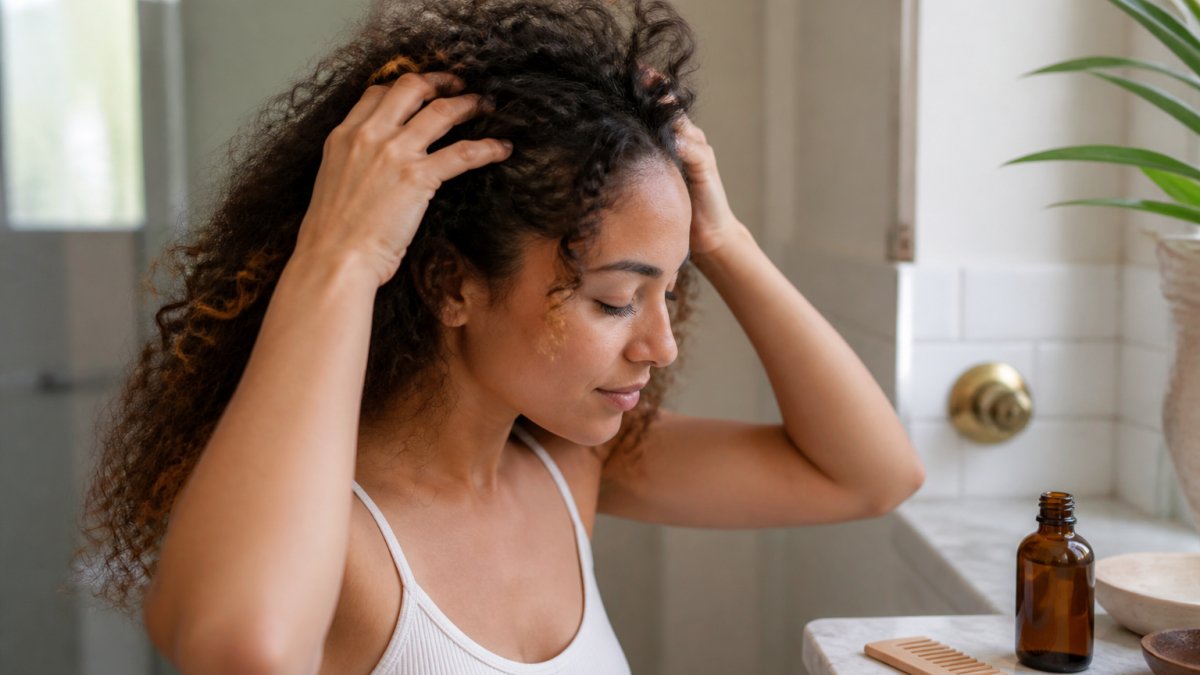
If you want a simple starting point, our Dry Skin & Scalp Care Duo pairs Calm Balm with THRIVE for £45.00, saving £10 on buying separately. For a fuller routine, the Skin & Scalp Ritual Set brings together Calm Balm, Pure Whipped Tallow and THRIVE for £62.50.


| Remedy | Best For | How to Use | Watch Out For |
|---|---|---|---|
| Aloe vera | Dry, hot, irritated scalp | Thin layer, 15-20 mins, rinse | Rare sensitivity |
| Coconut oil | Dry, tight scalp | Pre-wash, 30 mins, shampoo out | Clogging on some skin |
| Apple cider vinegar | Mild flaking | 1:4 dilution, rinse, wash out | Stings broken skin |
| Tea tree oil | Mild itch with flaking | 1 drop per 10ml carrier oil | Neat use irritates |
| Jojoba/argan oil | Sensitive, dry scalp | Pre-wash massage | Overuse weighs hair down |
Frequently Asked Questions
What can I use to calm my itchy scalp?
Start with the mildest option: a fragrance-free, non-stripping shampoo and a cool rinse. For extra soothing, try a small amount of aloe vera gel or a diluted apple cider vinegar rinse (one part vinegar to three parts water). If the itch is dry-driven, a pre-wash oil such as Thrive Hair & Scalp Oil (£25.00) can help soften flakes before shampooing. Patch test any new product on your inner forearm for 48 hours first, and stop if burning or redness appears.
How can I tell whether my itchy scalp is dry or has dandruff?
Dry scalp flakes are usually small, white and powdery, and the scalp feels tight rather than greasy. Dandruff flakes tend to be larger, slightly yellow and cling to the hair and shoulders, often with an oily scalp. Dry scalp often improves with moisturising oils and gentler washing, while dandruff usually needs an anti-fungal ingredient. If you are unsure after two to three weeks of gentle care, ask a pharmacist or GP for a proper look.
Can natural oils make an itchy scalp worse?
Yes. Essential oils like tea tree can irritate sensitive skin if used neat, and heavy oils such as coconut can feed the yeast linked to dandruff in some people. Always dilute essential oils to no more than 1-2% in a carrier oil, patch test first, and stop if itching increases. If your scalp feels hotter, redder or more irritated after an oil, wash it out and leave that oil alone.
When should I seek medical advice for an itchy scalp?
See a GP or pharmacist if the itch lasts more than two to three weeks despite gentle care, or if you notice spreading redness, swelling, weeping, crusting, hair loss, or sleep-disrupting itch. These can point to conditions such as scalp psoriasis or seborrhoeic dermatitis that need targeted treatment. NHS care is free at the point of use, so there is no cost barrier to getting a proper diagnosis.
An itchy sensitive scalp rarely needs more products. It needs fewer, better ones, chosen for your actual cause and applied gently. Izzy Rose Skin makes small-batch, botanical-led formulas for exactly this: THRIVE Hair & Scalp Oil for a pre-wash ritual, Calm Balm for dry-feeling areas, and sets that take the guesswork out of starting. Patch test first, then build slowly.
Get started with Izzy Rose Skin and give your scalp a calmer, simpler routine.


