
Table of Contents
- What Skin Barrier Repair Means for Eczema
- Step-by-Step Eczema Skincare Routine for Barrier Repair
- Choosing Emollients for Eczema: Creams, Ointments, and Lotions
- How Often to Moisturise Eczema-Prone Skin
- Eczema Flare Triggers and How to Manage Them at Home
- When to Seek Medical Help and How to Track Progress
- Conclusion: Building a Barrier-Friendly Routine That Lasts
- Frequently Asked Questions
Last Updated: October 16, 2026
What Skin Barrier Repair Means for Eczema
Skin barrier repair for eczema means rebuilding the outer layer of your skin so it holds water in and keeps irritants out.
Your skin barrier is the thin outer layer that locks in water and blocks irritants, allergens and bacteria.
A weak barrier loses water fast, so skin turns dry, cracked and itchy.
So barrier repair is not a single product. It is daily, consistent care.
Signs Your Barrier Is Damaged
Damage shows up in physical ways. Watch for:
- Tight, dry skin even after moisturising
- Rough or flaky patches that keep returning
- Stinging when you apply products that used to be fine
One sign alone may mean nothing. Several together usually point to a weakened barrier. The National Eczema Society guidance on eczema explains how these symptoms link to barrier function.
Step-by-Step Eczema Skincare Routine for Barrier Repair
A barrier-friendly routine is short, gentle and repeated twice a day. Here is the order we recommend.
Total time: 5-10 minutes, morning and evening. Difficulty: Beginner.
What You'll Need
- A gentle, fragrance-free cleanser
- A thick emollient or moisturiser
- A protective balm for cracked or broken areas
Morning and Evening Steps
- Cleanse gently. Use lukewarm water and a mild cleanser. Skip soap and hot water.
- Pat dry, leave skin damp. Do not rub, damp skin absorbs moisturiser better.
- Apply emollient within three minutes. Seal in moisture while skin is still damp.
- Add a balm to problem areas. Use it on cracked skin, hands, lips and elbows.
- Reapply during the day. Keep a balm in your bag for hands and dry patches.
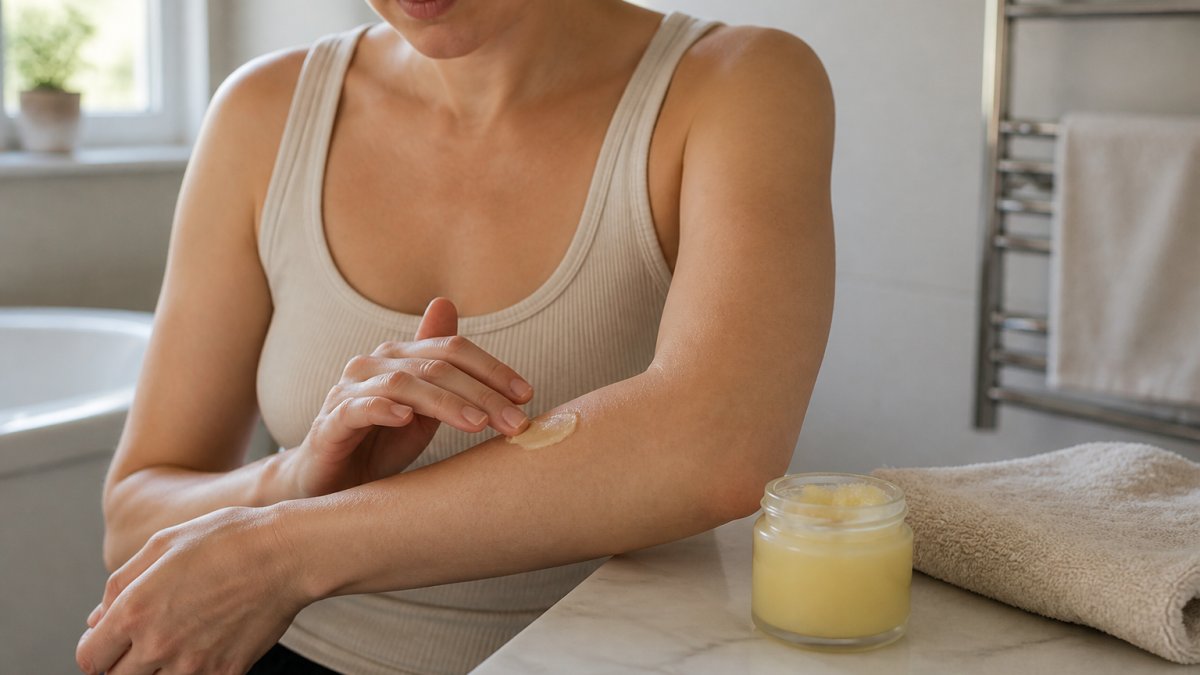
Our Calm Balm is built for step four. It is a concentrated, water-free balm with seven ingredients, including grass-fed tallow, shea butter and calendula. Warm a small amount between clean fingertips and press it into dry patches. Patch test first.

Choosing Emollients for Eczema: Creams, Ointments, and Lotions
Emollients for eczema come in three main forms, and the form matters as much as the ingredients. Thicker products trap more water but are less likely to be used, so match the form to the body area, age and time of day.
Here is how the forms compare:
| Form | Water Content | Typical Use | Feel |
|---|---|---|---|
| Lotion | High | Hairy areas, daytime, large surfaces | Light, runny |
| Cream | Medium | Most of the body, daily use | Soft, spreadable |
| Ointment or balm | None | Cracked skin, hands, night, very dry patches | Thick, protective |
A simple rule: lotions for large, hairy areas, creams for everyday use, ointments and balms for the driest spots.
Matching the Form to the Body Area
- Face. A lighter cream in the morning sits well under sunscreen; a richer ointment or balm at night on dry cheeks and around the mouth. Avoid heavy occlusives on eyelids unless a clinician advises them.
- Hands. Washed most, hands lose emollient fastest. An ointment or water-free balm after every wash beats a cream alone.
- Skin folds. In armpits, groin, behind the knees and under the breasts, thick occlusives trap sweat and worsen irritation. Use a lighter cream, applied thinly.
Age-Specific Considerations
- Babies and infants. Fragrance-free, dye-free emollients are the priority. Apply at every nappy change and after bathing. Avoid known sensitisers such as some essential oils and preservatives like methylisothiazolinone.
- Children. Frequency matters more than thickness. A cream tolerated twice a day beats an ointment they refuse; letting children choose a texture improves adherence.
- Adults. Occupational hand eczema often needs a water-free balm during the working day and a thicker ointment overnight.
What to Look For and What to Avoid
Look for short ingredient lists and no added fragrance. Fragrance is a common irritant for sensitive skin, and 'fragrance-free' is not the same as 'unscented', unscented products may still contain masking fragrances.
Also consider:
- Preservatives. Some, such as methylisothiazolinone and methylchloroisothiazolinone, are common causes of contact allergy. If skin stings or worsens after starting a new product, this is one to suspect.
- Humectants. Ingredients like glycerin and urea draw water into the skin. Urea at higher concentrations can sting broken skin, so start low.
- Occlusives. Petrolatum, shea butter and similar ingredients sit on top of the skin and reduce water loss. They are the workhorses for very dry, cracked areas.
Practical Trade-Offs
The best emollient is the one you will actually use twice a day, a perfect product you avoid because it feels greasy does nothing for your barrier. A few practical points:
- Pumps beat jars for hygiene and for people with hand eczema, who may struggle to scoop from a tub.
- Buy in larger sizes once a product suits you, cost per gram drops sharply, and eczema care is a long game.
- Keep one in every room you use. A jar by the sink gets used; one in a cupboard does not.
If you are unsure which form suits your skin, a pharmacist can advise on over-the-counter options, and a GP or dermatologist can recommend prescription emollients if standard products are not enough.
How Often to Moisturise Eczema-Prone Skin
Moisturise at least twice a day, and more often when skin is dry or flaring. Frequency beats quantity.
Most people under-apply. A thin smear once a day will not rebuild a barrier. Aim for:
- Twice daily as a baseline, morning and night
- After every wash, shower or bath
- Every time skin feels tight or itchy
Eczema Flare Triggers and How to Manage Them at Home
Most flares have a trigger, and finding yours is the fastest way to fewer of them. Common triggers include:
- Soaps and detergents. Switch to fragrance-free, non-biological products.
- Heat and sweat. Shower lukewarm, and change out of damp clothes quickly.
- Wool and rough fabrics. Choose soft cotton next to the skin.
Keep a simple diary for two weeks. Note flares, what you ate, wore and used. Patterns show up fast.
Calm Balm | Multi-Purpose Balm for Dry Skin →
For flare prevention, the basics do most of the work: gentle cleansing, regular moisturising, and avoiding your known irritants. The NHS information on atopic eczema covers treatment options if self-care is not enough.
When to Seek Medical Help and How to Track Progress
Self-care handles a lot of eczema, but some situations need a clinician. Knowing the difference keeps small problems small.
Infection Warning Signs, Seek Help Promptly
Eczema skin is more vulnerable to infection because the barrier is compromised. Contact a GP, NHS 111 or an urgent care service if you notice:
- Weeping or oozing from the skin, especially yellow or honey-coloured crusting
- Rapidly spreading redness or redness that extends beyond the usual eczema patches
- Pain that is new or out of proportion to the visible rash
- Heat coming from the affected skin
If in doubt, get it checked. Infected eczema often needs prescription treatment, and delaying makes it harder to control.
When to See a GP or Pharmacist
Book an appointment if:
- Eczema is not improving after two to four weeks of consistent emollient use
- Sleep is regularly disrupted by itch
- Skin is cracked, bleeding or very sore
- You are using over-the-counter hydrocortisone more often than the label advises
A pharmacist can advise on over-the-counter emollients, antihistamines for itch, and when to see a GP. A GP can prescribe stronger emollients, topical corticosteroids, or refer you to a dermatologist if needed.
Using Prescribed Treatments Safely
Prescription treatments such as topical corticosteroids and topical calcineurin inhibitors reduce inflammation so the barrier can recover. A few principles:
- Follow the instructions exactly, the strength, the area, and the length of the course are all specified for a reason.
- Apply emollient first, then the prescribed treatment, unless your clinician advises otherwise. Leave a short gap between them so the treatment is not diluted.
- Do not stop or extend a course without advice. Stopping too early can let inflammation return; extending beyond the plan is not appropriate without review.
- Use the correct amount. A common guide is the fingertip unit, roughly the amount from the tip of an adult index finger to the first crease, which covers an area about the size of two flat adult palms.
If you use an antihistamine for itch, follow the label or your pharmacist's guidance. Sedating antihistamines are sometimes suggested at night, but this should be discussed with a clinician, especially for children.
Tracking Progress Realistically
Barrier repair is gradual. Most people notice meaningful improvement in itch and dryness over two to four weeks of consistent care, with barrier function improving over months.
A simple daily log helps you spot patterns and gives your clinician useful information:
- Itch level each day, from 1 to 10
- Sleep quality, how often itch woke you
- How often you moisturised and which product you used
- Any new or worsening patches, with a note of where they are
Look for trends over weeks, not days. Steady improvement is the goal. If things are getting worse despite consistent care, that is a reason to seek advice, not to try harder on your own.
NHS information on atopic eczema treatment
Conclusion: Building a Barrier-Friendly Routine That Lasts
The hard part is not knowing what to do, it is keeping it up when skin feels fine and life gets busy. A short routine repeated twice a day beats a complicated one you abandon.
At Izzy Rose Skin, our small-batch formulas are made for exactly this. The Clean Start Set pairs Pure Whipped Tallow for face and body with Calm Balm for dry patches, and saves £15 against buying both alone.

Start with the two products you will actually use. Shop the Starter Set and give your skin the steady, gentle care it needs.
Frequently Asked Questions
How do I repair my skin barrier?
Repairing your skin barrier starts with a simple routine: cleanse gently with lukewarm water, apply an emollient or moisturiser while skin is still damp, and repeat at least twice daily. Avoid harsh soaps, fragrances, and long hot showers. For eczema-prone skin, choose a concentrated balm or thick cream that locks in moisture. Consistency matters more than the number of products you use, so keep it to a few purposeful steps and give your skin time to respond.
How can emollients help repair the skin barrier in eczema?
Emollients for eczema work by forming a protective layer that reduces moisture loss and shields irritated skin from external triggers. They soften cracked or dry patches and can reduce itching. Applying an emollient within three minutes of bathing helps trap water in the skin. Water-free balms and ointments are especially useful for very dry or broken skin because they contain no preservatives that might sting. Use them regularly, not just when skin feels dry.
How often should I moisturise eczema-prone skin?
Aim for at least twice daily, morning and evening, and more often if skin feels tight or dry. After washing hands or bathing, reapply within three minutes. Some people find that three to four applications daily during a flare works better. The key is consistency: regular application of moisturiser or emollient helps maintain skin hydration and supports barrier repair over time. Keep a small balm in your bag for top-ups during the day.
When should I seek medical advice for an eczema flare?
Speak to a GP or pharmacist if your eczema is not improving with regular emollient use, if itching disrupts sleep, or if you notice signs of infection such as yellow crusting, weeping, or increased pain and heat. A GP can prescribe a topical steroid or other treatment if needed. If you have severe or frequent flares, ask about a referral to a dermatologist. Early advice can prevent a flare from getting worse and help you adjust your routine safely.


