
Last Updated: November 15, 2026
Quick Summary
To tell if tallow is grass-fed, start by reading the label wording, since "grass-finished" is stronger than "grass-fed" and some terms carry little meaning. Then ask the supplier to name the farm, feeding regime, and rendering method, because a traceable grass-fed tallow answer is more reliable than a badge alone.
- Grass-finished means raised on grass until slaughter, with no grain finishing period.
- Labels like "natural," "pure" and "clean" carry little feeding information on their own.
- Ask for a supplier statement naming the farm, feeding regime and slaughter date.
- Low-temperature (wet) rendering preserves more fat-soluble compounds and gives a milder smell.
- Smell and melt tests can flag poor handling but cannot confirm grass feeding.
Table of Contents
- Why Grass-Fed Tallow Differs From Grain-Fed Tallow
- Step 1: Check the Label Wording
- Step 2: Judge the Colour and Texture
- Step 3: Use Smell and Melt Behaviour as Checks
- Step 4: Ask the Supplier the Right Questions
- Does Grass-Fed Tallow Need Certification?
- Choosing Grass-Fed Tallow for Your Skin
- Frequently Asked Questions
Why Grass-Fed Tallow Differs From Grain-Fed Tallow
Knowing how to tell if tallow is grass fed starts with understanding what changes the fat itself. Cattle that graze on pasture build a different fat profile than cattle finished on grain, and that difference can show up in the tallow you buy.
Grass-fed vs grass-finished: what the terms mean
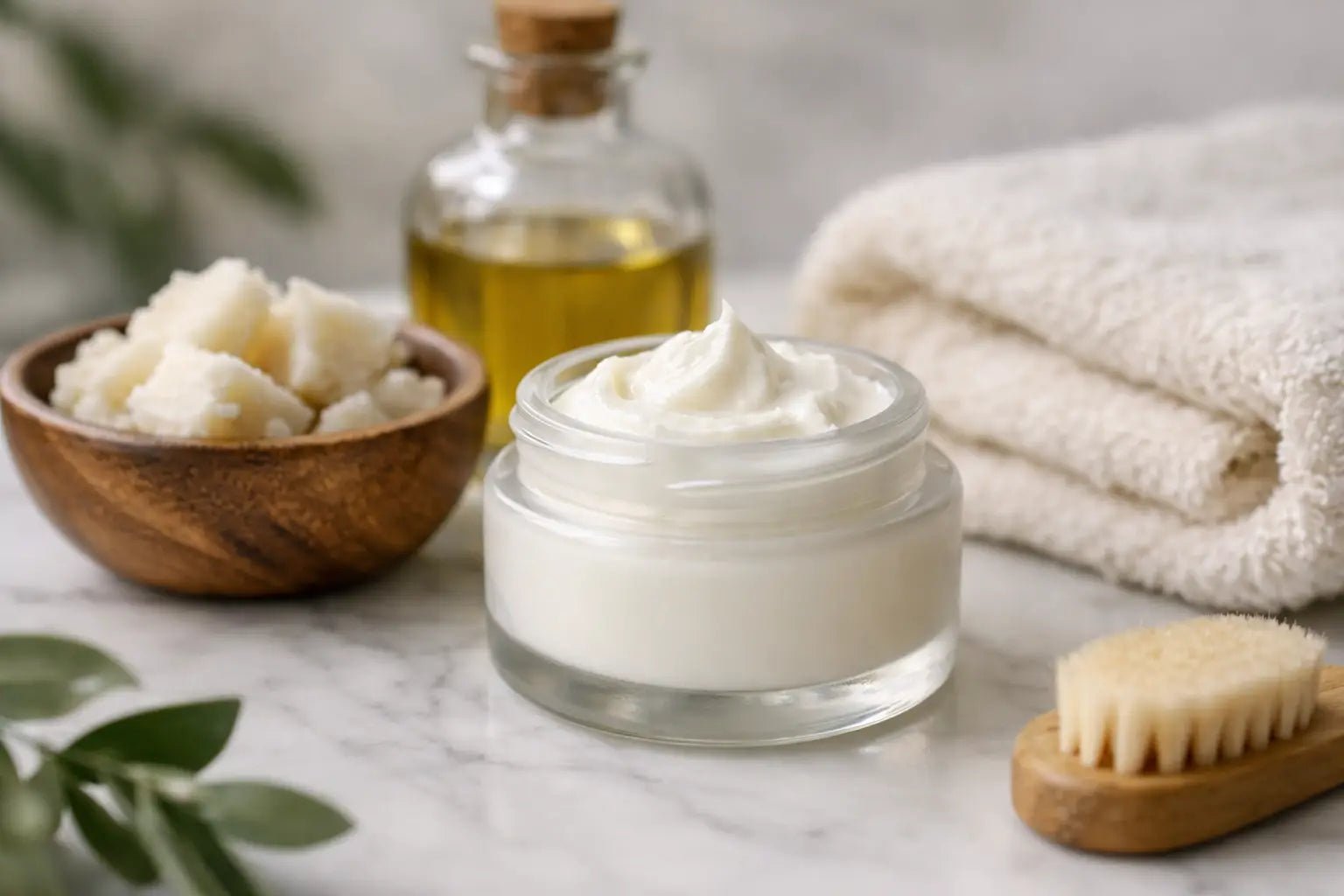
These two terms sound alike but mean different things. Grass-fed usually means the animal ate grass for most or all of its life. Grass-finished means it was raised on grass until slaughter, with no grain finishing period. Read carefully, because a label can say grass-fed while the animal spent its final months on grain.
Step 1: Check the Label Wording
Start with the words on the packaging or product page, but read them against what the terms actually mean in the UK market. The phrase "grass-fed" can describe quite different feeding regimes, so the label is a starting point rather than a verdict.
- "Grass-fed" is widely used to mean the animal ate grass for most of its life, but it does not by itself rule out a grain finishing period.
- "Grass-finished" is the stronger claim: the animal was raised on grass until slaughter, with no grain finishing.
- "100% grass-fed" should mean grass and forage only for the animal's whole life, but the wording is only as reliable as the evidence behind it.
- "Pasture-raised" describes where the animal lived, not necessarily what it ate to the end.
- "Natural," "pure," "clean" and "ancestral" carry little or no feeding information on their own.
What the UK labelling framework does and does not guarantee
The term "grass-fed" may be backed by a private certification scheme, by supply-chain records, or by the seller's word alone. That is the distinction worth probing.
Look for a named certification body or scheme on the pack, and check whether the certificate covers the specific animal source and the rendering process, not just the brand. A badge with no scheme name, no certificate number and no scope is decoration.
Claims that need backing and claims that mean little
Some claims carry weight only if the seller can show evidence. Others are marketing filler.
- Needs backing: "100% grass-fed," "grass-finished," "pasture-raised," "single-origin," "regenerative"
- Usually means little on its own: "natural," "pure," "clean," "ancestral," "premium"
Watch out: a product can be labelled "grass-fed beef tallow" while the tallow itself was bought in from a rendering plant with no link to the named farm, ask whether the label describes the animal or only the marketing story.
Before you trust the stronger claims, ask for a supplier statement or certificate that names the farm, the feeding regime and the slaughter date. If the seller cannot produce one, treat the claim as unverified rather than false, but do not pay a premium for it.
The label wording matters, so compare the terms against what each one actually promises:
| Label term | What it usually means | How strong the claim is |
|---|---|---|
| Grass-fed | Ate grass for most of its life | Does not rule out grain finishing |
| Grass-finished | Raised on grass until slaughter | Stronger claim, no grain finishing |
| 100% grass-fed | Grass and forage only, whole life | Only as reliable as the evidence |
| Pasture-raised | Where the animal lived | Says nothing about final diet |
| Natural, pure, clean, ancestral | Little or no feeding information | Marketing terms, little weight |
Step 2: Judge the Colour and Texture
Colour is a useful first check. Grass-fed tallow is often described as a warmer, more golden yellow. Grain-fed tallow is often described as whiter and more uniform. Fresh tallow can also vary slightly from batch to batch, so use colour as a clue, not proof.
Texture helps too. Good rendered tallow is firm at room temperature and smooth when whipped. Grainy, crumbly, or patchy tallow may point to poor rendering.
Step 3: Use Smell and Melt Behaviour as Checks
A clean, mild scent is a good sign. Strong, sour, or stale smells suggest the fat has gone off or was poorly processed. Melt the tallow gently and watch it. Quality tallow melts into a clear, even liquid. Cloudy residue or a sharp smell after melting are warning signs.
Keep these checks in proportion. Smell and melt tests cannot confirm grass feeding. They only help you spot tallow that is poorly handled.
Step 4: Ask the Supplier the Right Questions
When the label is not enough, contact the seller. The goal is not to catch them out but to see whether they can trace the fat from farm to jar. A supplier who can answer plainly, with dates and names, is giving you more than any badge.
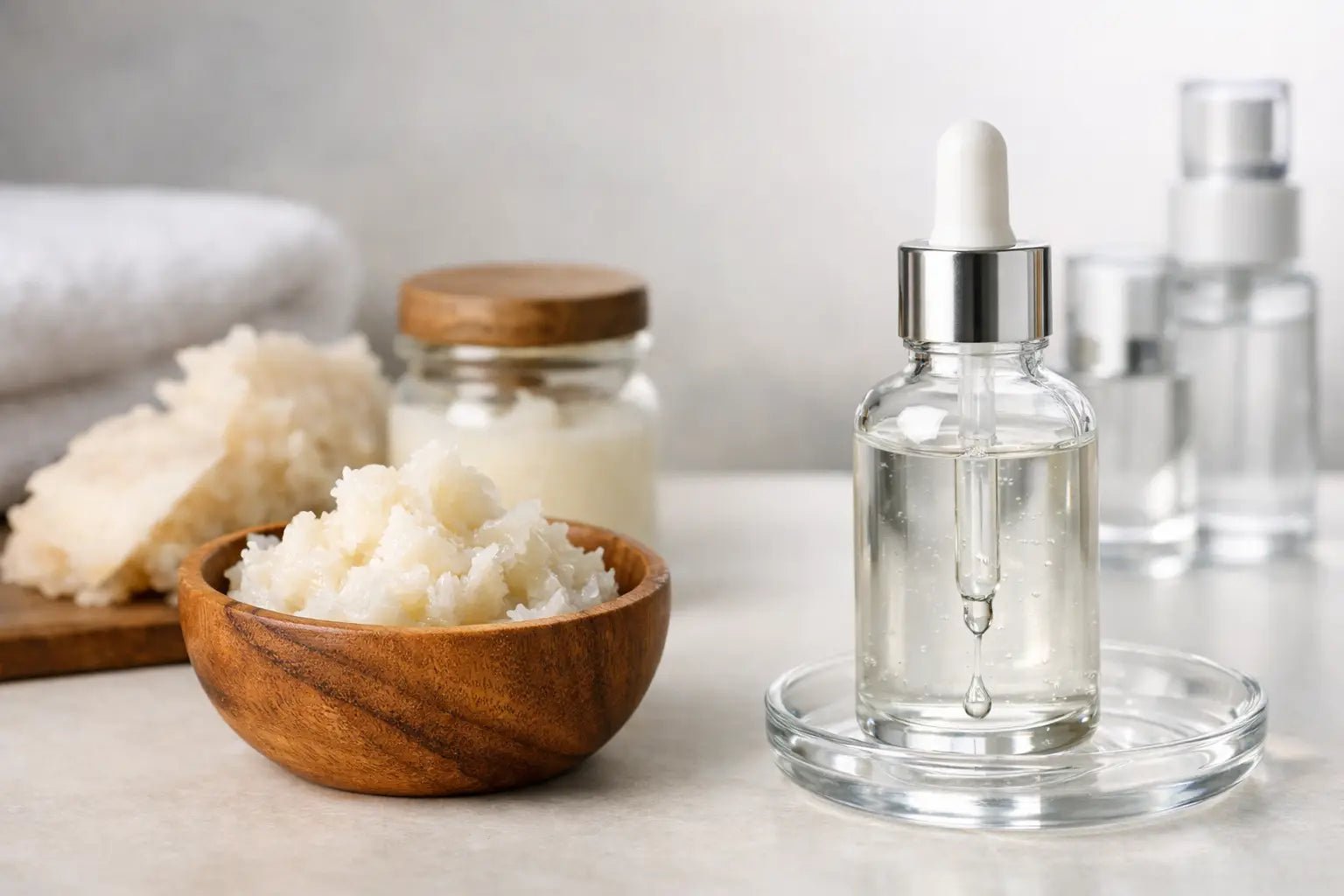
A supply-chain transparency checklist
Work through these in order. A good supplier will answer most of them without hesitation; a weak one will deflect or generalise.
- Animal source: Which farm or farms supplied the fat, and in which country were the animals raised?
- Feeding regime: What did the animals eat, and for how long? Were they grass-finished, or finished on grain?
- Slaughter and rendering dates: When were the animals slaughtered, and when was the tallow rendered? Freshness starts here.
- Rendering method: Was the fat rendered at low temperature (wet rendering) or high temperature (dry rendering)? Low-temperature rendering preserves more of the fat-soluble compounds and gives a milder smell.
- Purification: Was the tallow filtered, washed, bleached or deodorised? Heavy processing can strip colour and scent, which makes visual checks less useful.
- Batch records: Can they share a batch record or supplier statement that links the jar you are buying to a specific rendering run?
- Certification scope: If a scheme is claimed, does the certificate cover the animal source and the rendering site, or only the brand?
How to read the answers
A strong answer is specific: a farm name, a county, a month, a rendering method. A weak answer is circular, "our tallow is grass-fed because our cows eat grass", or leans on adjectives instead of records. Evasive answers tell you as much as clear ones.
Watch out: some sellers will answer the feeding question confidently but go quiet on rendering and purification, because those steps are where cheap tallow is often blended or heavily processed. Push on those two points specifically.
What to do when the answers are incomplete
If the supplier can confirm the farm and feeding regime but not the rendering details, you can still buy, but judge the product on colour, smell and melt behaviour rather than on the grass-fed claim alone. If they cannot confirm the animal source at all, treat the grass-fed wording as marketing and price it accordingly. Keep a note of what you were told; if a later batch looks or smells different, you have a baseline to compare against.
Does Grass-Fed Tallow Need Certification?
Certification is not the only route to trust, but it helps. Third-party certification gives an independent check on feeding and handling claims. Where a product has none, rely on specific supplier documentation instead. A detailed, traceable answer is more useful than a badge with no detail behind it.
Ask whether any certification covers the specific animal source and the rendering process, not just the brand name.
Choosing Grass-Fed Tallow for Your Skin
For skin, the source matters because you want a clean, well-handled fat. Our Men's facial cream - Grass Fed Beef Tallow Whipped Moisturizer (Large 118ml) is made from 100% grass-fed beef tallow, whipped into a smooth cream for face, hands and body. Its listing states the size as 4 oz (113 g) and lists no fillers, synthetic fragrance or petroleum.
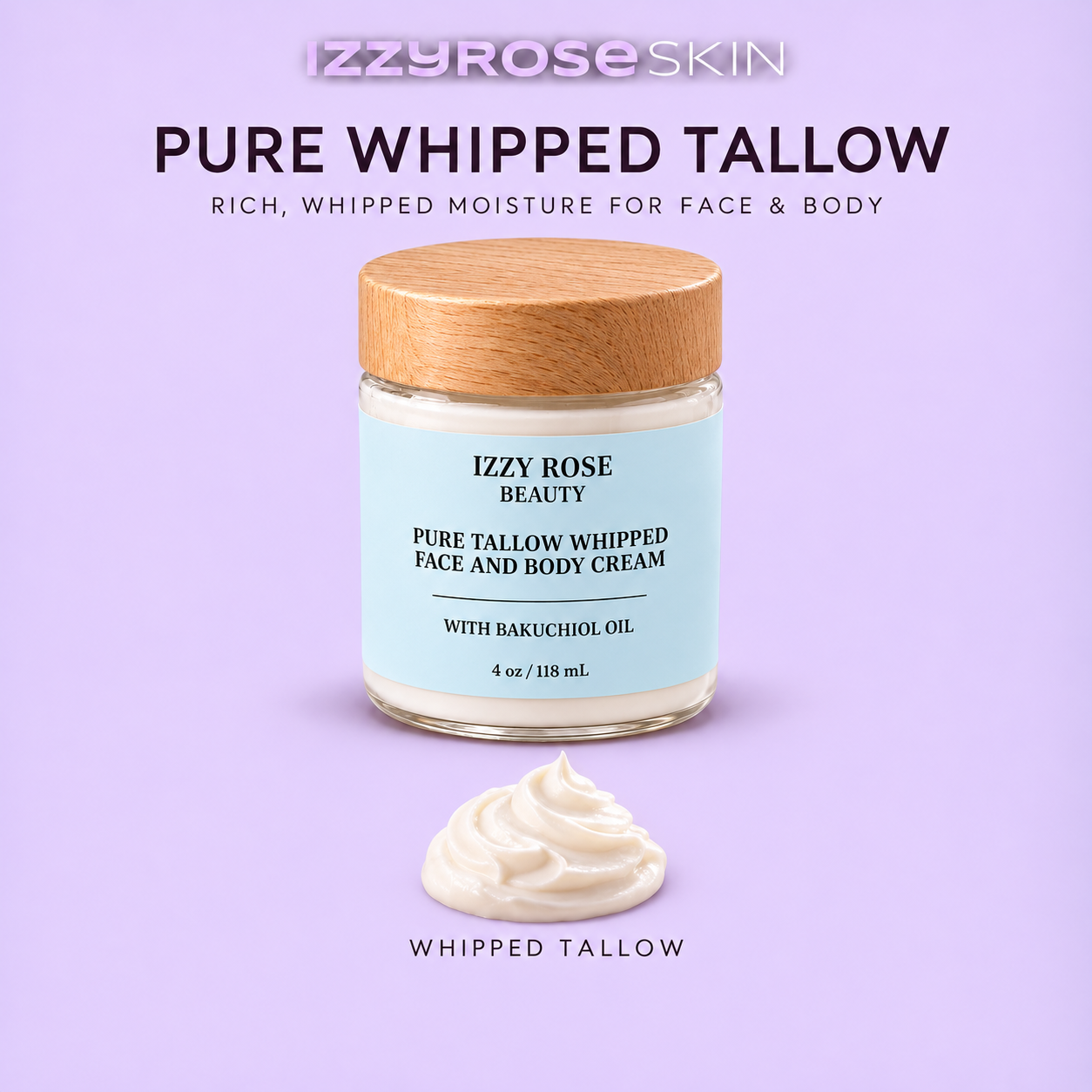
If you want one moisturiser for face and body, compare the Pure Whipped Tallow | Face & Body Moisturiser. It is a 118ml jar that combines grass-fed tallow with shea butter, beeswax and other botanical oils. For background on how tallow skincare is judged, read Is Tallow Skincare Backed by Science? The Honest Answer, and for the benefits of grass-fed tallow specifically, see Is Grass Fed Tallow Good For Skin.
Patch-test any new tallow product first, and speak to a doctor if your skin does not improve.
Frequently Asked Questions
How can you tell if beef tallow is grass-fed?
The label is the first place to look. Grass-fed claims should name the cattle diet and ideally carry a recognised certification. Colour and texture offer supporting clues: grass-fed fat tends to be a more golden, creamy yellow and firmer at room temperature, while grain-fed fat is often whiter and softer. These signs are indicative rather than proof, so the most reliable method is to ask the supplier directly what the cattle ate and where they were raised.
Does grass-fed tallow look or smell different?
Often, yes. Grass-fed tallow is often described as having a deeper golden hue and a faint, clean scent. Heavily refined or deodorised tallow tends to look whiter and smell of very little. Grain-fed tallow can have a stronger, more savoury smell. Colour varies with the animal and rendering method, so use appearance as one check among several rather than a definitive test.
Does grass-fed tallow need to be certified?
A third-party certification gives you independent verification of the cattle's diet and the supply chain. Look for a named certifying body and a certificate number you can check. Where a product has no certification, rely on the supplier's willingness to explain their sourcing in writing.
What questions should you ask a tallow supplier?
Ask what the cattle were fed and whether they were grass-finished or grass-fed. Ask where the animals were raised and slaughtered, how the fat was rendered, and whether it was bleached or deodorised. Request a batch certificate or sourcing statement. A reputable small-batch supplier will answer these questions clearly and without hesitation, and will tell you if a particular detail is unknown.


